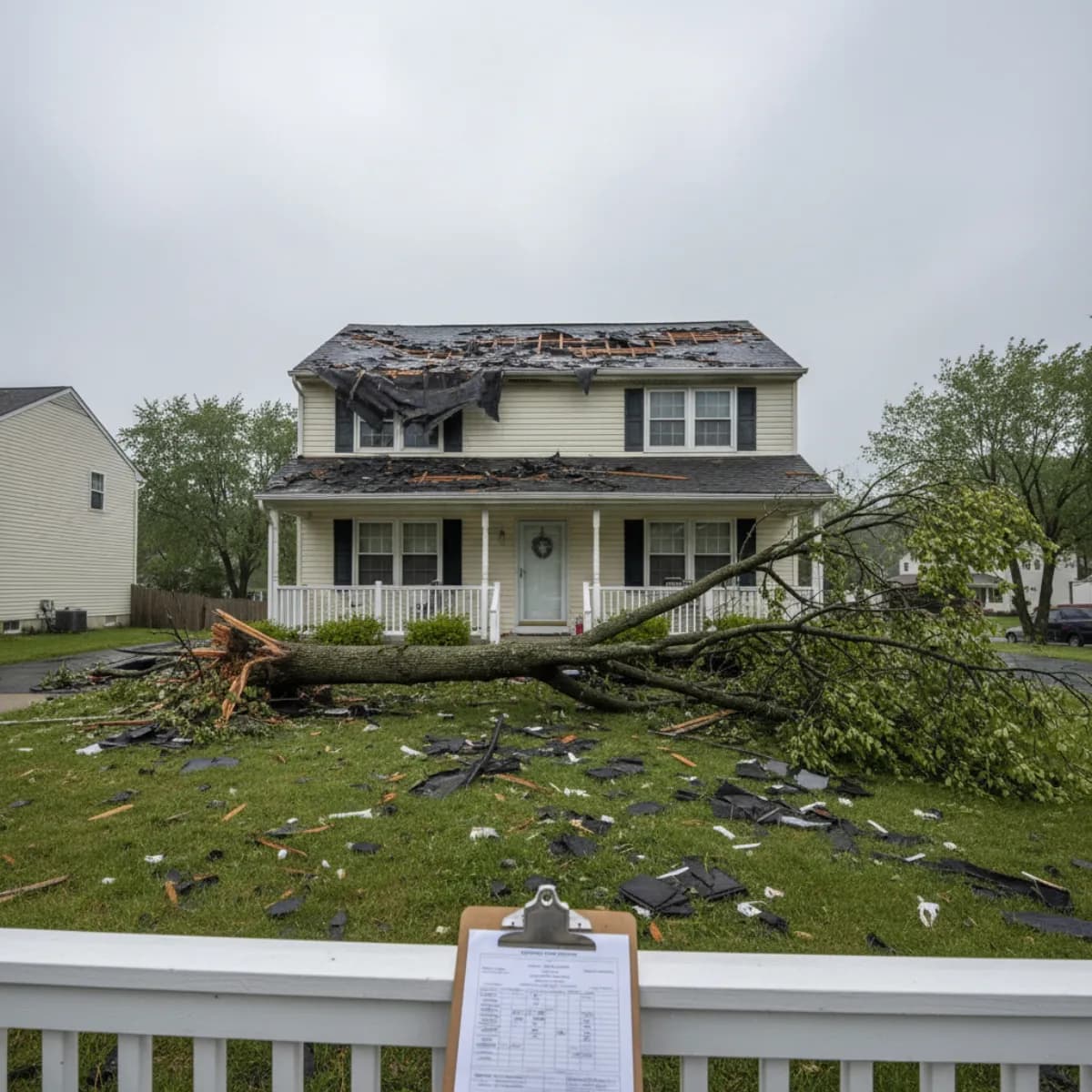
NJ Roof Storm Damage Insurance: The Basics
New Jersey homeowners file roof insurance claims for storm damage every year — from nor'easters and tropical systems to summer thunderstorms with hail and microbursts. The insurance claim process is well-defined under NJ Department of Banking and Insurance (NJ DOBI) regulations, but homeowners often receive less than they are owed because they do not know their rights, do not document damage thoroughly, or do not push back when an adjuster scope is inadequate.
This guide walks you through the entire NJ storm damage claim process step-by-step, from the moment of damage through final payout. It covers deductible structures common in NJ, the difference between ACV and RCV payouts, when to hire a public adjuster, how to invoke the appraisal clause, and how to escalate disputes to NJ DOBI consumer assistance. The principles apply across all NJ insurance carriers, including NJM, Allstate, State Farm, Plymouth Rock, Liberty Mutual, Travelers, Geico, and others.
One non-negotiable: document everything in writing. Photos, video, dated reports, written statements from contractors and adjusters, copies of every email and policy document. NJ insurance disputes are won or lost on documentation.
Step-by-Step Claim Process
1. Document the Damage Immediately
Photograph and video all visible exterior and interior damage with the date visible (use phone timestamp). Get wide context shots and close-up detail shots. Document interior water damage, ceiling stains, fallen debris. Save all photos to a backup location (cloud storage, separate drive).
2. Mitigate Further Damage
Tarp exposed areas, board over openings, place buckets under interior leaks. Insurance requires reasonable efforts to prevent additional damage and typically reimburses these mitigation expenses as loss mitigation. Save all receipts.
3. Contact Your Insurance Carrier (within 72 hours)
Call your insurer or use their online claim portal to report damage. Request a claim number and the assigned adjuster contact. Ask for your specific deductible structure (standard, wind/storm, hurricane/named-storm) in writing.
4. Get Independent Contractor Assessment
Hire a NJ-licensed roofing contractor (not a door-to-door storm chaser) to inspect and provide a written damage assessment with photos, scope of repair/replacement, and cost estimate. This is your independent evidence to compare against the insurance adjuster scope.
5. Meet the Insurance Adjuster On Site
Be present for the adjuster inspection. Have your contractor present if possible. Walk the adjuster through every damaged area. Make sure all interior damage, soft costs (debris removal, code upgrades), and code-required scope items are documented in the adjuster report.
6. Review the Settlement Offer
Compare the adjuster estimate against your contractor estimate line by line. Common gaps: code-required ice and water shield extension, ridge vent replacement, flashing material upgrades, debris disposal, paint and interior repair, and code-required ventilation upgrades.
7. Receive Initial Payment (ACV)
For RCV policies, the carrier issues an initial check based on actual cash value (replacement cost minus depreciation) minus your deductible. The depreciation holdback is paid after work is completed and invoices are submitted.
8. Complete the Work and Submit Final Documentation
After contractor completes the work, submit final invoice and photographs to your insurer. They release the depreciation holdback (RCV minus ACV minus deductible). Keep records of everything for 2+ years in case of disputes.
Understanding NJ Deductible Structures
| Deductible Type | Typical Range | Trigger |
|---|---|---|
| Standard (all-other-perils) | $1,000–$2,500 flat | Non-wind events |
| Wind/Hail (inland NJ) | $1,500–$5,000 or 1-2% | Wind/hail events |
| Hurricane/Named-Storm (coastal NJ) | 1-5% of insured value | NHC named tropical system |
For a $500,000 insured home with a 2% named-storm deductible, you pay $10,000 out of pocket before coverage applies.
ACV vs RCV: What You Actually Receive
The biggest single variable in your NJ storm claim payout is whether your policy is ACV (Actual Cash Value) or RCV (Replacement Cost Value).
- ACV pays the depreciated value of your roof at the time of damage. A 15-year-old roof with a 25-year useful life is depreciated 60%, so a $20,000 replacement pays only $8,000 minus deductible.
- RCV pays the full replacement cost minus deductible, often in two installments: ACV upfront, depreciation holdback after work is done.
- NJ trend toward ACV endorsements: Many NJ carriers now mandate ACV coverage on roofs over 15-20 years old as a renewal condition. Read your declarations page carefully.
- Practical impact: For a 15-year-old NJ roof needing $20,000 replacement, ACV pays roughly $7,000-$8,500 net; RCV pays roughly $18,500 net (after the $1,500 deductible and depreciation holdback).
Your Rights Under NJ DOBI
The NJ Department of Banking and Insurance (NJ DOBI) at dobi.nj.govregulates NJ insurance carriers and protects consumer rights. Key NJ consumer rights for storm damage claims include:
- Acknowledgement of claim within 10 working days
- Decision on coverage within 30 days of receiving necessary documentation
- Written explanation if a claim is denied
- Right to a written estimate from your insurer for comparison
- Right to invoke the appraisal clause in your policy
- Right to file a complaint with NJ DOBI consumer assistance
- Protection against retaliation (non-renewal cannot be solely based on a covered claim)
NJ DOBI cannot force a settlement, but it can investigate and take regulatory action against carriers that violate state law. NJ DOBI complaints often prompt carriers to revisit settlement positions.
When the Carrier Disputes Your Scope
If your insurance carrier offers a settlement that does not cover your full repair/replacement scope, you have these options in escalating order:
- Request re-inspection by a different adjuster with additional documentation.
- Submit independent expert reports (engineer, certified roof inspector, manufacturer rep).
- Hire a NJ-licensed public adjuster to negotiate on your behalf (10-20% fee).
- Invoke the appraisal clause if the dispute is about loss amount, not coverage.
- File a NJ DOBI complaint at dobi.nj.gov consumer assistance.
- Consult a NJ insurance bad-faith attorney if you believe the carrier acted in bad faith.
Roof Storm Damage Insurance Claim in New Jersey: Frequently Asked Questions
How do I file a storm damage roof claim in New Jersey?
NJ storm damage roof claim process: (1) Document damage immediately with dated photos and video of all visible damage, both exterior and interior. (2) Mitigate further damage by tarping exposed areas; keep all receipts. (3) Contact your insurance carrier within 72 hours to report the claim and request a claim number. (4) Confirm your specific deductible structure (standard vs wind/storm vs named-storm). (5) Get a written damage assessment from a NJ-licensed contractor. (6) Meet the insurance adjuster on site, ideally with your contractor present. (7) Compare the adjuster scope and estimate to your contractor estimate. (8) If scope or settlement is inadequate, request re-inspection, hire a NJ-licensed public adjuster, or invoke the appraisal clause in your policy.
What is the deadline to file a NJ roof insurance claim?
NJ insurance regulations and most homeowners policies allow up to 1 year from the date of the storm damage event to file a claim. However, reporting within 72 hours is strongly recommended. Faster reporting leads to smoother claims processing, better evidence preservation, and fewer disputes about whether damage is storm-related vs. pre-existing wear. NJ DOBI-regulated carriers must acknowledge a claim within 10 working days under state regulations. Some specific carriers have shorter deadlines specified in the policy itself; always read your declarations and notice provisions.
What deductibles apply to NJ storm damage claims?
Most NJ homeowners policies have three deductible structures: (1) Standard all-other-perils deductible, typically $1,000-$2,500 flat dollar amount; (2) Wind/storm deductible (also called wind/hail), often a higher flat amount or a percentage (1-2%) for inland NJ properties; (3) Hurricane or named-storm deductible for coastal NJ properties, typically 1-5% of the home insured value, triggered by NHC-named storm conditions. For a $500,000 insured home with a 2% named-storm deductible, you pay $10,000 out of pocket before coverage applies. Confirm your specific deductible structure and trigger conditions with your agent in writing before storm season.
Can I be denied coverage if my NJ roof is too old?
Yes. NJ insurance carriers can deny or reduce coverage for storm damage on roofs they determine are at end-of-life or have pre-existing wear that contributed to the damage. Roofs over 15-20 years old are commonly subject to ACV-only endorsements (Actual Cash Value, depreciated payout) rather than RCV (Replacement Cost Value, full replacement). Some NJ carriers refuse to write new policies on roofs over 20 years old. Document your roof annually with photos and keep maintenance records to support future storm claims. If your roof is approaching 15-20 years and in good condition, ask your carrier in writing whether RCV coverage will continue or convert to ACV.
What is the appraisal clause and when should I use it in NJ?
Most NJ homeowners policies include an appraisal clause that allows either the insurance company or the policyholder to demand a binding appraisal when the parties cannot agree on the amount of loss. Each side selects an independent appraiser; the two appraisers select an umpire. The two appraisers and umpire then determine the amount of loss, which becomes binding. Appraisal is useful when the insurance carrier has acknowledged coverage but disputes the dollar amount. It does NOT resolve coverage disputes (whether something is covered at all) or bad faith claims. Appraisal typically costs each side $500-$2,500 in fees. Consult a NJ-licensed public adjuster or attorney before invoking appraisal.
What are my consumer rights for NJ insurance claims?
The NJ Department of Banking and Insurance (NJ DOBI) at dobi.nj.gov regulates NJ insurance carriers and protects consumer rights. Key NJ consumer rights for storm damage claims include: (1) Acknowledgement of claim within 10 working days; (2) Decision on coverage within 30 days of receiving necessary documentation; (3) Written explanation if a claim is denied; (4) Right to a written estimate from your insurer that you can compare against contractor estimates; (5) Right to invoke the appraisal clause in your policy; (6) Right to file a complaint with NJ DOBI consumer assistance if your carrier acts in bad faith. NJ DOBI cannot force a settlement but can investigate and take regulatory action against carriers that violate state law.
Should I hire a public adjuster for my NJ storm claim?
A public adjuster represents the homeowner (not the insurance company) in negotiating an insurance claim. NJ requires public adjusters to be licensed by NJ DOBI. They typically charge 10-20% of the final claim payout. Hiring a public adjuster is most cost-justified when (1) the insurance adjuster is severely undercutting your scope, (2) your claim exceeds $25,000-$50,000, or (3) you face a denial or significantly reduced settlement. For straightforward storm claims under $15,000 with cooperative carriers, a public adjuster may not be cost-justified. Verify NJ licensure at dobi.nj.gov before hiring any public adjuster, and read the contract carefully (the percentage fee comes off the entire settlement, including amounts that would have been paid without the adjuster involved).
What if my NJ insurance carrier denies my storm damage claim?
If your NJ insurance carrier denies your storm damage roof claim, you have several options: (1) Request a written explanation of the denial and the specific policy language relied on; (2) Request a re-inspection by a different adjuster; (3) Submit additional documentation (engineer reports, contractor assessments, weather data); (4) Hire a NJ-licensed public adjuster to negotiate on your behalf; (5) Invoke the appraisal clause if the dispute is about the amount of loss rather than coverage; (6) File a complaint with NJ DOBI consumer assistance at dobi.nj.gov; (7) Consult a NJ insurance bad-faith attorney if you believe the carrier acted in bad faith. NJ has consumer-protective insurance regulations and active DOBI enforcement; do not accept a denial without exhausting these options.
Get Free Storm Damage Inspection in NJ
Pre-vetted NJ contractors can document storm damage to support your insurance claim and provide an independent estimate to compare against the adjuster scope. Free inspection request based on your address.
No spam. No phone calls. Free inspection from vetted local contractors.