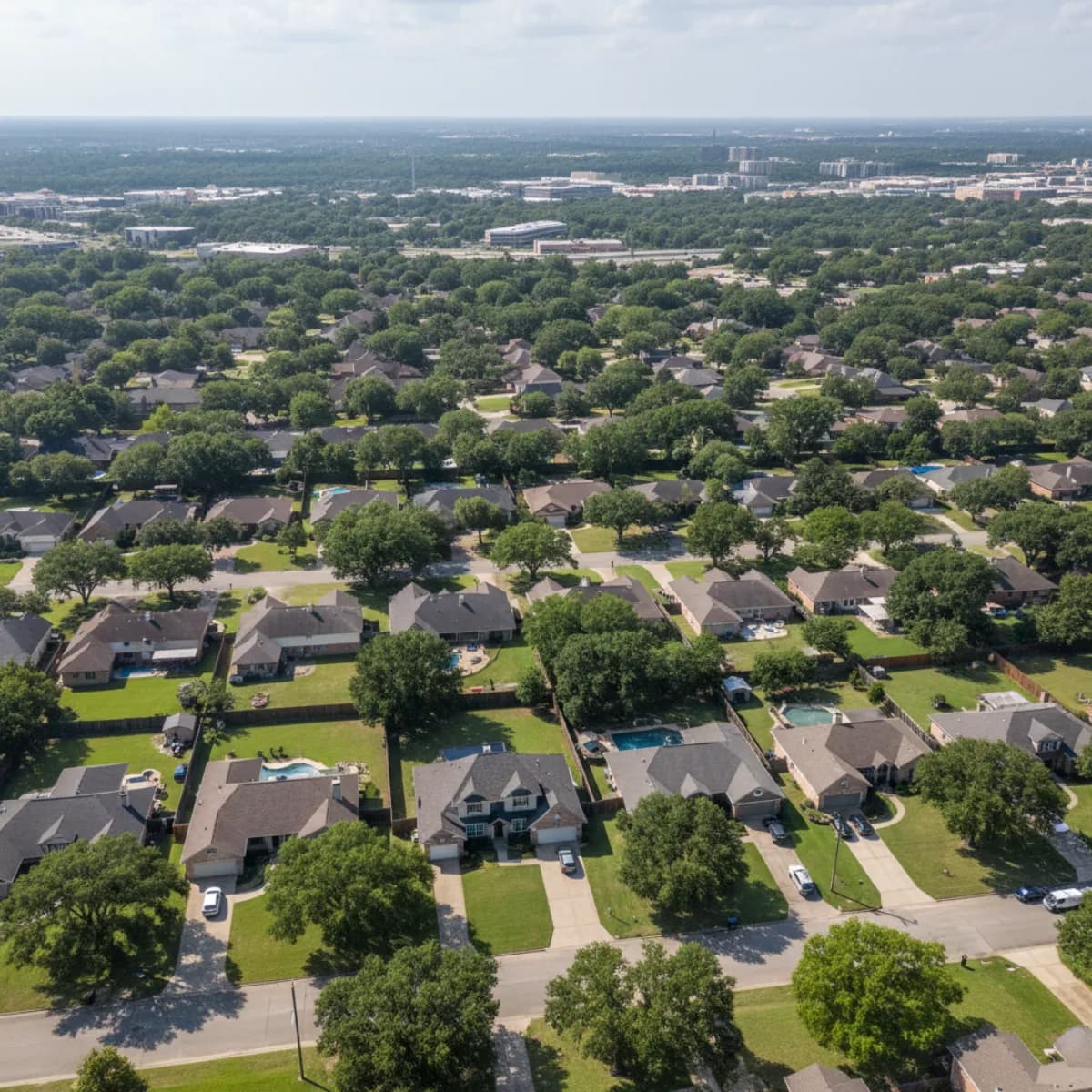
America's 5th Largest Metro — 7.1 Million Residents
Greater Houston Metro Roofing Guide: Hurricane Capital of Texas
From Katy to Pasadena, The Woodlands to League City — the Greater Houston metro's 7.1 million residents face hurricanes, severe hail, extreme humidity, and Gulf Coast corrosion. Get instant quotes from pre-vetted contractors who understand your sub-region's unique challenges, building codes, and HOA requirements.
Greater Houston Metro at a Glance
Population
5th largest metro in U.S.
Counties
Harris, Fort Bend, Montgomery, Galveston, Brazoria + more
Annual Rainfall
Among wettest major U.S. metros
Harvey Damage
2017 — costliest U.S. disaster
MPH Wind Ratings
Required roofing standard
Hail Events/Year
March-May storm season
Avg Humidity
Algae, mold & moisture risk
Avg Roof Cost
Standard architectural shingles
Roofing in the Greater Houston Metro: Where Hurricanes, Hail, and Humidity Converge
The Greater Houston metropolitan area sprawls across more than 10,000 square miles of southeastern Texas coastal plain, making it one of the most geographically expansive metros in the United States. From the dense urban core inside Loop 610 to the rapidly growing suburban frontiers of Katy, Conroe, and League City, this nine-county region is home to 7.1 million people living in a climate that pushes roofing materials to their absolute limits. No other major American metro combines the sheer volume of hurricane exposure, severe hail frequency, subtropical humidity, and extreme heat that defines life along the upper Texas Gulf Coast.
Houston's position approximately 50 miles inland from the Gulf of Mexico places the entire metro squarely in the path of Atlantic hurricanes that regularly threaten the Texas coast. Hurricane Harvey in August 2017 dumped over 60 inches of rain on parts of the metro, causing $125 billion in total damage and displacing hundreds of thousands of families. Hurricane Ike in September 2008 brought 110+ mph winds as far inland as downtown Houston, stripping roofs across Harris County. Most recently, Hurricane Beryl in July 2024 knocked out power to millions of Houston metro residents and caused widespread roof damage from destructive straight-line winds. These are not abstract risks — they are events that have reshaped how every homeowner in this region thinks about their roof.
Beyond hurricanes, the Houston metro endures severe spring thunderstorms from March through May that produce damaging hail, sometimes reaching softball size, across Harris, Fort Bend, and Montgomery Counties. The region's year-round subtropical humidity, consistently above 80%, promotes aggressive algae growth, moss formation, and moisture-related material degradation that can cut years off a roof's expected lifespan. Summer temperatures routinely exceed 95-100 degrees Fahrenheit, with attic temperatures soaring past 150 degrees, accelerating asphalt shingle aging and making proper ventilation a non-negotiable element of any quality roof installation.
Adding a layer of complexity unique to the Houston metro, the region's patchwork of municipalities, unincorporated areas, special districts, and master-planned communities means that building codes, permitting requirements, HOA restrictions, and even contractor licensing rules can vary dramatically from one neighborhood to the next. A homeowner in The Woodlands navigates Montgomery County permits and strict Township deed restrictions. A homeowner in Sugar Land deals with Fort Bend County codes and community association standards. A homeowner in Baytown contends with Harris County regulations plus the corrosive chemical environment of the Houston Ship Channel. RoofVista's pre-vetted contractors understand these local nuances, ensuring your quote, materials, and installation meet every applicable standard for your specific location within the metro.
Houston Metro Sub-Region Roofing Guide
The Greater Houston metro is not a monolith. Each sub-region presents distinct roofing challenges shaped by its geography, housing stock, local governance, and proximity to the Gulf Coast. Understanding your sub-region helps you choose the right materials, anticipate permitting requirements, and select a contractor with relevant local experience.
Inner Loop / Heights / Montrose
Avg. Roof Cost: $10,000 - $25,000
Houston's urban core inside Loop 610 encompasses the Heights Historic District, Montrose, Midtown, EaDo, and the Museum District. This area features a wide mix of historic bungalows, mid-century ranches, modern townhomes, and high-rise condos. Heights Historic District properties require design review from the Houston Archaeological and Historical Commission (HAHC) for visible exterior changes.
Key Characteristics
- Heights Historic District oversight
- Mixed architecture — bungalows to modern
- Urban density with limited staging areas
- Older homes may have multiple roof layers
Primary Roofing Challenge
Memorial / Energy Corridor / West Houston
Avg. Roof Cost: $15,000 - $40,000
The Memorial area and Energy Corridor stretch west along Interstate 10, home to Houston's major oil and gas corporate campuses and some of the city's most affluent residential neighborhoods. Piney Point Village, Bunker Hill Village, and Hunters Creek Village are independent municipalities with their own building codes. Large lot sizes with mature trees define the Memorial area's character.
Key Characteristics
- Affluent neighborhoods with large homes
- Memorial Villages have independent codes
- Mature trees create debris and shade issues
- Corporate campus proximity drives quality expectations
Primary Roofing Challenge
Katy / West Houston / Cinco Ranch
Avg. Roof Cost: $9,000 - $18,000
Katy and far west Houston have experienced explosive growth since the 1990s, with master-planned communities like Cinco Ranch, Cross Creek Ranch, Elyson, and Cane Island drawing families with new construction and strong schools. The Katy area was significantly impacted by Hurricane Harvey flooding in 2017 and the Barker Reservoir releases. Most homes feature newer construction with architectural shingles.
Key Characteristics
- Rapid suburban growth since 1990s
- Master-planned communities with HOAs
- Harvey flood zone impacts
- Newer construction — 10-25 year old roofs
Primary Roofing Challenge
Sugar Land / Missouri City / Fort Bend County
Avg. Roof Cost: $9,000 - $20,000
Sugar Land and Missouri City anchor Fort Bend County, one of the most ethnically diverse counties in the United States. Sugar Land's Telfair, New Territory, Sweetwater, and First Colony neighborhoods feature a mix of traditional and contemporary homes. Missouri City's Sienna community and the developing Riverstone area are newer master-planned communities. Fort Bend County has its own permitting and inspection requirements.
Key Characteristics
- Fort Bend County permitting (separate from Houston)
- Diverse architectural styles
- Strong HOA governance in most communities
- Growing commercial and residential mix
Primary Roofing Challenge
The Woodlands / Spring / North Houston
Avg. Roof Cost: $10,000 - $30,000
The Woodlands, Montgomery County's premier master-planned community, features a dense urban tree canopy that creates unique roofing challenges including debris accumulation, shading, and moisture retention. Spring and Tomball extend the north Houston corridor with a mix of established neighborhoods and newer development. Conroe, the Montgomery County seat, anchors the northern edge of the metro expansion.
Key Characteristics
- Dense tree canopy (The Woodlands)
- Strict Township deed restrictions via DSC
- Montgomery County permitting
- Mix of master-planned and rural-transitional
Primary Roofing Challenge
Pearland / Friendswood / South Houston
Avg. Roof Cost: $8,000 - $18,000
Pearland and Friendswood have grown into major suburban centers south of Houston, straddling Brazoria and Harris County lines. Shadow Creek Ranch in Pearland and Friendswood's established neighborhoods offer mid-range to upscale housing. Proximity to NASA's Johnson Space Center in Clear Lake and the Gulf Freeway corridor makes these communities attractive to aerospace industry professionals. South Houston and South Belt are more established, working-class neighborhoods.
Key Characteristics
- Brazoria and Harris County lines create permit complexity
- NASA/Clear Lake aerospace corridor
- Shadow Creek Ranch HOA standards
- Coastal proximity increases wind exposure
Primary Roofing Challenge
Pasadena / Baytown / Ship Channel / East Houston
Avg. Roof Cost: $7,000 - $16,000
East Houston encompasses Pasadena, Baytown, Deer Park, and La Porte along the Houston Ship Channel, the largest petrochemical complex in the Western Hemisphere. Industrial emissions, salt air from Galveston Bay, and refinery fallout create a uniquely corrosive environment for roofing materials. These are predominantly working-class communities where cost-effective, durable materials are paramount.
Key Characteristics
- Petrochemical corridor corrosion exposure
- Salt air from Galveston Bay proximity
- Working-class communities prioritize value
- Industrial fallout accelerates material degradation
Primary Roofing Challenge
Hurricane Preparedness & Building Codes
The Greater Houston metro sits in one of the most hurricane-vulnerable corridors in the United States. The 2017 and 2024 hurricane seasons demonstrated that every home in this 7.1-million-person metro needs a roof designed to withstand tropical storm and hurricane-force conditions. Post-Harvey building code enhancements and insurance industry pressure have transformed what constitutes a properly installed roof in the Houston area.
Hurricane History
The Houston metro has been directly impacted by three major hurricanes in recent memory, each revealing new vulnerabilities in the region's roofing infrastructure and driving code improvements.
- Harvey (2017): $125B damage, 60+ inches of rain, catastrophic flooding across 9 counties. Exposed failures in roof deck attachment and water intrusion prevention.
- Ike (2008): 110+ mph winds reached downtown Houston. Massive shingle and material loss, exposed need for enhanced wind ratings across inland areas.
- Beryl (2024): Destructive straight-line winds knocked out power to millions and damaged thousands of roofs across the metro, reinforcing the need for wind-rated installations.
Post-Harvey Code Requirements
Building code enhancements implemented after Harvey and reinforced after subsequent storms have raised the bar for roof installations across the Houston metro. These requirements apply regardless of which municipality or county you reside in.
- Wind ratings: Minimum 110 mph for inland areas, 130+ mph closer to coast
- Fastening: Ring-shank nails required for enhanced deck attachment
- Sealed deck: Self-adhering underlayment or sealed roof deck systems for water intrusion prevention
- TWIA compliance: Coastal counties require Texas Windstorm Insurance Association certification
Houston Metro Permitting Landscape
The Houston metro's fragmented jurisdictional structure means permit requirements vary significantly. All roof replacements require permits from the relevant authority, and your contractor should handle the entire process.
City of Houston
Permits through Houston Public Works, $75-$300. Heights Historic District properties require HAHC design review. Despite being famously unzoned, roofing codes are strictly enforced.
Harris County (Unincorporated)
County permits for unincorporated areas. Covers large swaths of Cypress, Spring, and other communities outside city limits.
Fort Bend County
Separate permitting for Sugar Land, Missouri City, Rosenberg, and Richmond. Fort Bend has its own inspection requirements and fee schedules.
Montgomery County / The Woodlands
County permits plus Woodlands Township DSC approval (10-15 business days). Deed restriction review is separate from and in addition to building permits.
Memorial Villages
Piney Point Village, Bunker Hill Village, Hunters Creek Village, and Hedwig Village are independent cities with their own codes and permitting processes.
Galveston County / TWIA Zone
League City, Friendswood (partial), and Galveston Island require TWIA windstorm certification. Separate windstorm inspection and compliance documentation.
Humidity & Moisture: The Silent Roof Killer
While hurricanes and hail grab headlines, the Houston metro's relentless humidity may actually cause more cumulative roof damage over time than any single storm event. With annual humidity levels consistently above 80% and more than 50 inches of rainfall each year, roofs in this region exist in a near-constant state of moisture exposure. Understanding how humidity affects your roof — and what to do about it — is essential for every Houston metro homeowner.
Algae & Dark Streaking
The dark streaks visible on roofs across the Houston metro are Gloeocapsa magma, a cyanobacterium that thrives in warm, humid conditions. Beyond being unsightly, algae feeds on limestone filler in asphalt shingles, accelerating granule loss and reducing UV protection. Algae-resistant (AR) shingles containing copper or zinc granules are essential for the Houston metro climate. Without AR treatment, visible algae growth can appear within 3-5 years of installation.
Attic Heat & Moisture Trap
Houston metro attics regularly exceed 150 degrees Fahrenheit in summer. When combined with humidity migrating upward from living spaces, this creates a superheated moisture environment that can cause deck rot, insulation failure, mold growth on underlayment, and accelerated shingle aging from below. Proper ridge and soffit ventilation creating continuous airflow is critical. Radiant barriers can reduce attic temperatures by 20-30 degrees, extending material lifespan and reducing cooling costs by 10-17%.
Underlayment & Ventilation
Every Houston metro roof installation should include synthetic moisture barrier underlayment, not just standard felt paper. Synthetic underlayment resists moisture penetration, withstands higher temperatures without degrading, and provides a secondary water defense if shingles are compromised during storms. Adequate ventilation — a balanced system of soffit intakes and ridge exhaust — prevents moisture accumulation that leads to deck deterioration, ice dam equivalents (moisture pooling), and premature material failure.
Salt Air Corrosion: Galveston Bay & Ship Channel Proximity
Communities east and south of Houston face an additional moisture challenge: salt air corrosion from Galveston Bay and the Houston Ship Channel. Baytown, Pasadena, La Porte, Deer Park, League City, and Galveston are all within range of salt-laden marine air that accelerates corrosion on metal flashing, fasteners, vents, and exposed metalwork. In these areas, stainless steel or heavily galvanized fasteners, marine-grade flashing, and corrosion-resistant metal roofing panels are recommended to prevent premature failure. Industrial emissions from the Ship Channel petrochemical corridor add a chemical component to the corrosive environment, particularly in Pasadena, Deer Park, and Baytown, where airborne particulates can etch and degrade roofing surfaces over time.
Most Popular Roofing Materials for the Houston Metro
Material selection in the Houston metro is driven by a unique combination of factors not found together in any other U.S. market: hurricane wind resistance, hail impact protection, extreme heat tolerance, humidity and algae resistance, salt air corrosion resistance (in coastal areas), and HOA aesthetic compliance. Here are the materials best suited to this demanding environment.
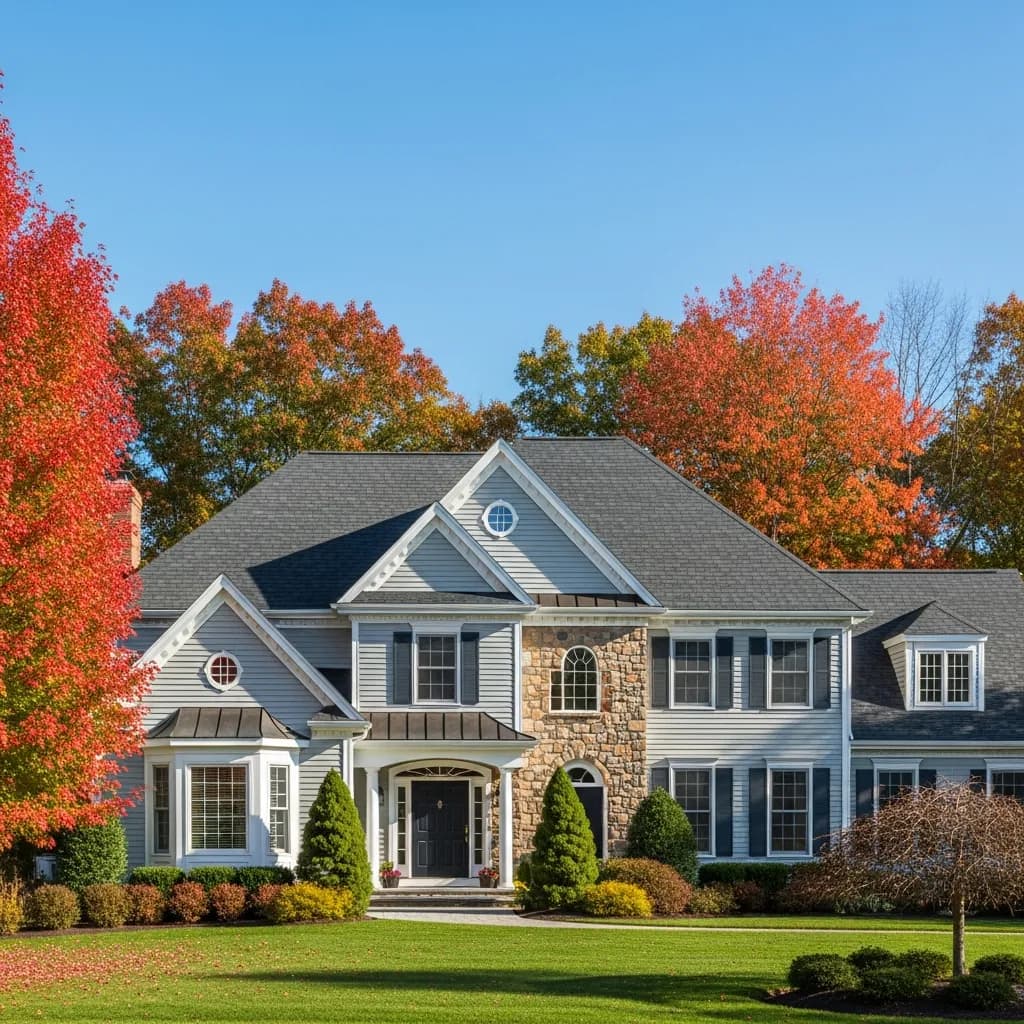
#1: Class 4 Impact-Rated Architectural Shingles
The workhorse of Houston metro roofing. Class 4 impact-rated architectural shingles combine hail resistance (withstanding 2-inch steel ball drops per UL 2218 testing) with 110-130 mph wind ratings that satisfy post-Harvey building code requirements. Algae-resistant formulations are standard for this climate. These shingles qualify for Texas homeowner insurance premium discounts of 10-28%, often paying for the impact-rating upgrade within 3-5 years of reduced premiums. They suit the vast majority of Houston metro homes from Katy to Pearland.
Best For:
Most Houston metro homes
Lifespan:
25-30 years
Cost Range:
$8,000 - $18,000
Wind Rating:
110-130 mph
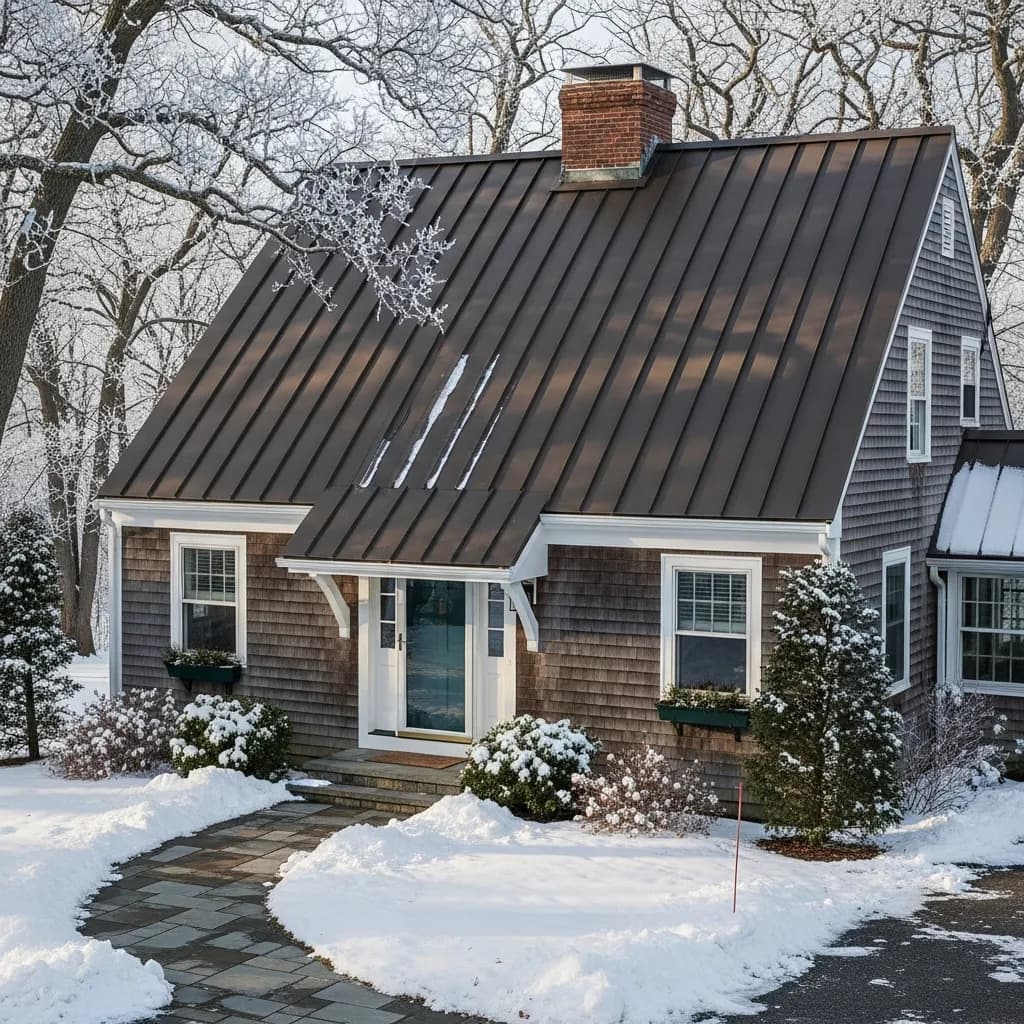
#2: Standing Seam Metal Roofing
Increasingly the material of choice for Houston metro homeowners who want the ultimate hurricane protection. Standing seam metal panels with concealed fasteners handle 140+ mph winds, are virtually impervious to hail, and shed debris from trees far more effectively than shingles. The reflective surface reduces cooling costs by 10-25% in Houston's brutal summers, where cooling accounts for 40-60% of energy bills. In coastal areas near Galveston Bay, specify marine-grade aluminum or Galvalume panels to resist salt air corrosion. Metal's 40-70 year lifespan means it may be the last roof you ever install.
Best For:
Hurricane protection, energy savings, coastal areas
Lifespan:
40-70 years
Cost Range:
$15,000 - $35,000
Wind Rating:
140-160+ mph
Clay & Concrete Tile
#3: Clay & Concrete Tile
Popular for Houston's Mediterranean, Spanish Colonial, and Tuscan-style homes, particularly in affluent neighborhoods like River Oaks, Bellaire, West University Place, and Sugar Land's upscale communities. Tile handles Houston's extreme heat exceptionally well thanks to its natural thermal mass, and a 50-75 year lifespan makes it a lifetime investment. However, tile is heavier than other materials, requiring structural verification, and individual tiles can crack under large hail impacts. Underlayment quality is critical for tile installations in the Houston humidity environment.
Best For:
River Oaks, Bellaire, Sugar Land estates
Lifespan:
50-75 years
Cost Range:
$20,000 - $45,000
Wind Rating:
125+ mph
Flat / Low-Slope Systems
#4: TPO / Modified Bitumen (Flat Roofs)
Essential for Houston's large inventory of flat and low-slope roofs, including Midtown townhomes, EaDo lofts, commercial buildings along the Energy Corridor, and modern flat-roof residential designs increasingly popular in Montrose and the Heights. TPO (thermoplastic polyolefin) provides excellent heat reflectivity critical for Houston summers, while modified bitumen offers superior waterproofing for the region's extreme rainfall. Proper drainage design is paramount — Houston's flat terrain and intense rain events can overwhelm inadequate flat roof drainage systems.
Best For:
Townhomes, commercial, modern residential
Lifespan:
20-30 years
Cost Range:
$5,000 - $15,000
Wind Rating:
90-120 mph (mechanically attached)
Houston Metro Average Roof Cost: $7,000 - $20,000 for standard homes with architectural shingles. Premium homes in River Oaks, Memorial, West U, and The Woodlands range $15,000 - $45,000. Metal roofing runs $15,000 - $35,000 across the metro. Get your exact price with a free instant quote tailored to your address.
Houston Metro Insurance Landscape
Insurance is one of the most important — and most misunderstood — aspects of roofing in the Houston metro. The region's hurricane and hail exposure creates a unique insurance environment where deductible structures, coverage requirements, and available discounts significantly affect the true out-of-pocket cost of a roof replacement. Understanding these dynamics before a storm hits can save Houston metro homeowners thousands of dollars.
Hurricane / Windstorm Deductibles
Most Houston metro homeowner policies carry a separate windstorm or hurricane deductible, typically 1-5% of the dwelling coverage amount. This is separate from your standard deductible.
Example:
A $400,000 home with a 2% windstorm deductible would have an $8,000 out-of-pocket cost before insurance pays anything for wind damage, compared to a typical $1,000-$2,500 standard deductible.
Impact-Rated Shingle Discounts
Texas insurers offer meaningful premium discounts for Class 4 impact-rated roofing materials, typically ranging from 10-28% of the annual premium. Over the life of a roof, these savings often exceed the additional cost of impact-rated materials.
Example:
A homeowner paying $4,000/year in premiums with a 20% impact-rated discount saves $800/year, totaling $20,000 over a 25-year roof lifespan. The Class 4 upgrade typically costs $1,500-$3,000 above standard shingles.
TWIA Windstorm Coverage
Properties in designated coastal counties (Galveston County, parts of Brazoria County, and Chambers County) may require separate windstorm coverage through the Texas Windstorm Insurance Association (TWIA). TWIA has specific material and installation standards that must be met, including a separate windstorm inspection and WPI-8 certification. League City, Galveston, and portions of Friendswood fall in TWIA territory. Your contractor must be familiar with TWIA compliance requirements.
Your Right to Choose
Texas law guarantees homeowners the right to choose their own contractor for insurance-covered roof repairs, regardless of what an insurance adjuster may suggest. You are not obligated to use a contractor recommended by your insurance company. Our pre-vetted contractors provide free storm damage inspections, assist with insurance documentation, and can be present during adjuster visits to ensure all damage is properly documented and accounted for.
After a Storm: Insurance Claim Checklist
- Document immediately: Photograph all visible damage from the ground before any temporary repairs.
- File promptly: Texas imposes a one-year statute of limitations for weather damage claims from the date of the storm.
- Get a professional inspection: Have a pre-vetted contractor inspect and provide a detailed scope before the adjuster visit.
- Attend the adjuster meeting: Have your contractor present to ensure all damage is documented.
- Review the scope carefully: Compare the insurer's scope against your contractor's assessment. Supplements for missed damage are common and appropriate.
- Upgrade to impact-rated: Use the claim as an opportunity to upgrade to Class 4 shingles and recoup the investment through premium discounts.
Houston Metro Roof Replacement Costs by Material
Texas roofing costs are generally lower than the national average due to competitive labor markets and no state income tax. However, the Houston metro's hurricane-rated material requirements, specialized installation methods (ring-shank nails, sealed deck systems), and post-storm demand surges can affect pricing. The table below shows current Texas pricing per square foot by material type, sourced from our contractor network.
Pricing Notes for Houston Metro
- Post-storm pricing: After major hurricanes or hail events, demand surges across the 7.1M metro can increase prices 15-30% temporarily due to material shortages and contractor scheduling backlogs.
- Sub-region variation: Inner-loop Houston, Memorial, and The Woodlands tend to be 10-25% above metro average due to larger homes, premium materials, and stricter code/HOA requirements.
- Coastal premium: Properties in TWIA zones (League City, Galveston) may see 5-15% higher costs for TWIA-compliant materials and inspection requirements.
- Texas sales tax: Houston's 8.25% sales tax applies to materials only, not labor. This is factored into quoted prices from our contractors.
Houston Metro Communities We Serve
RoofVista serves homeowners across the entire Greater Houston metropolitan area. Below are the major communities and cities where our pre-vetted contractors provide instant quotes. Click through to community-specific pages for localized roofing information where available.
Houston
Harris County · Pop. 2.3M+
City proper — 4th largest in U.S.
The Woodlands
Montgomery County · Pop. 120K+
Premier master-planned community
Pasadena
Harris County · Pop. 150K+
Ship Channel corridor, SE Houston
Katy
Harris / Fort Bend / Waller County · Pop. 21K+ (city); 350K+ (area)
Cinco Ranch, Cross Creek Ranch
Sugar Land
Fort Bend County · Pop. 110K+
Telfair, New Territory, First Colony
Pearland
Brazoria / Harris County · Pop. 130K+
Shadow Creek Ranch, growing suburb
League City
Galveston County · Pop. 115K+
Clear Lake area, NASA corridor
Conroe
Montgomery County · Pop. 100K+
County seat, rapid growth
Baytown
Harris / Chambers County · Pop. 83K+
Ship Channel, industrial corridor
Missouri City
Fort Bend / Harris County · Pop. 75K+
Sienna, Riverstone communities
Spring
Harris County · Pop. 60K+ (CDP)
North Houston suburban growth
Cypress
Harris County · Pop. 190K+ (CDP)
Bridgeland, Towne Lake, Cypress Creek
Friendswood
Galveston / Harris County · Pop. 40K+
Established neighborhoods, Clear Lake
Tomball
Harris County · Pop. 12K+
NW Houston, small-town character
Galveston (nearby)
Galveston County · Pop. 53K+
Island — highest wind requirements
Frequently Asked Questions: Houston Metro Roofing
How much does a roof replacement cost in the Greater Houston metro?
Roof replacement across the Greater Houston metro typically costs $7,000-$20,000 for standard homes. Inner-loop neighborhoods like River Oaks and Memorial run $15,000-$45,000. Suburban areas like Katy, Pearland, and League City average $9,000-$18,000. The Woodlands commands $10,000-$30,000 due to strict deed restrictions. Metal roofing ranges $15,000-$35,000.
What roofing materials work best for the Houston metro's hurricane and hail exposure?
Class 4 impact-rated architectural shingles are the most popular, offering hail protection and insurance discounts of 10-28%. Standing seam metal with 140+ mph wind ratings provides superior hurricane resistance. All materials should include algae-resistant treatments for the region's 80%+ humidity. Properties near Galveston Bay need corrosion-resistant options.
How did Hurricane Harvey affect Houston metro roofs?
Harvey caused an estimated $125 billion in total damage in August 2017, with 60+ inches of rain and catastrophic flooding across all nine counties. The storm prompted widespread adoption of enhanced wind-resistant materials, sealed roof deck systems, and ring-shank nails. Hurricane Beryl in July 2024 caused additional widespread roof damage across the metro.
Do Houston metro communities have different building codes?
Yes. Houston proper requires permits through Public Works. Sugar Land, Pearland, and League City have their own permitting departments. The Woodlands falls under Montgomery County plus strict Township deed restrictions. Coastal zones may need TWIA compliance. All areas require minimum 110 mph wind-rated materials.
How does humidity affect roofs in the Houston metro?
Houston's 80%+ humidity combined with 50+ inches of annual rainfall promotes aggressive algae growth, moss, mold, and accelerated granule loss. Attic temps can exceed 150 degrees F in summer. Algae-resistant shingles, moisture barrier underlayment, and proper ridge/soffit ventilation are essential for every installation.
What insurance considerations apply to Houston metro roofing?
Most policies carry separate windstorm/hurricane deductibles of 1-5% of dwelling coverage. Class 4 impact-rated shingles may qualify for premium discounts of 10-28%. Coastal properties may need TWIA coverage. Texas law lets homeowners choose their own contractor. Claims must be filed within one year of the storm.
How long does a roof replacement take in the Houston metro?
Standard shingle replacements take 1-3 days, metal 3-5 days, tile 5-7 days. Year-round warm weather allows work in all seasons, though summer heat requires early starts. Post-hurricane scheduling can extend 2-8 weeks. Permit times vary: Houston takes 1-3 days, The Woodlands DSC requires 10-15 business days.
Is there a statewide roofing license required in Texas?
Texas does not require a statewide roofing license. However, the City of Houston requires contractor registration. Other municipalities may have their own requirements. All contractors should carry general liability ($500K+ recommended) and workers' comp. RoofVista pre-vets all Houston metro contractors for insurance, licensing, reviews, and hurricane experience.
Explore More Texas Roofing Resources
Texas Roofing Overview
Statewide pricing, materials, and regulations
Houston City Roofing Guide
City proper — neighborhoods, permits, codes
Texas Gulf Coast Roofing
Coastal challenges, TWIA, wind ratings
Texas Storm Damage Repair
Emergency repair, insurance claims, hail damage
Texas Flat Roofing
TPO, modified bitumen, commercial systems
The Woodlands Roofing
Deed restrictions, tree canopy, DSC process
Why Houston Metro Homeowners Choose RoofVista
In a metro with 7.1 million residents and thousands of roofing contractors, finding one you can trust is a genuine challenge. Texas's lack of a statewide roofing license means anyone with a truck and a ladder can call themselves a roofer. After every major storm, “storm chasers” flood the Houston market, offering low prices and disappearing before warranty claims arise. RoofVista solves this by pre-vetting every contractor for licensing compliance, insurance coverage, financial stability, customer reviews, and specific Houston metro experience — then letting you compare their standardized quotes side by side.
Instant Satellite Quotes
Enter your address and get an AI-powered roof measurement and instant cost estimate in under 60 seconds. No waiting for a contractor to visit. No phone calls required.
Standardized Scope Comparison
Compare quotes from multiple pre-vetted contractors on the same scope of work. See exactly what each includes — materials, labor, underlayment, ventilation, cleanup, warranty — so you can compare apples to apples.
Privacy Until You Choose
Your contact information stays private until you decide to move forward. No spam calls. No lead resale. No pressure. You control when and how contractors can reach you.
Energy Corridor & Commercial Roofing in the Houston Metro
Houston's status as the energy capital of the world extends beyond oil and gas to include a massive commercial and industrial roofing market. The Energy Corridor along Interstate 10 west of Beltway 8, the Texas Medical Center (the world's largest medical complex), the Galleria district, and the Houston Ship Channel petrochemical complex all represent significant commercial roofing demand. While RoofVista primarily serves residential homeowners, many of our pre-vetted contractors also handle commercial projects and can provide quotes for multi-family, HOA common areas, and small commercial properties.
The Houston metro's flat commercial roofing market is dominated by TPO, PVC, and modified bitumen systems, with an increasing trend toward cool roof coatings that meet Texas energy codes and can reduce commercial cooling costs by 15-30%. Metal panel systems are common for light industrial and warehouse applications along the Ship Channel and in distribution corridors. All commercial roofing in the Houston metro must meet the same wind resistance standards as residential, with many commercial properties requiring enhanced ratings due to building height, exposure classification, and occupancy type.
Best Time to Replace Your Roof in the Houston Metro
Best: Late Fall & Winter (Oct-Feb)
Moderate temperatures (50-75 degrees F), lower humidity, and reduced storm risk create ideal working conditions. Contractor availability is typically highest during this period as post-storm demand has subsided. Shingle adhesive activates properly in Houston's mild winters. This window also positions your new roof before the spring hail season and summer hurricane season.
Good: Early Spring (Feb-Mar)
Still comfortable temperatures and reasonable contractor availability. The window narrows as April approaches and hail season begins. Getting your roof done before March severe weather begins is strategically sound. Be aware that unexpected cold fronts can occasionally delay work by a day or two.
Challenging: Summer (Jun-Sep)
Extreme heat (95-105 degrees F) requires early morning starts (6 AM) to protect worker safety and material quality. Afternoon thunderstorms can interrupt work. Hurricane season (June 1 - November 30) creates scheduling uncertainty. However, if your roof needs replacement and a storm is approaching, timing becomes an emergency.
Post-Storm: Any Time (Emergency)
After hurricanes or major hail events, timing is not a choice — it is an emergency. Demand surges across the 7.1M metro can create 2-8 week wait times and 15-30% temporary price increases. Having a pre-vetted contractor relationship through RoofVista before a storm hits ensures you are in the queue early, not competing with millions of other homeowners for limited contractor availability.
Get Your Houston Metro Roof Quote in Minutes
Whether you're in Katy, Sugar Land, The Woodlands, Pearland, or anywhere across the 7.1-million-person Greater Houston metro — enter your address to compare instant quotes from pre-vetted Texas contractors who specialize in your sub-region's unique challenges.
Compare 1256+ vetted roofers near Houston Metro, Texas
See independent reviews, BBB ratings, and Google data — then compare quotes side-by-side from pre-vetted local contractors.