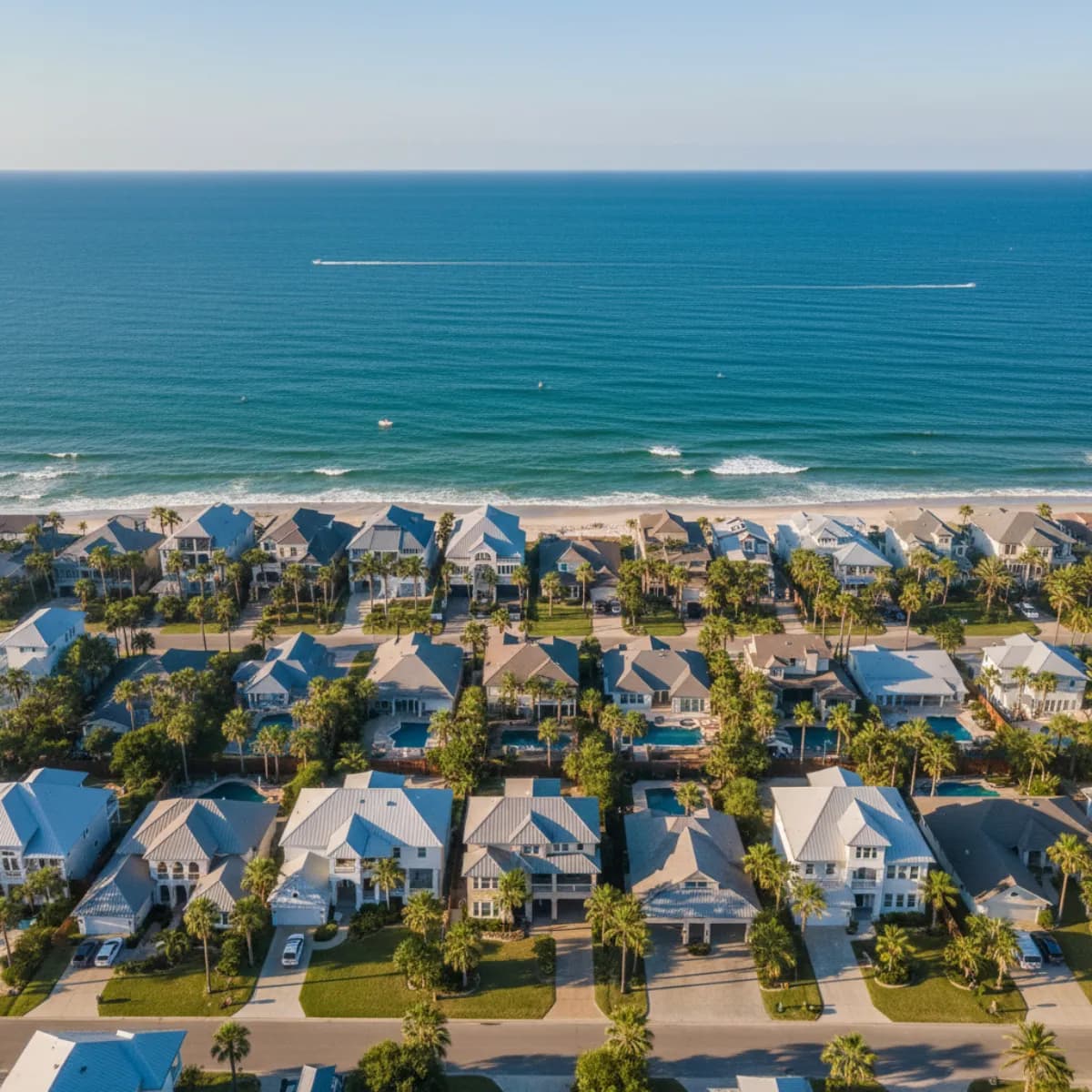
367 Miles of Coastline · Sabine Pass to South Padre Island · Hurricane Zone
Texas Gulf Coast Roofing Guide
The Texas Gulf Coast stretches 367 miles from the Louisiana border at Sabine Pass to the Mexico border at South Padre Island — every mile of it in the direct path of Atlantic hurricanes. Get instant quotes from pre-vetted contractors who specialize in WPI-8 certified, TWIA-compliant, hurricane-rated roofing for coastal Texas homes. No phone calls, no spam, no obligation.
Coastline Covered
Sabine Pass to South Padre
Wind-Rated Roofing
standing seam metal standard
Certified Installations
TDI windstorm compliant
TX Contractors
licensed, insured, reviewed
Roofing on the Texas Gulf Coast: Where Every Roof Is a Hurricane Shield
The Texas Gulf Coast is not like inland Texas. It is a 367-mile corridor of barrier islands, bay systems, estuaries, and coastal plains that stretches from the industrial shipyards of Sabine Pass through the resort beaches of Galveston and South Padre Island to the international border at Brownsville. This coastline absorbs the full force of Atlantic hurricanes, tropical storms, and the relentless salt-laden wind that blows off the Gulf of Mexico 365 days a year.
For homeowners, the Gulf Coast environment creates roofing demands that are fundamentally different from the rest of the state. Every roofing decision — material, fastener, underlayment, slope, ventilation — must be made with the understanding that a Category 3 or 4 hurricane could strike at any point during the six-month storm season. The Texas Department of Insurance (TDI) recognizes this reality by designating 14 Tier 1 coastal counties where all construction must meet windstorm-resistant standards and pass inspection for WPI-8 certification. Without that certificate, a coastal property cannot obtain windstorm insurance through the Texas Windstorm Insurance Association (TWIA), leaving homeowners financially exposed to the most common and devastating natural disaster in the region.
Beyond hurricanes, Gulf Coast roofs face a daily assault from salt air that corrodes metal components at three to four times the rate of inland installations, subtropical humidity that promotes algae growth, wood rot, and mold, extreme UV radiation that degrades asphalt shingles years faster than in cooler climates, and intense summer heat that drives attic temperatures above 150 degrees Fahrenheit.
RoofVista serves the entire Texas Gulf Coast with pre-vetted contractors who specialize in coastal roofing. Enter your address to get an instant satellite-based roof estimate, then compare standardized quotes from contractors who understand WPI-8 certification, TWIA compliance, salt-air material selection, and hurricane-rated installation methods.
Gulf Coast Roofing Challenges
Coastal Texas homeowners face a unique combination of threats that inland roofing systems simply cannot withstand. These are the six critical challenges that define every roofing decision on the Gulf Coast.
Hurricane Force Winds
The Texas Gulf Coast faces a statistically significant hurricane threat every 2-3 years. Category 3 and 4 storms generate sustained winds of 111-156 mph with gusts exceeding 180 mph. Standard asphalt shingles rated at 60-80 mph are peeled from the deck within minutes of hurricane-force onset. Standing seam metal, concrete tile, and high-wind architectural shingles rated at 110-180 mph are the baseline for responsible coastal construction.
- Minimum 110 mph wind-rated materials
- Ring-shank nails at 6-inch spacing
- Enhanced roof-to-wall connections
Salt Air Corrosion
Gulf of Mexico salt spray is carried inland by prevailing onshore winds, depositing a corrosive film on every exposed surface. Standard galvanized steel fasteners, flashing, and vents corrode at 3-4 times the rate of identical components installed just 50 miles inland. Properties within 1,500 feet of the shoreline experience the most severe exposure, but salt effects are measurable up to 5-10 miles from the coast depending on wind patterns.
- Stainless steel or marine-rated fasteners
- Aluminum or Galvalume panels
- Annual freshwater rinse recommended
Wind-Driven Rain Infiltration
During hurricanes and tropical storms, rain does not fall vertically — it is driven horizontally at 80-130 mph, infiltrating every exposed seam, nail hole, and overlap point. Standard shingle installations rely on gravity drainage and fail under wind-driven conditions. Gulf Coast roofing requires sealed roof deck underlayment, enhanced valley and flashing details, and roofing systems designed to resist horizontal water entry.
- Sealed roof deck underlayment (TDI required)
- Ice and water shield at all penetrations
- Concealed fastener systems preferred
Extreme UV and Heat
Gulf Coast Texas receives some of the highest UV radiation levels in the continental United States. Summers routinely exceed 95 degrees with heat indices above 110 degrees. Asphalt shingles that last 25-30 years in moderate climates degrade to 12-18 years on the coast due to accelerated granule loss, thermal cycling, and UV embrittlement. Attic temperatures above 150 degrees bake underlayment and stress structural components.
- Reflective metal or cool-roof rated materials
- Radiant barrier in attic space
- Balanced ridge and soffit ventilation
Humidity and Moisture Damage
Coastal humidity averages 75-85% year-round along the Texas Gulf Coast, creating persistent moisture conditions that promote algae and moss growth on shingle surfaces, wood rot in decking and fascia, mold development in attic spaces, and condensation damage to insulation. The Upper Coast (Beaumont-Port Arthur) is the wettest region, receiving 55 to 62 inches of rainfall annually — the highest totals in Texas.
- Algae-resistant shingle coatings
- Synthetic underlayment (not organic felt)
- Regular attic moisture inspections
Flood Zone and Elevation
Much of the Texas Gulf Coast sits within FEMA flood zones, and many homes are built on elevated pier-and-beam or piling foundations to comply with floodplain regulations. Elevated structures experience higher wind loads on the roof because there is less ground-level wind dampening. Gable end roofs on elevated homes are particularly vulnerable to hurricane wind pressure and should be replaced with hip roof configurations where structurally possible.
- Hurricane straps at all roof-wall connections
- Hip roof profiles outperform gable designs
- Impact-rated soffit panels required
Hurricane History: Why Storm-Rated Roofing Is Non-Negotiable
The Texas Gulf Coast has been struck by more billion-dollar hurricanes than any other stretch of U.S. coastline outside Florida. Understanding recent storm history is essential for making informed roofing decisions. Every hurricane listed below caused widespread roof failures that could have been mitigated with properly installed, wind-rated roofing materials.
Hurricane Nicholas
Category 1 — Matagorda PeninsulaMade landfall on the central Texas coast with 75 mph winds and heavy rainfall. Caused significant roof damage to homes in Bay City, Port Lavaca, and Matagorda County. Widespread power outages lasted days across the coastal bend.
Hurricane Hanna
Category 1 — South Padre Island / Kenedy CountyThe first hurricane of the 2020 Atlantic season struck the Lower Texas Coast with 90 mph winds. Caused roof and structural damage across Cameron and Willacy counties, including South Padre Island and the Rio Grande Valley.
Hurricane Harvey
Category 4 — Rockport / San Jose IslandThe most destructive hurricane in Texas history. Made landfall at Rockport with 130 mph sustained winds, destroying 35% of structures in Aransas County. Stalled over Southeast Texas, dumping over 60 inches of rain on Beaumont and Houston. Caused $125 billion in total damage. Fundamentally changed Gulf Coast building codes and roofing standards.
Hurricane Ike
Category 2 — Galveston IslandStruck Galveston with 110 mph winds and a catastrophic 15-20 foot storm surge. Destroyed or severely damaged thousands of roofs across Galveston, Chambers, and Jefferson counties. The Bolivar Peninsula was virtually leveled. Ike remains the third-costliest hurricane in U.S. history.
Hurricane Rita
Category 3 — Sabine Pass / Johnson BayouMade landfall near the Texas-Louisiana border with 120 mph sustained winds. Devastated Beaumont, Port Arthur, and Orange with widespread roof destruction, weeks-long power outages, and massive evacuations. The Golden Triangle region sustained billions in damage.
Hurricane Claudette
Category 1 — Port O'ConnorStruck the central Texas coast with 90 mph winds. Caused significant wind damage to roofing in Calhoun, Matagorda, and Victoria counties. Prompted upgrades to coastal building standards in the mid-coast region.
The Pattern Is Clear
Major hurricane landfalls on the Texas Gulf Coast are not rare events — they are a statistical certainty within any mortgage cycle. A 30-year mortgage holder on the Gulf Coast should expect to experience at least 10-15 direct or near-direct hurricane impacts during the life of their loan. Investing in hurricane-rated roofing is not an upgrade — it is baseline protection for the most common and destructive natural hazard in the region.
TWIA Windstorm Insurance and WPI-8 Certification
What Is TWIA?
The Texas Windstorm Insurance Association (TWIA) is a state-created insurer of last resort that provides wind and hail coverage in 14 Tier 1 coastal counties and portions of Harris County. Private insurers have largely withdrawn from writing windstorm policies in these areas due to the catastrophic loss potential from hurricanes. For most Gulf Coast homeowners, TWIA is the only source of windstorm insurance available.
TWIA coverage is separate from your standard homeowners insurance policy, which typically excludes wind and hail damage in designated coastal counties. This means Gulf Coast homeowners carry two insurance policies: a standard homeowners policy (fire, theft, liability) and a TWIA windstorm policy (wind and hail). Both are necessary for complete coverage.
What Is a WPI-8 Certificate?
A WPI-8 (Windstorm Protection Inspection) certificate is a Texas Department of Insurance document verifying that a building's construction meets the Texas Windstorm Resistant Standards. The certificate is issued by a TDI-approved inspector or licensed professional engineer after physically verifying that the roof materials, fastening methods, underlayment, and structural connections comply with windstorm-resistant construction requirements.
A valid WPI-8 is the gatekeeper for TWIA coverage. Without it, your property cannot obtain or renew windstorm insurance, which means you bear the full financial risk of hurricane damage out of pocket. A new WPI-8 is required after every roof replacement, and the inspection must be completed before the final payment to your roofing contractor.
WPI-8 Inspection Checklist: What Inspectors Verify
Roof Covering
- Materials meet TDI-approved wind resistance ratings
- Manufacturer's installation instructions followed
- Hip and ridge caps properly secured
- Starter strips at eaves and rakes installed
Fastening and Attachment
- Ring-shank nails at required spacing (typically 6 inches)
- Correct nail length for material and decking
- Sealed roof deck underlayment installed
- Drip edge properly installed and secured
Structural Connections
- Roof-to-wall connections (hurricane straps/clips)
- Decking attachment to rafters/trusses
- Gable end bracing (if applicable)
- Soffit panel attachment and venting
Openings and Penetrations
- Flashing at walls, chimneys, and vents
- Pipe boot sealing and collar attachment
- Ridge vent or turbine vent attachment
- Skylight curb and flashing integrity
TWIA Designated Coastal Counties (Tier 1)
Properties in these counties require WPI-8 certification for windstorm insurance eligibility:
Salt Air Corrosion: The Hidden Threat to Coastal Roofs
Salt air corrosion is the most underestimated roofing threat on the Texas Gulf Coast. Homeowners focus on hurricane resistance — and rightfully so — but it is the daily, invisible salt deposit from Gulf breezes that silently degrades fasteners, flashing, vents, gutters, and metal panels between storms. The result is a roof that looks intact from the ground but has compromised connections that fail catastrophically when hurricane winds arrive.
The corrosion mechanism is electrochemical. Salt deposits on metal surfaces create an electrolyte that accelerates oxidation and pitting. When dissimilar metals are in contact — for example, galvanized steel nails in an aluminum panel — the electrolytic salt solution creates a galvanic reaction that destroys the less noble metal at an accelerated rate. This is why Gulf Coast roofing requires strict attention to metal compatibility and marine-grade fastener selection.
Salt Exposure Zones: Distance from Shoreline
0-1,500 feet from shoreline
Maximum salt exposure. All fasteners and components must be stainless steel or aluminum. Galvalume steel panels are acceptable; standard galvanized is not. Annual freshwater rinsing of roof surfaces is recommended. Applies to barrier island properties on Galveston, Padre Island, South Padre Island, and beachfront communities.
1,500 feet - 3 miles from shoreline
Significant salt exposure. Stainless steel fasteners strongly recommended. Galvalume or aluminum panels preferred over standard galvanized. Biannual inspection of metal components for early corrosion. Applies to most of Galveston Island, Corpus Christi waterfront, and bay community neighborhoods.
3-10 miles from shoreline
Measurable salt exposure, particularly during onshore wind events. Hot-dipped galvanized or Galvalume fasteners are acceptable. Standard galvanized panels should be avoided in favor of Galvalume. Annual visual inspection of metal components is sufficient. Applies to mainland communities like Texas City, League City, and inland areas of Corpus Christi.
Material Selection for Gulf Coast Conditions
Choosing the right roofing material for the Texas Gulf Coast means balancing hurricane wind resistance, salt air corrosion tolerance, UV and heat performance, and budget. The following materials are proven performers in the coastal environment.
Standing Seam Metal (Galvalume)
Best for: Primary coastal residences
Standing Seam Metal (Aluminum)
Best for: Beachfront and barrier island homes
Architectural Shingles (Impact-Rated)
Best for: Budget-conscious coastal homeowners
Concrete Tile
Best for: Mediterranean and Spanish Colonial style homes
Stone-Coated Steel
Best for: Traditional look with metal performance
TPO/PVC Flat Roofing
Best for: Low-slope and flat-roof coastal structures
Standing Seam Metal: The Gulf Coast Roofing Standard
Standing seam metal roofing has become the de facto standard for serious Gulf Coast homeowners, and for good reason. No other roofing system matches its combination of hurricane wind resistance, salt air durability, energy efficiency, and longevity in the coastal environment.
The key engineering advantage of standing seam is its concealed fastener system. Unlike exposed-fastener corrugated panels or screw-down metal, standing seam panels attach to the roof deck via hidden clips that allow thermal expansion and contraction without stressing the panel or creating leak points. During a hurricane, this means there are no exposed screw heads for wind-driven rain to infiltrate and no rigid connections that can shear under dynamic wind loads.
The interlocking seam profile — typically 1 to 1.75 inches tall — creates a continuous vertical barrier that channels heavy rainfall efficiently while preventing horizontal wind-driven rain from penetrating beneath the panels. This is critical during Gulf Coast storms where rainfall rates can exceed 4 inches per hour with horizontal wind velocities of 80-130 mph.
140-180 mph Wind Rating
Exceeds Category 4 hurricane sustained wind speeds. The interlocking panel and concealed clip system resists uplift forces that strip conventional shingles within minutes of hurricane onset.
40-70 Year Lifespan
Outlasts 3-4 asphalt shingle roofs in the coastal environment. Kynar 500 and PVDF coatings resist UV fading and salt degradation for 30+ years with minimal maintenance.
20-25% Cooling Savings
Reflective metal surfaces bounce up to 70% of solar radiation, reducing attic temperatures by 20-40 degrees and cutting air conditioning costs throughout the brutal Gulf Coast summer.
Galvalume vs. Aluminum for the Gulf Coast
Galvalume steel (55% aluminum, 43.4% zinc, 1.6% silicon coating over steel) is the most popular standing seam material on the Gulf Coast. It offers excellent corrosion resistance at a lower cost than pure aluminum and is the standard choice for properties more than 1,500 feet from the shoreline.
Aluminum panels provide superior corrosion resistance for beachfront and barrier island properties where salt exposure is at maximum intensity. Aluminum costs 15-25% more than Galvalume but eliminates the risk of undercoating corrosion that can affect steel-based products in extreme marine environments. For properties within 1,500 feet of the Gulf of Mexico, aluminum is the recommended choice.
Insurance on the Gulf Coast: Windstorm Policies, TWIA, and Hurricane Deductibles
Insurance on the Texas Gulf Coast is unlike insurance anywhere else in the state. Standard homeowners policies in the 14 Tier 1 coastal counties exclude wind and hail damage, which is the single most likely cause of catastrophic loss. Homeowners must carry a separate windstorm policy — typically through TWIA — in addition to their standard coverage. This dual-policy structure creates a complex financial landscape that directly intersects with roofing decisions.
The quality and type of your roof determines your TWIA eligibility (through WPI-8 certification), your premium cost, and the deductible structure that will apply when a hurricane claim is filed.
TWIA Premium Factors
- Roof age: Newer roofs with current WPI-8 certification receive the lowest premiums. Roofs older than 10 years face surcharges.
- Roof material: Metal and tile roofs typically receive lower premiums than asphalt shingles due to superior wind resistance.
- Roof shape: Hip roofs receive premium credits over gable roofs because they perform better in hurricane winds.
- Distance from coast: Properties closer to the shoreline pay higher premiums reflecting greater storm surge and wind exposure.
Hurricane Deductible Structure
Gulf Coast windstorm policies use percentage-based deductibles rather than fixed dollar amounts, calculated as a percentage of your dwelling coverage:
- 1% deductible: On a $300,000 home, you pay the first $3,000 of any windstorm claim
- 2% deductible: On a $300,000 home, you pay the first $6,000 (lower premium, higher risk)
- 5% deductible: On a $300,000 home, you pay the first $15,000 (lowest premium, highest risk)
A hurricane-rated metal roof reduces claim frequency and severity, offsetting higher deductible risk over time.
The Insurance Math: Metal Roof vs. Asphalt Shingles on the Gulf Coast
For a $300,000 coastal home, upgrading from asphalt shingles to standing seam metal typically:
- - Reduces TWIA annual premium by $400-$1,200 (material and age credits)
- - Eliminates one re-roofing cycle over 40 years (saving $12,000-$18,000)
- - Reduces hurricane deductible exposure by limiting claim severity
- - Cuts energy costs by $600-$1,200 per year in coastal heat
- - Total 30-year financial advantage: $25,000-$60,000 over asphalt shingles
Elevated Home Roofing: Special Considerations for Coastal Construction
Elevated homes built on pilings, pier-and-beam foundations, or stilts are ubiquitous along the Texas Gulf Coast, particularly on barrier islands (Galveston, Padre Island, South Padre Island), beachfront communities (Port Aransas, Port Isabel, Surfside Beach), and flood zone properties throughout the coastal plain. These structures face roofing challenges that ground-level homes do not encounter.
The primary issue is wind load amplification. Wind speed increases with height above ground level because there are fewer obstructions to slow airflow. An elevated home with its roof peak at 35-40 feet experiences wind pressures 15-25% higher than an identical roof on a slab foundation at 15-20 feet. This means the roofing system, fastening schedule, and structural connections must all be engineered for higher wind loads than standard residential construction.
Roof Shape: Hip vs. Gable
Hip roofs — where all four sides slope inward toward the ridge — perform significantly better in hurricane winds than gable roofs. The angled walls of a hip roof deflect wind uplift forces, while the flat triangular gable end of a gable roof acts as a sail that catches wind and generates massive uplift pressure. On elevated Gulf Coast homes, hip roofs with moderate slopes (4:12 to 6:12) are strongly recommended.
TWIA offers premium credits for hip roof configurations.
Hurricane Straps and Structural Connections
Every roof-to-wall and wall-to-foundation connection on an elevated home must use hurricane straps or hurricane clips rated for the local design wind speed. These metal connectors create a continuous load path from the roof through the walls to the foundation, preventing the roof from lifting off during hurricane-force uplift. WPI-8 inspectors verify these connections during certification.
Simpson Strong-Tie and MiTek are the most common connector brands specified in Gulf Coast construction.
Soffit Protection
Elevated homes have exposed soffits (the underside of the roof overhang) that are vulnerable to wind-driven rain and debris impact from below. Standard vinyl soffits can be ripped off by hurricane winds, allowing rain to infiltrate the attic from beneath. Impact-rated soffit panels or perforated aluminum soffits with locking fasteners are required for Gulf Coast elevated construction.
Soffit failure is one of the leading causes of interior water damage during hurricanes.
Access and Logistics
Elevated homes require additional scaffolding, longer ladder setups, and specialized equipment for material delivery to the roof level. On barrier islands, material delivery may be limited by bridge weight restrictions or seasonal ferry schedules. These logistics add 10-20% to typical roofing costs compared to ground-level construction.
Plan material deliveries during low-traffic periods to avoid bridge and access delays.
Gulf Coast Sub-Regions: Communities We Serve
The Texas Gulf Coast encompasses three distinct sub-regions, each with unique roofing demands shaped by local climate, hurricane history, and building traditions. Select your region to see community-specific information.
Upper Coast
Sabine Pass to Freeport — Beaumont, Port Arthur, Galveston
The Upper Texas Coast is the wettest and most hurricane-battered section of the Gulf Coast. Beaumont receives over 60 inches of rainfall annually — more than any other major Texas city — and the region has been directly hit by Hurricanes Rita (2005), Ike (2008), Harvey (2017), and Laura (2020). Galveston Island sits at the epicenter of Gulf Coast hurricane vulnerability, with its barrier island geography exposing every structure to maximum wind, surge, and salt exposure. The Golden Triangle industrial corridor (Beaumont-Port Arthur-Orange) adds petrochemical fallout to the roofing challenge mix.
Galveston
Pop. 53,000Galveston County
- -Barrier island — maximum salt exposure
- -Historic Strand District requires architectural sensitivity
- -Hurricane Ike (2008) devastated the island
- -Elevated homes on stilts throughout East End and West End
- -TWIA Tier 1 mandatory
Beaumont
Pop. 115,000Jefferson County
- -Wettest city in Texas — 60+ inches annual rainfall
- -Golden Triangle industrial hub
- -Hurricane Harvey dumped 60+ inches of rain (2017)
- -Extreme humidity — year-round 80%+
- -TDI windstorm compliance mandatory
Port Arthur
Pop. 56,000Jefferson County
- -Petrochemical refinery corridor
- -Sabine-Neches Waterway proximity
- -Hurricane Rita devastation (2005)
- -Heavy industrial fallout accelerates shingle degradation
- -Flood zone properties require elevated construction
Texas City
Pop. 53,000Galveston County
- -Mainland coast — strong salt air exposure
- -Galveston Bay shoreline properties
- -Industrial refinery adjacent neighborhoods
- -WPI-8 windstorm certification required
- -High humidity and rainfall combo
League City
Pop. 115,000Galveston County
- -Fastest-growing coastal community
- -NASA/Johnson Space Center corridor
- -Mix of new construction and established neighborhoods
- -Clear Lake waterfront properties
- -TWIA windstorm designated area
Central Coast
Matagorda Bay to Baffin Bay — Corpus Christi, Victoria, Rockport
The Central Texas Coast bore the catastrophic brunt of Hurricane Harvey in 2017, with the Category 4 storm making direct landfall at Rockport with 130 mph sustained winds. Aransas County lost 35% of its structures. Corpus Christi, the largest city on the Texas coast, sits on the western shore of Corpus Christi Bay with Mustang Island and North Padre Island providing a partial barrier from direct Gulf wave action but offering no protection from hurricane winds. The central coast is also where tile roofing begins to appear as an aesthetic preference, influenced by the Spanish Colonial and Mediterranean architecture common in the region.
Corpus Christi
Pop. 320,000Nueces County
- -Largest city on the Texas coast
- -Hurricane Harvey direct landfall nearby (2017)
- -Mustang Island and Padre Island barrier beaches
- -Naval Air Station Corpus Christi proximity
- -Extreme salt air and UV exposure year-round
Victoria
Pop. 67,000Victoria County
- -30 miles inland — reduced salt but full hurricane exposure
- -Hurricane Harvey caused severe roof damage (2017)
- -Guadalupe River flood zone considerations
- -Mix of historic and modern construction
- -Crossroads region roofing hub
Rockport
Pop. 12,000Aransas County
- -Hurricane Harvey Category 4 direct landfall (2017)
- -130 mph sustained winds destroyed 35% of structures
- -Rebuilt with enhanced windstorm construction standards
- -Artist colony and fishing community
- -Maximum TWIA windstorm zone
Port Aransas
Pop. 4,100Nueces County
- -Barrier island community — extreme coastal exposure
- -Hurricane Harvey devastated structures (2017)
- -Nearly all homes on elevated pilings
- -Tourism-dependent economy — quick repairs critical
- -Stainless steel fasteners mandatory
Bay City
Pop. 18,000Matagorda County
- -Colorado River and Matagorda Bay proximity
- -Rice farming community — flat terrain, high wind exposure
- -TWIA coastal designation
- -Hurricane Nicholas landfall area (2021)
- -Affordable housing stock — cost-effective upgrades valued
Port Lavaca
Pop. 12,000Calhoun County
- -Lavaca Bay waterfront exposure
- -Multiple hurricane direct hits historically
- -Petrochemical industry presence
- -TWIA Tier 1 county
- -Commercial fishing fleet — marine-grade materials required
Lower Coast
Baffin Bay to South Padre Island — Brownsville, McAllen, Harlingen
The Lower Texas Coast includes the Rio Grande Valley and the southernmost barrier islands of the state. This region combines Gulf Coast hurricane exposure with the extreme heat of subtropical South Texas, where summer temperatures regularly exceed 100 degrees Fahrenheit. Brownsville, the southernmost city in Texas, sits at the same latitude as Cairo, Egypt. The Rio Grande Valley is one of the fastest-growing metropolitan areas in the United States, driving massive new construction that must comply with windstorm-resistant standards. Tile roofing and metal roofing dominate the Lower Coast aesthetic, reflecting both functional performance and cultural architectural preferences.
Brownsville
Pop. 187,000Cameron County
- -Southernmost city in Texas
- -Rio Grande Valley — extreme heat and humidity
- -SpaceX Starbase nearby (Boca Chica)
- -Hurricane-prone barrier island system
- -Tile and metal roofing dominate aesthetics
South Padre Island
Pop. 3,400Cameron County
- -Barrier island — maximum coastal exposure
- -Tourism-dependent — rapid repairs essential
- -All structures subject to extreme wind loads
- -Elevated construction standard throughout
- -Salt air corrosion at maximum intensity
McAllen
Pop. 143,000Hidalgo County
- -Rio Grande Valley metro hub
- -60 miles inland — reduced salt but hurricane wind exposure
- -Extreme summer heat — 100+ degrees F regularly
- -Rapid population growth driving new construction
- -Tile roofing popular for regional aesthetics
Harlingen
Pop. 65,000Cameron County
- -Central Rio Grande Valley location
- -Hurricane Hanna damage (2020)
- -Valley International Airport corridor
- -Mix of older and newer housing stock
- -TWIA windstorm designated area
Port Isabel
Pop. 5,500Cameron County
- -Gateway to South Padre Island
- -Laguna Madre waterfront properties
- -Historic lighthouse district
- -Elevated homes throughout
- -Maximum salt air and hurricane exposure
Gulf Coast Roofing Costs: Current Texas Pricing
Roofing costs on the Texas Gulf Coast run 10-20% higher than inland Texas markets due to several coastal-specific factors: WPI-8 inspection and certification fees ($150-$500), TDI windstorm-compliant materials and fasteners, salt-air-resistant components (stainless steel, aluminum, Galvalume), sealed roof deck underlayment requirements, enhanced labor for elevated home construction, and logistics costs for barrier island deliveries.
The pricing table below reflects current Texas material costs pulled from our contractor database. Actual project costs will vary based on your specific location, roof size, complexity, material selection, and the coastal premiums described above. Enter your address above for an instant estimate tailored to your property.
Coastal Price Premium Breakdown
Material Premiums
- - Stainless steel fasteners: +$0.25-$0.50/sqft
- - Aluminum vs. steel panels: +$2-$4/sqft
- - Sealed deck underlayment: +$0.50-$1.00/sqft
- - Marine-grade flashing: +$0.15-$0.30/sqft
Labor and Certification Premiums
- - WPI-8 inspection fee: $150-$500
- - Elevated home scaffolding: +10-20%
- - Barrier island delivery surcharge: $500-$1,500
- - Hurricane strap installation: $300-$800
Texas Gulf Coast Roofing FAQ
Answers to the most common questions about roofing on the Texas Gulf Coast, from WPI-8 certification to hurricane-rated material selection.
How much does a hurricane-rated roof cost on the Texas Gulf Coast?
Hurricane-rated roofing on the Gulf Coast costs $9,000 to $25,000 for architectural shingles with 110-130 mph wind ratings, and $16,000 to $35,000 for standing seam metal with 140-180 mph ratings. Coastal pricing runs 10-20% higher than inland Texas due to WPI-8 certification, corrosion-proof fasteners, sealed deck underlayment, and salt-resistant materials. Barrier island properties pay additional premiums for access logistics.
What is TWIA windstorm insurance and why does it affect my roof?
TWIA (Texas Windstorm Insurance Association) is the insurer of last resort for wind and hail coverage in 14 Tier 1 coastal counties. TWIA requires a valid WPI-8 certificate proving your roof meets windstorm-resistant construction standards. Without a current WPI-8, your property cannot obtain or renew windstorm coverage, leaving it uninsurable against hurricane damage.
What is a WPI-8 certificate and do I need one?
A WPI-8 is a Texas Department of Insurance certificate verifying your building meets windstorm-resistant standards. Required in all TWIA-designated coastal counties including Galveston, Nueces, Cameron, Jefferson, Aransas, and others. A licensed TDI inspector must verify materials, fasteners, underlayment, and installation methods. A new WPI-8 is required after every roof replacement.
How does salt air damage roofs on the Texas Gulf Coast?
Salt-laden air corrodes metal fasteners, flashing, vents, and gutters at 3-4 times the rate of inland locations. Standard galvanized fasteners can fail within 5-7 years near the waterfront. Gulf Coast roofing requires stainless steel or marine-rated fasteners, aluminum or Galvalume panels, and regular freshwater rinsing. Properties within 1,500 feet of the shore need all-stainless or aluminum construction.
Why is standing seam metal the best roof for the Gulf Coast?
Standing seam metal roofing is tested to 140-180 mph wind uplift, exceeding Category 4 hurricane speeds. Concealed fasteners eliminate leak points from wind-driven rain. Continuous seams channel heavy rainfall without ponding. The smooth surface resists salt corrosion and algae. Lifespan of 40-70 years compared to 12-18 years for asphalt shingles in the coastal environment.
What roofing materials should I avoid on the Gulf Coast?
Avoid three-tab shingles (fail in 10-15 years from wind and UV), standard galvanized steel (corrodes in salt air), wood shake (moisture rot and mold), and organic felt underlayment (degrades in 2-3 years in coastal humidity). Any material rated below 110 mph wind resistance is inadequate for Gulf Coast installation.
How often do hurricanes hit the Texas Gulf Coast?
Statistically, the Texas Gulf Coast faces a direct hurricane hit every 2-3 years. Recent major landfalls include Harvey (2017, Category 4, Rockport), Hanna (2020, South Padre), and Nicholas (2021, Matagorda). Hurricane season is June 1 through November 30, peaking in August and September. Pre-season roof inspections are critical for every coastal homeowner.
Do elevated homes need special roofing on the Texas coast?
Yes. Elevated homes on pilings face higher wind loads due to reduced ground-level wind resistance. They require enhanced fastening schedules, hurricane straps at every roof-to-wall connection, hip roof profiles (which outperform gables in hurricanes), and impact-rated soffit panels to prevent wind-driven rain intrusion from below the eaves.
Explore Texas Roofing Resources
Texas Roofing Hub
Statewide roofing guide covering all regions, materials, and Texas-specific building codes.
View guideCorpus Christi
Instant quotes for the Sparkling City by the Sea. Salt-air resistant materials and WPI-8 certified installations.
Get quotesBeaumont
Roofing quotes for the wettest city in Texas. Hurricane-rated specialists for the Golden Triangle.
Get quotesBrownsville
Southernmost Texas roofing. Extreme heat, hurricane winds, and Rio Grande Valley specialists.
Get quotesHouston Metro
Roofing quotes for the greater Houston area. Storm damage repair and hurricane-rated installations.
Get quotesMcAllen
Rio Grande Valley roofing hub. Heat-resistant materials and windstorm-compliant contractors.
Get quotesTexas Metal Roofing
Complete guide to metal roofing costs, types, and performance across all Texas climate zones.
View guideStorm Damage Repair
Emergency roofing services for hurricane and storm damage across Texas. Insurance claim assistance included.
Get helpRoof Inspections
Pre-hurricane season inspections and WPI-8 certification inspections from qualified Texas contractors.
ScheduleGet Your Gulf Coast Roof Quote in 60 Seconds
Enter your address to get an instant satellite-based roof estimate. Compare standardized quotes from pre-vetted Texas contractors who specialize in WPI-8 certified, TWIA-compliant, hurricane-rated roofing. No phone calls, no spam, no obligation — your information stays private until you choose a contractor.
Compare 1256+ vetted roofers near Gulf Coast, Texas
See independent reviews, BBB ratings, and Google data — then compare quotes side-by-side from pre-vetted local contractors.