Texas Storm Damage Roof Repair
Get instant storm damage repair quotes from pre-vetted Texas contractors. Hurricanes, hail, tornadoes, and straight-line winds — compare prices and navigate insurance claims with confidence across the Lone Star State.
Texas faces more storm threats than virtually any other state. Enter your address below for an instant AI-powered estimate and connect with vetted local contractors who specialize in storm damage repair in your area.
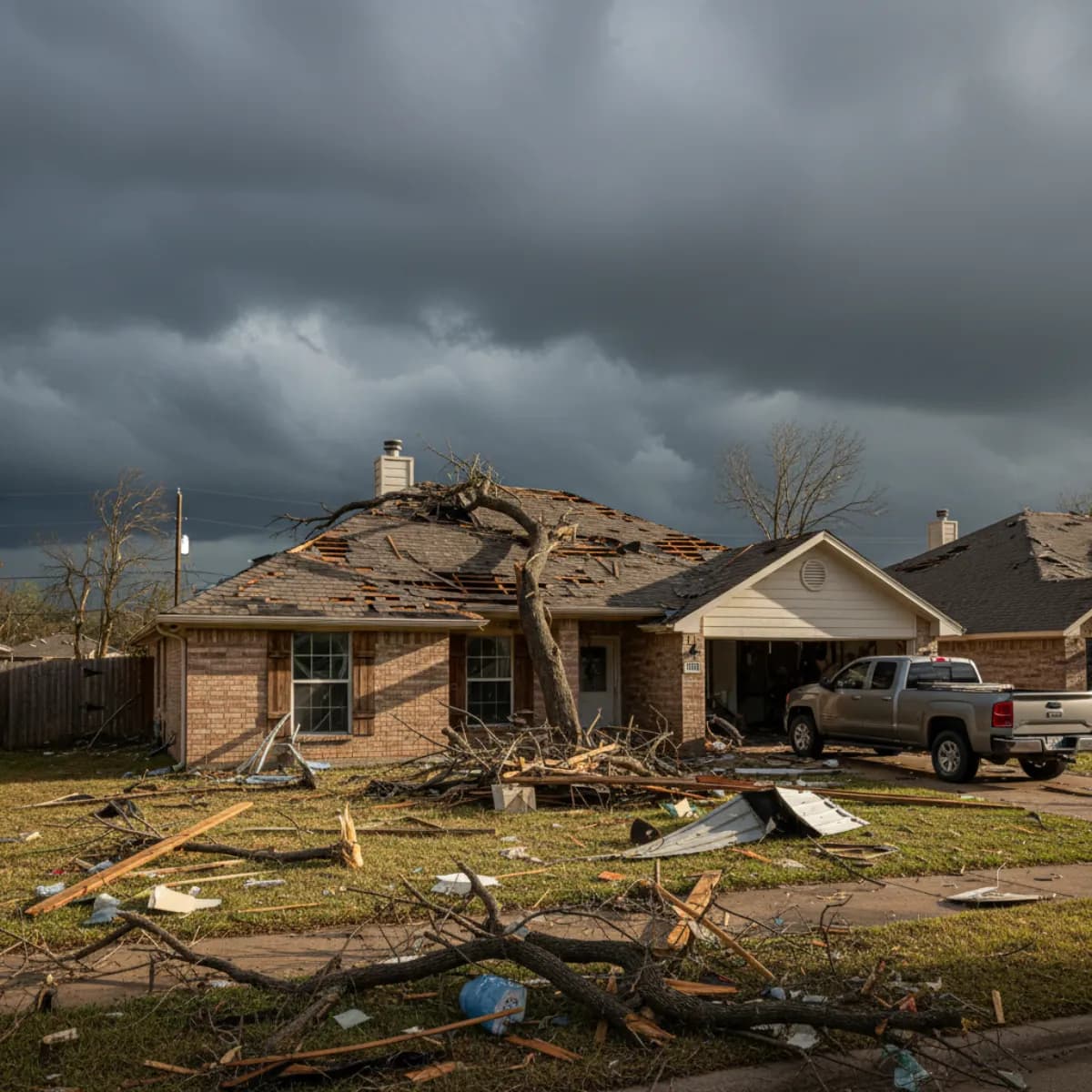
Why Texas Faces More Storm Damage Than Almost Any State
Texas's massive geographic footprint, Gulf Coast exposure, and position at the collision point of multiple air masses create a year-round storm threat that no other state matches in variety and intensity. From Category 4 hurricanes on the coast to EF4 tornadoes in North Texas to billion-dollar hailstorms across Hail Alley, Texas homeowners face the full spectrum of weather-related roof damage.
Hurricanes & Tropical Storms
The Texas Gulf Coast stretches 367 miles from Brownsville to Beaumont, placing millions of homes directly in the path of Atlantic hurricanes and tropical storms. Hurricane Harvey in 2017 caused over $125 billion in damage, making it one of the costliest natural disasters in United States history. Harvey dropped over 60 inches of rain on parts of the Houston metro area over four days, flooding hundreds of thousands of homes and causing catastrophic roof failures from sustained winds exceeding 130 mph at landfall near Rockport. Hurricane Ike in 2008 struck Galveston with a 15-foot storm surge that devastated Bolivar Peninsula and caused $30 billion in damage across the Houston-Galveston corridor. Even tropical storms that do not reach hurricane intensity routinely deliver 50 to 70 mph winds and torrential rainfall of 10 to 20 inches along the Texas coast. The warm waters of the Gulf of Mexico act as a supercharger for storms making landfall in Texas, often intensifying rapidly in the 24 to 48 hours before they hit shore.
Common Damage Types
- Complete roof removal from sustained winds exceeding 100 mph
- Massive debris impact from airborne materials and structures
- Water infiltration through compromised roofing from wind-driven rain
- Storm surge damage to coastal roof structures and supports
- Fallen trees crushing through roof decking and framing
- Extended saturation causing structural wood rot and mold growth
Tornadoes
Texas leads the nation in total tornado count, averaging 137 tornadoes per year with some years exceeding 200. The state sits at the southern end of Tornado Alley where warm, moist air from the Gulf of Mexico collides with cold, dry air sweeping down from the Rockies, creating the explosive supercell thunderstorms that spawn the most violent tornadoes on Earth. The Dallas-Fort Worth metroplex, with its 8 million residents, lies squarely in the highest-risk corridor. In December 2015, an EF4 tornado with 180 mph winds tore through the city of Garland and surrounding communities in DFW, killing 11 people and destroying over 1,000 structures. The October 2019 EF3 tornado struck North Dallas, ripping through densely populated neighborhoods and causing hundreds of millions in damage. Tornadoes in Texas can occur any month of the year, though the primary season runs March through June. The Panhandle and North Texas experience the most frequent and most powerful tornadoes, but central Texas along the I-35 corridor from Waco through Austin to San Antonio also sees significant tornado activity.
Common Damage Types
- Total roof destruction from direct tornado strike
- Partial roof removal from peripheral tornado winds
- Massive debris penetration through roofing and decking
- Structural failure of trusses and rafters from wind pressure
- Flying debris embedding in roofing materials at high velocity
- Complete home destruction in the direct path of strong tornadoes
Hailstorms
Texas consistently ranks as the most hail-damaged state in America, with annual hail insurance claims regularly exceeding $2 billion. The state sits in what meteorologists call Hail Alley, where the collision of Gulf moisture and cold fronts produces supercell thunderstorms capable of generating hailstones the size of softballs. The DFW metroplex alone accounts for more hail damage claims than many entire states. In June 2012, a single hailstorm in the DFW area caused over $900 million in insured losses. The April 2016 hailstorm that struck San Antonio and parts of Central Texas produced $1.36 billion in insured losses, making it the costliest hailstorm in Texas history at that time. Hailstones in Texas regularly reach golf ball size with 1.75-inch diameter and can exceed baseball size at 2.75 inches, generating impact forces capable of punching through asphalt shingles, cracking clay tiles, and denting standing seam metal panels. The Panhandle region, including Amarillo and Lubbock, experiences some of the largest hailstones on average in the entire country.
Common Damage Types
- Granule loss and bruising on asphalt shingles across entire roof
- Cracked, chipped, or shattered clay and concrete tiles
- Denting and dimpling on metal roofing and metal components
- Skylight and roof vent destruction from direct hail impact
- Gutter damage and crushing from accumulated hail and impacts
- Compromised roof underlayment from hail penetrating shingles
Straight-Line Winds & Derechos
Straight-line winds from severe thunderstorms are responsible for more cumulative roof damage across Texas than tornadoes because they affect vastly larger geographic areas. While tornadoes concentrate their destruction in narrow paths, straight-line winds associated with squall lines and derechos can deliver sustained gusts of 60 to 100 mph across corridors stretching hundreds of miles. A derecho is a widespread, long-lived windstorm produced by a fast-moving band of severe thunderstorms. In May 2022, a derecho swept across North and Central Texas with measured wind gusts exceeding 100 mph, downing thousands of trees, destroying structures, and leaving over 500,000 customers without power. These events are particularly dangerous because they strike with less warning than hurricanes and affect areas that may not perceive themselves as being in a high wind-risk zone. Straight-line winds are especially devastating to aging roofs where shingle adhesion has weakened from years of Texas heat exposure, lifting and peeling shingles that a newer roof would retain.
Common Damage Types
- Progressive shingle blow-off starting at edges and ridge lines
- Fallen trees and large branches puncturing roof structures
- Flashing separation at chimneys, walls, and roof penetrations
- Ridge vent and hip cap failure from sustained wind pressure
- Gutter detachment and fascia damage from wind loading
- Flying debris impact from unsecured outdoor items and structures
Severe Thunderstorms
Texas averages over 100 days per year with thunderstorm activity somewhere in the state, more than nearly any other state in the nation. Severe thunderstorms, defined as those producing winds exceeding 58 mph, hail of 1 inch or larger, or tornadoes, account for billions of dollars in annual roof damage. Even thunderstorms that do not meet the severe criteria can produce damaging wind gusts of 40 to 55 mph, heavy rain at rates exceeding 3 inches per hour that overwhelm roof drainage systems, frequent lightning strikes that can ignite roofing materials or damage electrical systems, and sudden temperature drops that stress roofing materials through rapid thermal contraction. The combination of intense rain and wind during Texas thunderstorms is particularly damaging because wind-driven rain can penetrate roofing systems that are otherwise watertight under normal rainfall conditions. Water forced horizontally under shingles, around flashing, and through roof penetrations causes interior damage that may not become apparent for days or weeks after the storm.
Common Damage Types
- Wind damage to shingles, flashing, and roof accessories
- Lightning strike damage to roof structures and wiring
- Torrential rain overwhelming drainage and causing interior leaks
- Small hail causing cumulative granule loss on shingles
- Rapid thermal stress cracking vulnerable roofing materials
- Water pooling on flat or low-slope commercial roofs
Emergency Tarping & Temporary Storm Repairs
When storm damage exposes your home to the elements, every hour counts. Temporary repairs prevent secondary water damage that can multiply repair costs by 3 to 5 times. Texas law does not require permits for emergency temporary repairs, and your insurance policy covers these as loss mitigation expenses.
Immediate Steps After Storm Damage
- 1
Stay off the roof
Storm-damaged roofs are structurally unpredictable. Wet shingles, broken decking, and displaced materials create fall hazards that injure hundreds of Texas homeowners every year. Never walk on a storm-damaged roof.
- 2
Mitigate interior water damage
Place buckets under active leaks, move furniture and electronics away from water, and use towels or a wet vacuum to manage water on floors. Document everything with photos before and during cleanup.
- 3
Document damage from the ground
Take extensive photos and video of all visible damage including missing shingles, dented gutters, debris, and any interior water intrusion. This documentation is critical for your insurance claim.
- 4
Request emergency tarping
Get an instant estimate through RoofVista and compare emergency repair quotes from pre-vetted Texas contractors. Professional tarping prevents further water intrusion until permanent repairs can be completed.
- 5
File your insurance claim
Contact your insurer within 24 to 48 hours. Do not wait for the adjuster before authorizing emergency mitigation — your policy covers these measures. Keep all receipts.
Emergency Repair Cost Ranges
Emergency Tarping
Depends on roof size and number of tarps required
Emergency Leak Stop
Temporary sealant application and interior protection
Board-Up Service
Securing openings from debris impact or wind damage
Emergency Tree Removal from Roof
Varies significantly with tree size and structural damage
Temporary Flashing Repair
Emergency seal of separated flashing at penetrations
After-Hours / Weekend Premium
Applied to standard rates for emergency off-hours response
Insurance note: Emergency mitigation costs are covered by your homeowners insurance policy as loss prevention expenses. Keep all receipts and document conditions before and after emergency repairs. These costs are typically separate from your deductible.
Texas Storm Damage Insurance Claims Process
Texas has strong homeowner protections under the Texas Department of Insurance (TDI) and the Prompt Payment of Claims Act (Insurance Code Chapter 542). Understanding your rights and the proper claims process protects you from both insurer underpayment and contractor fraud.
Document the Damage Immediately
Take extensive photos and video from the ground of all visible damage including missing shingles, dented gutters, broken tiles, and debris impact marks. Capture wide-angle shots showing the overall roof condition and close-ups of specific damage. Photograph surrounding property damage as well since it establishes the storm event. Record the date and time of the storm and save any severe weather alerts you received. This documentation is the foundation of your entire claim.
File Your Claim Within 24 to 48 Hours
Contact your insurance company by phone immediately, then follow up with a written notice including your photo documentation. Under the Texas Prompt Payment of Claims Act (Insurance Code Chapter 542), your insurer must acknowledge your claim within 15 calendar days of receiving it. Have your policy number, the date of the storm event, and a preliminary description of damage ready when you call. Request a claim number and the name of the assigned adjuster.
Get an Independent Inspection
Before the insurance adjuster visits, get an instant estimate through RoofVista and compare quotes from pre-vetted Texas contractors. Having an independent professional assessment gives you leverage during negotiations and ensures you know the true scope of damage. A qualified contractor can identify damage the insurance adjuster might miss, particularly on the underside of the roof decking, in the attic space, and on components that are not visible from the ground.
Meet the Insurance Adjuster On-Site
Be present when the insurance adjuster inspects your roof or have your contractor representative present on your behalf. The adjuster will use Xactimate software to generate a line-item repair estimate. Request a copy of this report. If the adjuster finds less damage than your independent inspection identified, politely point out the discrepancies with your documentation. Under Texas Insurance Code Chapter 541, it is an unfair claim practice for an insurer to deny a claim without conducting a reasonable investigation.
Review the Settlement Offer
Your insurer must accept or reject the claim within 15 business days of receiving all requested documentation, and if accepted, must issue payment within 5 business days. Review the Xactimate report line by line. If the settlement does not cover the full scope of repairs, you have the right to file a supplement with additional documentation, invoke the appraisal clause in your policy for independent damage evaluation, hire a public adjuster who works on a percentage basis, or file a complaint with the Texas Department of Insurance. Under Chapter 542, insurers who unreasonably delay or underpay claims owe 18 percent annual interest on the amount owed.
Your Rights Under Texas Law
Chapter 542: Prompt Payment of Claims Act
- Insurer must acknowledge your claim within 15 calendar days
- Investigation must begin within 15 days of notice
- Accept or reject within 15 business days of receiving all documentation
- Payment within 5 business days of acceptance
- 18% annual interest penalty for unreasonable delays
Chapter 541: Unfair Claim Settlement Practices
- Insurers cannot deny claims without reasonable investigation
- Cannot misrepresent policy provisions to deny coverage
- Cannot fail to attempt fair and equitable settlement
- Appraisal clause gives you the right to independent damage evaluation
- File complaints with TDI at 1-800-252-3439
Important:Texas wind and hail deductibles are typically calculated as a percentage of your home's insured value (usually 1% to 2%), not a flat dollar amount. On a $400,000 home, that means a $4,000 to $8,000 deductible for wind and hail claims. Review your policy declarations page to know your exact deductible before filing a claim.
Texas Is the #1 State for Roofing Fraud After Storms
Texas consistently leads the nation in storm chaser roofing scams. After every major hailstorm, tornado, or hurricane, out-of-state crews flood affected neighborhoods targeting homeowners who are overwhelmed by damage and desperate for help. The Texas Attorney General receives thousands of roofing fraud complaints annually.
Door-to-door solicitation immediately after a storm
Legitimate contractors do not roam neighborhoods hours after storms knocking on doors. They are busy responding to existing customers and emergency calls. Storm chasers arrive in convoys from out of state, sometimes traveling thousands of miles to exploit disaster areas.
Offering to waive or pay your insurance deductible
This is explicitly illegal under Texas Insurance Code Section 27.02. Any contractor offering to absorb, waive, or rebate your deductible is committing insurance fraud and inviting you to participate. This is the single most common storm chaser tactic in Texas.
Pressure to sign a contract before the adjuster visits
Storm chasers want you locked into a contract before you understand the true scope of damage or receive your insurance settlement. They often use scare tactics, claiming damage will worsen immediately if not repaired, to create urgency that overrides rational decision-making.
No permanent Texas business address
Check the address on any business card or contract. Storm chasers frequently list PO boxes, UPS Store mailboxes, or addresses from other states. A legitimate Texas roofing contractor has a physical business location that has been established for at least two years.
Requesting large upfront deposits exceeding one-third
Reputable Texas contractors may request a deposit to order materials, but it should never exceed one-third of the total project cost. Storm chasers frequently demand 50 percent or more upfront and then deliver substandard work or disappear entirely with the money.
Cash-only payment demands
Requesting cash-only payment avoids creating a paper trail and makes it nearly impossible to dispute poor workmanship or recover funds if the contractor abandons the project. Legitimate contractors accept checks, credit cards, and insurance payment assignments.
Unusually low bids that seem too good to be true
Storm chasers often offer artificially low initial bids to win the contract, then cut corners on materials, skip steps like removing old layers, use unlicensed labor, and present change orders after the project begins. The final cost often exceeds what a reputable contractor would have charged.
No proof of insurance or refusing to provide references
Every legitimate contractor should be able to immediately provide certificates of general liability and workers compensation insurance, along with a list of recent Texas references. Storm chasers either have no insurance, carry minimal coverage from another state, or forge certificates.
How RoofVista Protects Texas Homeowners
Pre-Vetted Contractors Only
Every contractor on the RoofVista marketplace undergoes verification of insurance, licensing, permanent Texas business presence, and a minimum two-year track record. Storm chasers cannot pass this vetting process.
Standardized Written Bids
All quotes through RoofVista use standardized scope-of-work templates that detail every material, labor item, and warranty term. This eliminates the vague verbal estimates that storm chasers use to obscure cut corners and hidden charges.
No Pressure, No Solicitation
RoofVista never sends contractors to knock on your door. You initiate the process by entering your address, and you compare quotes at your own pace. There is never pressure to sign before you are ready or before your insurance adjuster has visited.
Under the Texas DTPA, homeowners have a 3-day right to cancel any contract signed during a home solicitation. If a storm chaser pressured you into signing, exercise this right immediately.
Report suspected roofing fraud to the Texas Attorney General at 1-800-621-0508 or the Texas Department of Insurance at 1-800-252-3439.
Identifying Storm Damage by Roofing Material
Different roofing materials show storm damage in different ways. Understanding what to look for on your specific roof type helps you document damage accurately for insurance claims and communicate effectively with contractors.
Asphalt Shingles
Most common in Texas (75%+ of residential roofs)
Wind Damage Signs
- Shingle tab lifting and creasing from wind getting under the leading edge
- Complete shingle blow-off starting at eaves and ridgelines
- Adhesive strip failure on shingles older than 8 to 10 years
- Ridge cap shingle loss from sustained uplift forces
Hail Damage Signs
- Random-pattern circular granule loss exposing the asphalt mat
- Bruising that feels soft or spongy when pressed with a finger
- Cracking and fracturing of the fiberglass mat on direct impact
- Accelerated aging from cumulative granule loss over multiple events
Water Damage Signs
- Curling and buckling from moisture trapped beneath the shingle
- Algae and moss growth accelerating deterioration in humid regions
- Underlayment failure after prolonged water exposure
- Nail pop leaks from thermal cycling and sheathing movement
Metal Roofing
Growing rapidly in Texas (15%+ of new installations)
Wind Damage Signs
- Panel lifting and peeling at fastener points on exposed-fastener systems
- Standing seam panel disengagement from wind uplift forces
- Flashing separation at transitions and penetrations
- Debris impact denting and panel puncture
Hail Damage Signs
- Cosmetic denting and dimpling on steel and aluminum panels
- Functional damage to panel seams that compromise weather resistance
- Damage to painted finish coatings leading to premature corrosion
- Destruction of metal trim, ridge caps, and valley components
Water Damage Signs
- Rust and corrosion at cut edges and fastener penetrations
- Condensation issues on underside of panels in humid Gulf Coast areas
- Sealant failure at panel overlaps and penetrations
- Screw back-out creating leak points at penetrations
Clay & Concrete Tile
Common in South and Central Texas (Mediterranean styles)
Wind Damage Signs
- Tile displacement and sliding from wind uplift under tile edges
- Broken tiles from wind-blown debris impact
- Ridge tile loss from sustained wind on exposed ridgelines
- Underlayment exposure when tiles are displaced or missing
Hail Damage Signs
- Cracked, chipped, or completely shattered tiles from direct impact
- Hairline fractures not visible from the ground that leak progressively
- Broken tile corners and edges that allow water entry
- Cumulative weakening of tile integrity from repeated hail events
Water Damage Signs
- Water wicking through cracks into underlayment and decking
- Efflorescence and salt deposits indicating moisture migration
- Underlayment deterioration beneath tiles from trapped moisture
- Moss and biological growth in mortar joints and tile overlap areas
When to Repair vs. Full Replacement After Storm Damage
Not every storm damage event requires a full roof replacement. The decision depends on the extent and type of damage, your roof's age and condition, and what your insurance adjuster determines. Here is a practical guide to the repair-versus-replace decision for Texas homeowners.
Localized Shingle Loss
RepairLess than 25% of roof surface affected
When storm damage is confined to one slope or a small area, individual shingle replacement or section repair is appropriate. This is common after localized wind events or small hail cells. The repair must use matching or compatible shingles and should include inspection of the underlayment in the damaged area. Matching existing shingles can be challenging on roofs older than 5 years due to color fading and product discontinuation.
Widespread Hail Damage
ReplaceDamage found on 8+ of 10 test squares
When a hail damage inspection using the industry-standard 10-square test finds functional damage on 8 or more test areas, the entire roof needs replacement. Patching widespread hail damage is ineffective because the remaining undamaged areas have also sustained sub-threshold impacts that will cause premature failure. Insurance adjusters in Texas generally approve full replacement when this threshold is met.
Flashing Damage Only
RepairFlashing separation without shingle or decking damage
Storm winds frequently cause flashing separation at chimneys, skylights, walls, and pipe penetrations without damaging the surrounding roofing material. Flashing repairs are relatively straightforward and cost-effective when the underlying roofing system is intact. However, if the flashing failure caused water infiltration before being discovered, the decking and underlayment beneath must also be inspected for rot and damage.
Structural Decking Damage
ReplaceAny compromised decking from water or impact
When storm damage penetrates through the roofing material and underlayment to damage the structural roof decking, full replacement is almost always necessary. Compromised decking cannot properly hold nails, distributes weight unevenly, and will continue to deteriorate even after surface repairs. Texas building codes require that damaged decking sections be replaced with matching or better materials before new roofing is installed.
Roof Age Over 12 Years with Moderate Damage
ReplacePre-existing wear combined with storm damage
Texas heat dramatically accelerates asphalt shingle aging, and a 12-year-old roof in Texas has experienced thermal stress equivalent to a 15 to 18-year-old roof in a northern state. When storm damage occurs on a roof already showing signs of age, including widespread granule loss, curling edges, and brittle shingles, repair is a temporary measure at best. The undamaged areas are likely within 2 to 4 years of failure regardless. If insurance approves replacement, accepting a repair means forfeiting the remaining claim value.
Minor Cosmetic Damage
RepairSurface-level marks without functional compromise
Light hail, small debris, and minor wind events can leave cosmetic marks on roofing materials without compromising their functional ability to shed water. Dents on metal roofing that do not affect the seam or coating, surface scuffs on shingles without granule loss, and minor edge chips on tiles that do not create water entry points are examples. An experienced inspector can distinguish between cosmetic and functional damage. In most cases, cosmetic-only damage does not warrant an insurance claim because the claim filing itself may increase your premiums.
Not Sure Whether to Repair or Replace?
Get an instant AI-powered estimate through RoofVista and compare quotes from pre-vetted Texas contractors who will provide honest assessments. Our standardized scope-of-work format makes it easy to compare repair and replacement options side by side.
Understanding Wind Uplift Damage Patterns
Wind does not push roofing materials off — it lifts them. Understanding wind uplift patterns helps you identify storm damage, communicate accurately with contractors and adjusters, and evaluate whether repairs were performed correctly. Wind uplift is the dominant damage mechanism in Texas storms other than hail.
When wind flows over a roof, it creates negative pressure (suction) on the leeward side and at edges, ridges, and corners. This suction force pulls roofing materials upward and away from the deck. The force is greatest at roof edges, corners, ridges, and hips — which is why these areas fail first in every wind event. A roof can lose its perimeter shingles in a 60 mph wind event while the center field remains intact.
In Texas, wind uplift damage follows predictable patterns that experienced inspectors and adjusters recognize immediately. The windward rake edge and eave perimeter are the most vulnerable zones. Once perimeter shingles are lifted or removed, the exposed edges of the next course of shingles become vulnerable, creating a progressive peeling effect that can strip large sections of a roof in minutes during sustained high winds.
Texas building codes specify minimum wind uplift resistance ratings based on geographic wind zones. Coastal areas from Brownsville to Beaumont require higher wind ratings than inland areas. After a storm, check whether your roof was originally installed to meet the wind zone requirements for your specific location — roofs that were not properly rated may have sustained damage that would not have occurred with code-compliant installation.
Most Vulnerable Roof Zones
- Roof Corners: Experience 2 to 3 times the wind uplift force of the center field. Corners are where two edges meet, creating compounded suction.
- Roof Perimeter (Eaves & Rakes): Experience 1.5 to 2 times the uplift force of the center. Wind accelerates as it flows over edges, increasing suction.
- Ridge Line: The highest point on the roof where wind speeds are greatest. Ridge cap shingles are exposed to uplift from both sides simultaneously.
- Hip Lines: Similar exposure to ridges. Hip cap shingles on hip roofs are susceptible to uplift from changing wind angles.
- Roof Penetrations: Chimneys, skylights, vents, and pipes create turbulence zones where wind forces are amplified and unpredictable.
- Valley Transitions: Where two roof planes meet, channeling both wind and water. Flashing in valleys is subject to both uplift and lateral forces.
Texas Wind Zone Requirements
The Texas Department of Insurance designates wind zones along the coast that require enhanced construction standards under the Texas Windstorm Insurance Association (TWIA) requirements. The 14 coastal counties and parts of Harris County require WPI-8 inspections for all roofing work to qualify for windstorm insurance coverage.
If your property is in a TWIA-designated area, your roof repair or replacement must be inspected by a TDI-certified inspector and receive a WPI-8 certificate. Without this certificate, you cannot obtain or renew windstorm insurance coverage. Ensure any contractor you hire understands and complies with TWIA requirements.
Hurricane Preparedness & Fortified Roof Standards
For Texas Gulf Coast homeowners, hurricane-resistant roofing is not optional — it is essential protection for your family and your investment. The IBHS FORTIFIED Home program and Texas Windstorm Insurance Association (TWIA) standards provide tested, proven frameworks for building roofs that survive hurricane-force winds.
FORTIFIED Roof Standards
The Insurance Institute for Business & Home Safety (IBHS) FORTIFIED program provides three levels of hurricane resistance. The FORTIFIED Roof designation is the entry level and addresses the most common failure point — the roof. A FORTIFIED roof must meet these requirements:
- Sealed roof deck with code-plus underlayment preventing water intrusion even if shingles are blown off
- Enhanced attic ventilation protection preventing wind-driven rain entry through soffit and ridge vents
- Drip edge and starter strip installed to code-plus standards at all roof edges
- Enhanced nail pattern and high-wind rated shingles with 6-nail installation
- Proper deck-to-wall and deck-to-truss connections meeting IBHS uplift requirements
FORTIFIED designation can qualify you for significant insurance premium discounts in Texas, particularly in TWIA-covered coastal zones. Some insurers offer 25% to 55% premium reductions for FORTIFIED Roof or FORTIFIED Home designations.
Texas-Specific Considerations
Hurricane preparedness in Texas must account for the state's unique combination of extreme heat, intense UV exposure, and Gulf Coast humidity in addition to wind and water resistance:
- Heat-rated materials: Standard sealants and adhesives can fail under Texas summer heat of 160+ degrees on roof surfaces. Specify high-temperature rated products.
- TWIA compliance: Coastal properties must use TDI-approved materials and receive WPI-8 inspection certification for windstorm insurance eligibility.
- Hurricane clip retrofitting: Older homes may lack proper roof-to-wall connections. Adding hurricane clips during a roof replacement can improve wind resistance by 50% or more.
- Impact-resistant shingles: Class 4 shingles provide both hail and wind resistance, addressing the two most common Texas storm damage types simultaneously.
- Secondary water barrier: Self-adhering membrane over the entire roof deck prevents water intrusion even when shingles are stripped by hurricane winds.
Texas Seasonal Storm Calendar
Texas faces storm threats in every season. Understanding the seasonal patterns helps you prepare your roof before threats arrive and respond effectively when storms strike. Here is a season-by-season breakdown of Texas storm risks and recommended preparation steps.
Spring (March - May)
Extreme RiskHailstorms, Tornadoes, Severe Thunderstorms, Straight-Line Winds
Spring is the most dangerous storm season across most of Texas. The collision of warm Gulf moisture with cold fronts from the north creates the volatile atmospheric conditions that produce supercell thunderstorms, tornadoes, and destructive hailstorms. April and May are historically the most damaging months for hail across the DFW metroplex, the I-35 corridor, and the Texas Panhandle. Tornado activity peaks in May across North Texas. This is the season when most Texas roofing insurance claims originate.
Preparation Checklist
- Schedule a professional roof inspection before March
- Clear gutters and downspouts of winter debris
- Trim tree branches within 10 feet of the roof
- Verify your homeowners insurance policy is current and review your wind/hail deductible
- Photograph your roof condition as a pre-storm baseline
Summer (June - August)
High RiskHurricanes, Tropical Storms, Extreme Heat, Thunderstorms
Summer brings the beginning of Atlantic hurricane season combined with some of the most extreme heat on the planet. Texas roofs endure surface temperatures exceeding 160 degrees Fahrenheit, which accelerates shingle aging, dries out sealants, and weakens adhesive bonds. The Gulf Coast faces increasing hurricane risk as ocean temperatures peak in August and September. Afternoon thunderstorms are nearly daily occurrences in East Texas and along the coast, delivering localized wind damage and heavy rainfall. The extreme heat also makes emergency repairs more dangerous and may limit contractor working hours.
Preparation Checklist
- Ensure attic ventilation is functioning to reduce heat buildup
- Check for hurricane clips and strapping on Gulf Coast properties
- Stock emergency tarping supplies and a battery-powered radio
- Review your hurricane evacuation plan and insurance coverage
- Inspect sealants around roof penetrations for heat damage
Fall (September - November)
High RiskHurricanes (Peak), Tropical Storms, Late-Season Tornadoes
September and October represent peak hurricane season for the Texas Gulf Coast. The warm Gulf waters fuel rapid intensification of tropical systems, and some of the most devastating Texas hurricanes have struck in September and October. Hurricane Harvey made landfall on August 25, 2017. Hurricane Ike struck on September 13, 2008. Late-season tornado outbreaks can still occur through November, particularly in North Texas. The December 2015 tornado outbreak in DFW demonstrated that violent tornadoes can strike Texas well outside the traditional spring season.
Preparation Checklist
- Maintain emergency supplies through the end of hurricane season
- Address any damage from spring and summer storms before winter
- Schedule a fall roof inspection to catch developing issues
- Clear fallen leaves from gutters and roof valleys
- Check for loose or damaged shingles before winter weather arrives
Winter (December - February)
Moderate RiskIce Storms, Winter Storms, Freeze Events, Cold Fronts
While Texas winters are generally mild compared to northern states, the state is increasingly vulnerable to winter storms that its infrastructure and housing stock were not designed to handle. Winter Storm Uri in February 2021 brought unprecedented cold, ice accumulation, and frozen precipitation to virtually the entire state, causing widespread roof damage from ice loading, burst pipes flooding through ceilings, and fallen tree limbs weighed down by ice. North Texas and the Panhandle regularly experience freezing rain and ice storms that add dangerous weight to roofing structures and cause ice dam formation on homes with insufficient insulation.
Preparation Checklist
- Insulate exposed pipes in the attic to prevent burst-pipe flooding
- Ensure attic insulation meets current Texas energy code minimums
- Remove dead tree limbs that could break under ice weight
- Check that your roof can handle the occasional ice and snow load
- Know how to safely shut off your water main in case of pipe burst
Texas Roofing Material Costs
Compare current roofing material costs across Texas. Prices reflect installed costs per square foot including materials and labor, and are updated regularly from actual contractor bids in the RoofVista marketplace. After major storm events, prices may temporarily increase 10 to 20 percent due to demand surges and material shortages.
Frequently Asked Questions: Texas Storm Damage Roof Repair
Answers to the most common questions Texas homeowners ask about storm damage repairs, insurance claims, contractor selection, and protecting their roofs from future storms.
What should I do immediately after storm damage to my Texas roof?
How do I file a storm damage insurance claim in Texas?
How much does storm damage roof repair cost in Texas?
What are the red flags of storm chaser roofing scams in Texas?
When is storm season in Texas and which regions are most at risk?
Should I repair storm damage or replace my entire Texas roof?
How long does storm damage roof repair take in Texas?
Does Texas require permits for storm damage roof repair?
Related Texas Roofing Resources
Explore more Texas-specific roofing guides to protect your home and make informed decisions about your roof.
Texas Roofing Overview
Complete guide to roofing in the Lone Star State including costs, materials, and climate considerations across all regions.
Texas Hail Damage Roof Repair
Specialized guide for hail damage identification, Class 4 impact-resistant shingles, and Hail Alley insurance strategies.
Texas Emergency Roofing
24/7 emergency roof repair resources for Texas homeowners dealing with active leaks, storm damage, and urgent situations.
Texas Gulf Coast Roofing
Hurricane-resistant roofing solutions for coastal Texas from Brownsville to Beaumont including TWIA compliance.
DFW Metroplex Roofing
Roofing services and storm damage resources for the Dallas-Fort Worth metro area, the epicenter of Texas hail damage.
Texas Roof Replacement
Full roof replacement guide for Texas including costs, material options, permitting, and timeline expectations.
Get Your Texas Storm Damage Repair Estimate in 60 Seconds
Whether you are dealing with hurricane damage on the Gulf Coast, hail damage in DFW, or tornado debris in North Texas, RoofVista instantly connects you with pre-vetted local contractors who specialize in storm damage repair in your area.
Enter your address below for an instant satellite-based estimate. Compare standardized quotes from vetted Texas contractors, get insurance claim guidance, and choose the right contractor for your repair — all without a single door-knock or pressure sales pitch.
Compare 1256+ vetted roofers near Storm Damage Repair, Texas
See independent reviews, BBB ratings, and Google data — then compare quotes side-by-side from pre-vetted local contractors.