In This Guide
Why Tile Roofing Dominates the Florida Market
Tile roofing is not just popular in Florida — it is the defining roofing material of the state. More than 60% of homes south of Orlando use tile, and the material accounts for a growing share of re-roofing projects statewide. Competitors like PITCH Roofing have built entire businesses around Florida tile expertise, publishing multiple dedicated tile pages because the demand is that significant. The reasons tile dominates here are rooted in climate science, post-hurricane code evolution, and straightforward economics.
Climate-Driven Material Selection
Florida's combination of extreme UV radiation, surface temperatures exceeding 160°F on dark roofing, year-round humidity above 70%, coastal salt air exposure, and regular hurricane-force winds creates the most punishing environment for roofing materials in the continental United States. Asphalt shingles degrade two to three times faster in Florida than in northern states — a 30-year rated shingle typically lasts only 12 to 18 years in South Florida. Tile, whether clay or concrete, is inherently immune to UV degradation, impervious to salt air corrosion, and does not absorb moisture that drives biological growth. The thermal mass of tile absorbs and releases heat slowly, reducing peak cooling loads by 15 to 25 percent compared to asphalt shingles — a meaningful savings when annual air conditioning costs regularly exceed $2,500 in Florida homes.
Post-Hurricane Andrew Code Revolution
Hurricane Andrew in 1992 exposed catastrophic construction failures across South Florida, and the post-Andrew code reforms — culminating in the Florida Building Code (FBC) enacted in 2002 — fundamentally changed roofing requirements. The new code mandated mechanical fastener attachment for every tile, mortar or adhesive supplemental bonding in high-wind zones, and enhanced perimeter attachment in the first three rows from all edges. Post-Andrew damage assessments proved that properly attached tile roofs suffered significantly less covering loss than stapled shingle roofs at equivalent wind speeds. FBC section R905.3 now governs all tile installations statewide, while the Miami-Dade/Broward High Velocity Hurricane Zone (HVHZ) adds NOA product approval and TAS testing requirements that push tile performance even further.
Lifecycle Economics Favor Tile
The upfront cost objection dissolves under lifecycle analysis. A clay tile roof installed for $40,000 that lasts 75 years costs approximately $533 per year. An asphalt shingle roof installed for $15,000 that lasts 15 years in Florida costs $1,000 per year — and demands a full tear-off and replacement every 15 years with all the associated permitting, disposal, and disruption costs. Over 60 years, a shingle homeowner spends roughly $60,000 on four replacements. The tile homeowner spends $40,000 initially plus $18,000 to $22,000 for one underlayment replacement at the 20 to 25-year mark — a total of $58,000 to $62,000 with far less disruption. Add insurance premium reductions of $500 to $3,000 per year and cooling cost savings, and tile delivers a clear economic advantage for any Florida homeowner planning to stay in their home longer than eight to ten years.
Clay vs Concrete vs Barrel Tile: Complete Comparison
Understanding the differences between tile materials and profiles is critical for making the right investment. Each combination of material and profile affects cost, weight, wind resistance, aesthetics, and long-term maintenance requirements. The comparison below covers every dimension that matters for Florida homeowners.
Side-by-Side Comparison: Clay vs Concrete vs Barrel
| Attribute | Clay Tile | Concrete Tile | Barrel Tile (Clay/Concrete) |
|---|---|---|---|
| Cost/SqFt Installed | $15 – $25 | $12 – $18 | +10–15% over flat profile |
| Wind Rating | Up to 140 mph | Up to 125 mph | Varies by attachment method |
| Lifespan | 50 – 100 years | 30 – 50 years | Matches material type |
| Weight/Square | 600 – 900 lbs | 900 – 1,100 lbs | Heaviest of each material |
| Color Permanence | Permanent (through-body) | Surface coating fades 10–20 yr | Matches material type |
| Moisture Absorption | <1% (near zero) | 2–5% (algae prone) | Matches material type |
| Thermal Performance | Excellent | Very good | Best (air channel ventilation) |
| Best For | Premium/historic homes | Budget-conscious tile | Mediterranean/Spanish style |
Clay Tile: The Premium Choice
Clay tiles are manufactured from natural clay that is shaped and kiln-fired at temperatures exceeding 2,000°F. This firing process creates a vitrified (glass-like) surface that is extraordinarily durable. Unlike concrete, the color in clay tile runs through the entire body of the tile — the distinctive terracotta, buff, and earth tones that define Florida's Mediterranean architecture will never fade, regardless of decades of UV bombardment.
Clay tile's near-zero moisture absorption rate (less than 1%) makes it highly resistant to algae, mold, and biological growth that plagues concrete tile in Florida's humidity. The material is lighter than concrete (600 to 900 pounds per roofing square vs 900 to 1,100), which places less demand on the roof structure and can eliminate the need for truss reinforcement on some homes converting from shingles.
Wind performance:Properly installed clay tile with mechanical fasteners and mortar or foam adhesive set achieves wind ratings up to 140 mph — among the highest available for residential roofing. The combination of individual mechanical attachment at every tile plus the dead load weight creates a dual resistance mechanism that outperforms lighter materials in sustained hurricane winds. Leading manufacturers for the Florida market include MCA Clay Roof Tile, Ludowici Roof Tile, and US Tile by Boral.
Concrete Tile: Value-Driven Performance
Concrete tiles are manufactured from Portland cement, sand, water, and iron oxide pigments. They are the most common tile material in Florida because they deliver tile-level performance at a lower price point. Concrete tile is available in virtually every profile — flat, low-profile, medium-profile, high-profile barrel, and S-curve — and can be colored to closely mimic the appearance of clay, slate, or wood shake.
The primary trade-offs compared to clay are weight, color retention, and lifespan. Concrete tile weighs 900 to 1,100 pounds per roofing square — roughly 30 to 40 percent heavier than equivalent clay tile. The surface color coating fades over 10 to 20 years of Florida UV exposure and may need recoating to maintain aesthetics. Concrete also absorbs more moisture (2 to 5% absorption rate), which promotes algae and moss growth in humid environments.
Wind performance: Concrete tile achieves wind ratings up to 125 mph with standard FBC-compliant installation. The heavier dead load provides inherent uplift resistance, though the higher moisture absorption can make older concrete tiles more vulnerable to freeze-thaw damage in North Florida. Major manufacturers serving Florida include Boral, Eagle Roofing Products, and Entegra Roof Tile, all of which produce Florida-specific product lines with FBC and HVHZ approvals.
Barrel Tile: Florida's Signature Profile
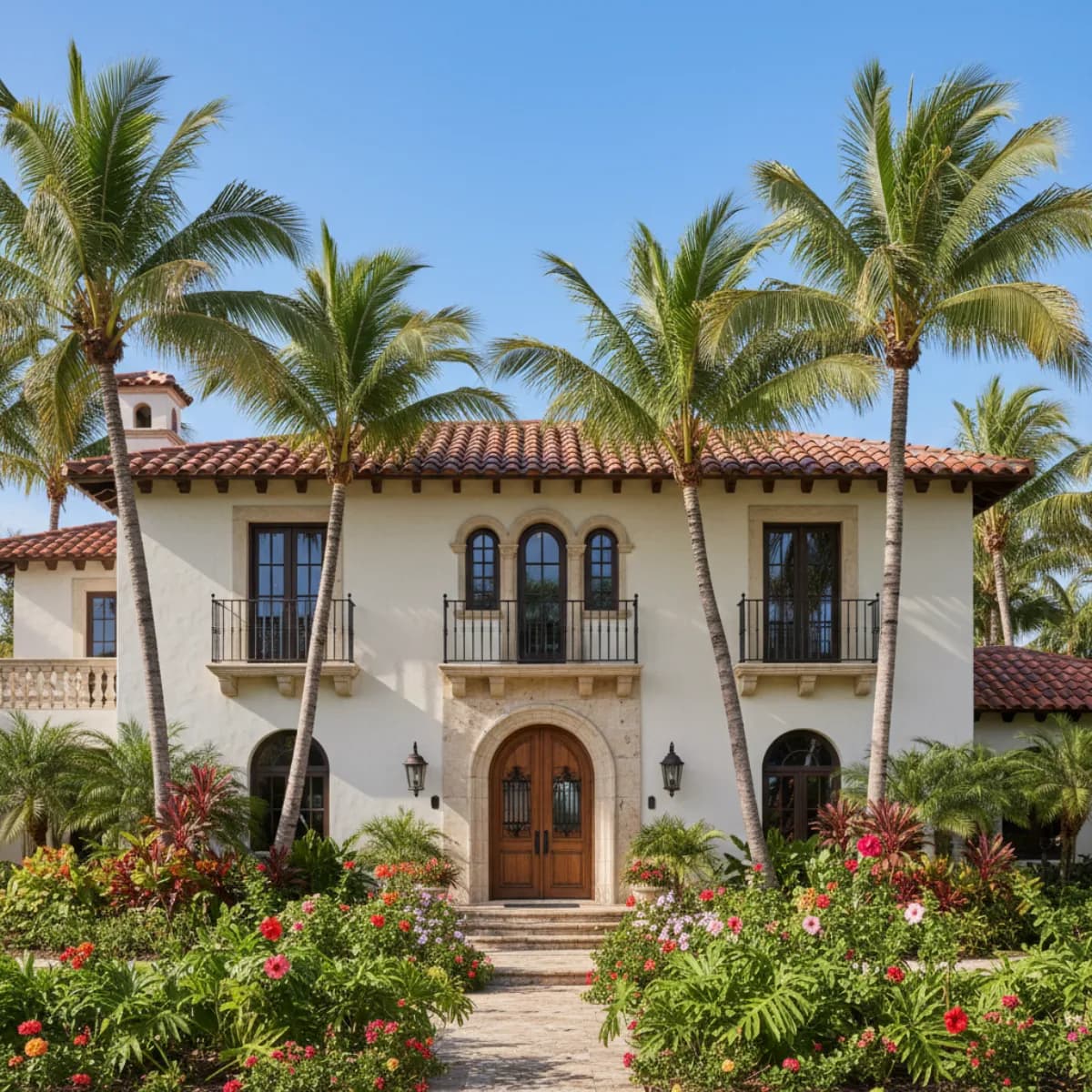
Barrel tile is the iconic half-cylinder profile most associated with Florida's Mediterranean, Spanish Colonial, and Mission-style architecture. Available in both clay and concrete, barrel tiles create a dramatic shadow line and distinctive wave pattern that defines Florida streetscapes from Coral Gables to Naples. The profile costs 10 to 15 percent more than flat tiles due to the additional labor for individual alignment, mortar set at head and hip closures, and more complex installation logistics.
Beyond aesthetics, barrel tile offers a functional advantage that flat profiles cannot match: the large air channels created by the curved profile allow continuous ventilation beneath the tile surface. This natural convection loop draws cooler air at the eaves and exhausts heated air at the ridge, reducing the heat load transferred to the underlayment and roof deck. In Florida's climate, this ventilation effect provides 15 to 25 percent better thermal performance than flat-profile tiles and meaningfully extends underlayment lifespan by reducing the peak temperatures the underlayment endures. However, these same air channels can create wind-uplift vulnerability if tiles are not properly attached, which is why the FBC requires enhanced attachment (mortar plus mechanical fasteners) for barrel tile in all wind zones above 110 mph.
S-Tile and Flat Profile: The Other Options
S-Tileis the medium-profile option that bridges the gap between barrel and flat. Its S-shaped cross-section provides more visual dimension than flat tile without the full height and installation complexity of barrel. S-tile interlocks along its edges, providing good wind-uplift resistance with less mortar than barrel tile. It is the default specification when Florida builders specify “tile roof” without designating a specific profile, and it dominates tract housing and mid-range residential construction.
Flat profile tiles provide a sleek, modern appearance and the best wind-uplift resistance of any tile profile because there is minimal surface area exposed to wind loading. They are lighter than equivalent barrel tiles, faster to install, and increasingly popular in contemporary Florida architecture. The lower profile means less air circulation beneath the tiles, so flat-profile installations rely more on the underlayment and roof ventilation system for moisture management.
2026 Cost Breakdown by Tile Type
Tile roofing costs in Florida vary based on material (clay vs concrete), profile (flat vs barrel), geographic location (standard FBC vs HVHZ), and existing roof condition. The following 2026 pricing reflects the complete installed cost including tear-off, underlayment, tile, flashings, ridge caps, and cleanup. Current live pricing from our contractor network shows Florida tile at $10.50–$21.00 per square foot installed.
Concrete Tile: $12 to $18 Per Square Foot Installed
| Component | Cost/SqFt |
|---|---|
| Tear-off & disposal | $1.50 – $3.00 |
| Underlayment (synthetic/felt) | $0.50 – $1.50 |
| Concrete tile material | $3.00 – $5.50 |
| Labor (installation) | $5.00 – $7.00 |
| Flashings, ridge caps, trim | $1.00 – $2.00 |
| Total installed | $12.00 – $18.00 |
For a typical 2,000-square-foot Florida home, a concrete tile re-roof costs $24,000 to $36,000. The lower end represents flat-profile concrete tile in standard FBC zones. The higher end reflects barrel-profile concrete tile, complex roof geometry, or significant deck repair.
Clay Tile: $15 to $25 Per Square Foot Installed
| Component | Cost/SqFt |
|---|---|
| Tear-off & disposal | $1.50 – $3.00 |
| Underlayment (synthetic/felt) | $0.50 – $1.50 |
| Clay tile material | $5.00 – $10.00 |
| Labor (installation) | $6.00 – $9.00 |
| Flashings, ridge caps, trim | $1.00 – $2.50 |
| Total installed | $15.00 – $25.00 |
For a typical 2,000-square-foot Florida home, a clay tile re-roof costs $30,000 to $50,000. Clay tile labor runs higher because the material is more fragile during handling, and barrel-profile clay requires more precise alignment and mortar work than concrete equivalents.
Barrel Tile Premium: +10% to 15%
Barrel profile tiles — whether clay or concrete — cost 10 to 15 percent more than the same material in a flat or S-tile profile. The premium breaks down as follows: individual tile alignment adds 15 to 20 percent more labor hours per square; mortar set requirements at hip and ridge closures consume more material; and barrel tiles have a higher breakage rate during handling and installation (typically 5 to 8 percent vs 2 to 3 percent for flat tile).
For a 2,000-square-foot home, the barrel premium adds approximately $3,000 to $7,000 over a flat-profile installation of the same material. Most homeowners in South Florida neighborhoods with established barrel-tile streetscapes choose to maintain the barrel profile for aesthetic consistency and resale value, and many HOAs in communities like Coral Gables, Boca Raton, and Naples mandate barrel tile specifically.
HVHZ Cost Premium: +15% to 30%
Tile roof installations within the Miami-Dade/Broward High Velocity Hurricane Zone cost 15 to 30 percent more than equivalent installations in standard FBC zones. The premium comes from NOA-approved products (higher manufacturer pricing for tested and certified materials), sealed roof deck underlayment ($1.50 to $3.00/sqft additional), enhanced fastener schedules, and three mandatory inspections. For a 2,000-square-foot HVHZ home, the premium adds $5,000 to $12,000 to total project cost. See our HVHZ roofing guide for a detailed breakdown.
Underlayment-Only Replacement (Tile Re-Lay): $12,000 to $22,000
The most common major expense for Florida tile roofs is not tile replacement but underlayment replacement. At the 20 to 25-year mark, the underlayment degrades to the point where it no longer provides reliable waterproofing. A tile re-lay involves carefully removing all tiles, stripping the old underlayment, inspecting and repairing the roof deck, installing new code-compliant underlayment, and reinstalling the original tiles. This costs 40 to 60 percent of a full tile replacement because the tiles themselves are reused. For a typical 2,000-square-foot home, an underlayment replacement runs $12,000 to $22,000. Factor this predictable cost into your ownership timeline when comparing tile to other materials.
Live Florida Roofing Prices (All Materials)
The table below shows live pricing from our pre-vetted Florida contractor network across all roofing materials. Enter your address above to receive a free satellite-powered quote. Current rates: architectural shingles at $4.77–$7.42/sqft; tile at $10.50–$21.00/sqft; standing seam metal at $9.45–$16.80/sqft installed.
How to read this table: “Cost / sq ft” is the installed price per square foot of roof area. “Avg Project” reflects the total cost for a typical 2,000–2,200 square foot Florida roof. Prices update automatically from our contractor network. For your exact price, enter your address above for a free instant satellite estimate.
Wind Ratings & Hurricane Performance
Hurricane resistance is the single most important factor in Florida roofing material selection. Tile's combination of heavy dead load and individual mechanical attachment makes it one of the highest-performing residential roofing materials under sustained hurricane conditions. Here is how each tile type performs.
Clay Tile: Rated to 140 mph
Properly installed clay tile with FBC-compliant mechanical fasteners plus mortar or adhesive set provides wind-uplift resistance up to 140 mph sustained winds. The combination of 600 to 900 pounds of dead load per square plus individual two-point attachment (fastener at the tile head and mortar/adhesive bond at the tile body) creates a dual resistance mechanism. Post-hurricane damage assessments after major storms including Irma (2017), Michael (2018), and Ian (2022) consistently showed properly installed clay tile roofs with lower rates of complete covering loss than any other residential roofing material at equivalent wind speeds. The vitrified surface of clay tile also resists impact damage better than concrete — it does not absorb moisture that can weaken the tile body over time.
Concrete Tile: Rated to 125 mph
Concrete tile with standard FBC-compliant installation achieves wind ratings up to 125 mph. The heavier dead load (900 to 1,100 pounds per square) provides excellent inherent uplift resistance, but the higher moisture absorption rate means older concrete tiles can become more brittle and prone to breaking under debris impact during storms. In the HVHZ, concrete tile products must pass TAS 101 wind uplift testing at pressure cycles exceeding 185 mph equivalent — only products that achieve these ratings receive the NOA required for HVHZ installation. After Hurricane Ian, FEMA damage surveys noted that concrete tile roofs with proper attachment performed well, while the primary failure mode was debris impact breaking individual tiles rather than wholesale tile loss from wind uplift.
The Sealed Deck Advantage
Tile roofing combined with a sealed roof deck (self-adhering modified bitumen underlayment) provides the best hurricane water-intrusion resistance available for residential construction. If tiles are lost to wind or debris during a hurricane, the sealed deck prevents water from entering the structure until repairs can be made. Post-hurricane surveys consistently show that homes with tile-over-sealed-deck experience 70 to 90 percent less interior water damage than shingle homes when both lose their primary covering. The HVHZ requires sealed deck for all new construction. For standard FBC zones, a sealed deck is required in wind zones above 140 mph but is optional (and highly recommended) in lower wind zones. The sealed deck adds $1.50 to $3.00 per square foot but can pay for itself in a single storm event. See our Florida Sealed Roof Deck Guide for complete requirements.
Tile vs Shingles: Impact Vulnerability Trade-Off
Tile's one vulnerability is debris impact. While asphalt shingles flex and absorb impact energy, tile shatters on contact with wind-borne objects. A flying branch that would dent a shingle will break a tile. However, broken tiles expose the underlayment, and if the sealed deck is intact, no water enters the structure. The broken tiles can be individually replaced after the storm at $15 to $50 per tile. This is precisely why the HVHZ TAS 114 test evaluates the entire tile-plus-underlayment system for debris resistance rather than testing tile alone. The takeaway: tile with a sealed deck provides superior overall hurricane performance even accounting for tile breakage, because the underlayment system maintains the water barrier regardless of individual tile losses.
Lifespan, Maintenance & Re-Underlayment Schedules
Understanding the difference between tile lifespan and underlayment lifespan is critical for Florida homeowners. The tiles last decades longer than the waterproofing layer beneath them, which means the maintenance calendar revolves around underlayment replacement, not tile replacement.
Clay Tile: 50 to 100 Years
Kiln-fired clay is essentially a ceramic material that does not degrade under UV radiation, does not absorb meaningful moisture, does not support biological growth, and maintains structural integrity for generations. Buildings throughout the Mediterranean and Middle East have clay tile roofs that have been in service for centuries. In Florida, properly manufactured clay tiles from established producers can reasonably be expected to last the entire useful life of the structure. The primary failure modes are impact damage (fallen branches, foot traffic, wind-borne debris), structural movement that cracks tiles at attachment points, and manufacturing defects in lower-quality imported tiles. Buy from established manufacturers with Florida-specific product lines and your clay tile investment will outlast every other component of your home.
Concrete Tile: 30 to 50 Years
Concrete tile has a shorter lifespan because Portland cement is more porous and susceptible to long-term moisture absorption and surface erosion. Over 30 to 50 years in Florida, concrete tiles gradually lose their surface coating, develop porosity that encourages algae growth, and can become brittle as the cement matrix degrades. High-quality concrete tiles from major manufacturers may reach 50 years, while lower-quality products may show significant deterioration at 25 to 30 years. End-of-life concrete tiles become noticeably soft, crumble when walked on, and show visible surface erosion of both the coating and tile body.
Underlayment: Replace Every 20 to 25 Years
The underlayment beneath Florida tile roofing — whether traditional felt, synthetic, or self-adhering modified bitumen — degrades faster than the tiles above it. Florida roof surface temperatures regularly exceed 160°F in summer, drying out the oils and binders in felt underlayment and degrading synthetic products over 20 to 25 years (synthetics may last 25 to 30 years). When the underlayment fails, water penetrates past the tiles to the roof deck, causing rot, mold, and interior water damage. This is the predictable maintenance event that every Florida tile roof owner should plan for financially. Budget $12,000 to $22,000 for a 2,000-square-foot home at the 20 to 25-year mark.
Annual Maintenance Checklist
- Visual inspection (twice yearly): Check for cracked, broken, or displaced tiles from ground level or via drone. Never walk on tile roofing unless absolutely necessary.
- Pre-hurricane season (May–June): Inspect mortar at ridges, hips, and perimeter rows. Replace deteriorated mortar before storm season begins.
- Gutter and valley cleaning: Clear debris from gutters, valleys, and around penetrations to prevent water damming against the tile overlap.
- Algae treatment (as needed): Concrete tiles may need soft washing every 3 to 5 years. Clay tiles rarely require cleaning. Never pressure wash at high PSI.
- Individual tile replacement: Replace cracked or broken tiles promptly at $15 to $50 per tile. Keep spare tiles from the original installation for color matching.
- Professional inspection at year 15: Have a licensed roofer assess underlayment condition by checking the attic for daylight, moisture, or mold. This establishes your re-underlayment timeline.
Insurance Savings & ROI Analysis
In Florida's crisis-level insurance market — where premiums have increased 50 to 100 percent over the past five years — tile roofing's wind mitigation credits are not just a nice bonus. They are a major financial factor that changes the ROI calculation for material selection.
Wind Mitigation Insurance Credits
Florida law requires insurers to provide premium discounts for homes meeting specific wind-resistance criteria on the OIR-B1-1802 wind mitigation inspection form. A tile roof with mechanical attachment qualifies for a Roof Covering credit. Combined with a secondary water barrier (sealed deck or self-adhering underlayment), the home qualifies for additional credits in Roof Deck Attachment and Secondary Water Resistance categories. Total annual premium reductions from these combined credits range from $500 to $3,000 depending on insurer, coverage amount, and property location. Over a 50-year clay tile lifespan, cumulative savings can exceed $50,000 to $100,000 in present-value terms. For a deeper analysis, see our Florida Insurance Crisis and Roofing Guide.
ROI Comparison: Tile vs Shingles Over 30 Years
| Cost Factor | Clay Tile | Asphalt Shingles |
|---|---|---|
| Initial installation | $40,000 | $15,000 |
| Replacements in 30 yr | 1 underlayment ($18,000) | 1 full re-roof ($18,000) |
| Insurance savings (30 yr) | −$30,000 to −$60,000 | $0 |
| Cooling savings (30 yr) | −$7,500 to −$15,000 | $0 |
| 30-year net cost | $0 to $20,500 | $33,000 |
The numbers are clear: for any Florida homeowner planning to stay in their home longer than 8 to 10 years, clay tile is the economically superior choice when insurance and energy savings are factored in. Concrete tile reaches cost parity with shingles even faster due to its lower upfront cost.
Roof Age and Insurability
Many Florida insurers refuse to write or renew policies on homes with roofs older than 15 to 20 years. However, some insurers make exceptions for tile because the tile material does not degrade like shingles. If your tile roof has had its underlayment replaced within the past 20 years and the tiles are in good condition, some insurers will consider the roof “age” as the date of the most recent underlayment replacement rather than the original tile installation date. This can save homeowners from unnecessary full replacements driven solely by insurance age requirements. Document your underlayment replacement with permit records, inspection reports, and contractor invoices to support this position.
Choosing the Right Tile for Your Florida Home
The right tile choice depends on your budget, architectural style, geographic location, structural capacity, and long-term ownership plans. This decision tree helps narrow the options.
Choose Clay Tile If...
- Your budget supports $15 to $25 per square foot installed and you plan to stay in the home 15+ years to realize the lifecycle cost advantage
- Your home has Mediterranean, Spanish Colonial, or Italianate architecture where tile aesthetic value is significant for resale
- You are in a high-wind zone and want the maximum 140 mph wind rating available from residential tile
- Color permanence matters — you want the terracotta or earth tones to look the same in 40 years as on day one
- Your roof structure can support 600 to 900 pounds per square (lighter than concrete but still significantly heavier than shingles)
Choose Concrete Tile If...
- You want tile-level performance at a lower price point ($12 to $18 per square foot installed)
- You need a specific profile or color that is only available in concrete (concrete offers more profile and color variety than clay)
- You are comfortable with potential color recoating at 10 to 20 years if aesthetics are important
- Your roof structure can handle the heavier 900 to 1,100 pound per square dead load
- Your home is in a mid-wind zone where the 125 mph rating is sufficient for your comfort level
Choose Barrel Profile If...
- Your home or neighborhood has established Mediterranean or Spanish Colonial architecture where barrel tile defines the streetscape
- Your HOA requires or strongly prefers barrel tile (common in South Florida communities)
- You want the superior thermal ventilation performance that barrel's air channels provide
- You can accommodate the 10 to 15 percent price premium over flat profile for the aesthetic and functional benefits
- Resale value is a priority — barrel tile commands premium pricing in most South Florida real estate markets
Getting the Right Quote
The easiest way to compare tile options for your specific home is to get an instant satellite-powered estimate from RoofVista. Enter your address to receive a free quote that accounts for your exact roof area, pitch, and complexity. Then compare standardized quotes from pre-vetted Florida tile contractors — all with written scopes of work — so you can make an informed decision without the high-pressure sales tactics that plague the Florida roofing market.
Florida Tile Roofing Cost: Frequently Asked Questions
How much does a tile roof cost in Florida in 2026?
Tile roof costs in Florida range from $12 to $25 per square foot installed in 2026. Concrete tile is the more affordable option at $12 to $18 per square foot, while clay tile costs $15 to $25 per square foot. For a typical 2,000-square-foot Florida home, that translates to $24,000 to $36,000 for concrete tile or $30,000 to $50,000 for clay tile. Barrel tile profiles add 10 to 15 percent over flat profiles due to additional labor. In the Miami-Dade HVHZ, add 15 to 30 percent for NOA-approved products and sealed roof deck requirements.
What is the difference between clay tile and concrete tile roofing?
Clay tile is kiln-fired at over 2,000 degrees Fahrenheit, creating a vitrified surface with permanent through-body color that never fades. Clay weighs 600 to 900 pounds per roofing square, lasts 50 to 100 years, and has a wind rating up to 140 mph when properly installed. Concrete tile is made from Portland cement and sand with surface-applied color that can fade over 10 to 20 years of Florida UV exposure. Concrete weighs 900 to 1,100 pounds per square, lasts 30 to 50 years, and has a wind rating up to 125 mph. Clay costs more upfront but offers superior longevity and color permanence.
How long does a tile roof last in Florida?
Clay tile roofs last 50 to 100 years in Florida, making them among the longest-lasting residential roofing materials available. Concrete tile lasts 30 to 50 years. However, the underlayment beneath both types degrades faster in Florida heat and requires replacement every 20 to 25 years. Most tile roof "replacements" in Florida are actually underlayment replacements where tiles are removed, new underlayment is installed, and the original tiles are reinstalled at roughly 40 to 60 percent of a full replacement cost.
What wind speed can Florida tile roofs withstand?
Properly installed clay tile roofs in Florida can withstand sustained winds up to 140 mph when mechanically attached with mortar or adhesive set per FBC R905.3 standards. Concrete tile is rated to approximately 125 mph. In the HVHZ (Miami-Dade and Broward counties), tile products must pass TAS 101 wind uplift testing that simulates pressure cycles exceeding 185 mph equivalent wind speeds. The heavy dead load of tile (600 to 1,100 pounds per roofing square) inherently resists wind uplift forces better than lighter materials like asphalt shingles.
Is barrel tile more expensive than flat tile in Florida?
Yes, barrel tile costs 10 to 15 percent more than flat profile tile in Florida. The premium comes from more labor-intensive installation since each barrel tile must be individually aligned, and the alternating convex/concave pattern requires careful mortar set at head and hip closures. Barrel tile also requires more supplemental materials (mortar, foam closures) and more installation time. However, barrel tile provides superior ventilation beneath the tile surface due to the large air channels created by the curved profile, which improves thermal performance and can reduce cooling costs by 15 to 25 percent compared to flat profiles.
How often does tile roof underlayment need replacement in Florida?
Tile roof underlayment in Florida typically needs replacement every 20 to 25 years. Florida roof surface temperatures regularly exceed 160 degrees Fahrenheit in summer, which dries out the oils and binders in felt underlayment and degrades synthetic underlayment over time. Signs of failing underlayment include interior water stains during rain, visible daylight through the roof deck from the attic, and tiles that lift or shift. An underlayment replacement costs $12,000 to $22,000 for a 2,000-square-foot roof because the tiles must be carefully removed and reinstalled, even though the tile material itself is reused.
Do tile roofs lower insurance premiums in Florida?
Yes, tile roofs qualify for significant wind mitigation insurance credits in Florida. Under the OIR-B1-1802 wind mitigation inspection form, a tile roof with mechanical attachment and a code-compliant secondary water barrier qualifies for premium reductions across multiple categories: Roof Covering, Roof Deck Attachment, and Secondary Water Resistance. Annual savings of $500 to $3,000 are typical, and over a 50-year clay tile lifespan these cumulative credits can exceed $50,000. In the HVHZ, tile roofs with NOA-approved products and sealed roof decks receive the highest possible wind mitigation credits.
Can my Florida home support the weight of a tile roof?
Most Florida homes built after the mid-1980s in South Florida were designed with tile-rated trusses since tile is the dominant roofing material in the region. Concrete tile weighs 900 to 1,100 pounds per roofing square (100 square feet), while clay tile weighs 600 to 900 pounds. By comparison, asphalt shingles weigh 200 to 350 pounds. If your home currently has shingles and you want to convert to tile, a Florida-licensed structural engineer must evaluate the roof framing and foundation. Truss reinforcement costs $3,000 to $10,000 if required. Homes in Central and North Florida and older homes statewide are more likely to need structural upgrades.