In This Guide
CT Insurance Claim Process: 7-Step Timeline
Filing a roof insurance claim in Connecticut follows a specific sequence. Each step builds on the one before it. Skipping steps, filing late, or failing to document properly gives your insurer grounds to reduce or deny your payout. Here is the proven timeline for Connecticut homeowners.
Document Damage Immediately
Within 24 hours of discovery
Use your smartphone to capture clear, well-lit photos from multiple angles. Take wide shots showing the overall roof, medium shots showing damaged areas in context, and close-up shots showing individual shingle damage, cracks, or missing pieces. Record a narrated video walkthrough starting from the ground, scanning up to the roofline. Include interior damage: water stains on ceilings, peeling paint on walls, active drips, and wet insulation in the attic.
Make sure your phone's date and time stamp are enabled so every image is automatically timestamped. Connecticut adjusters and the CID give significant weight to date-stamped evidence that correlates with a specific weather event. Without timestamps, your insurer can argue the damage predates the storm.
Safety first: Do not climb on your roof. Photograph from the ground using zoom, or from second-story windows. A licensed contractor can safely assess roof-level damage during their inspection.
Prevent Further Damage
Same day as discovery
Your Connecticut insurance policy requires you to take reasonable steps to prevent further damage after a loss. This is your “duty to mitigate.” If your roof has an active leak or exposed opening, have it tarped immediately. Emergency tarping in Connecticut typically costs $300 to $1,500 depending on the area to cover. This cost is usually reimbursable as part of your claim.
Keep all receipts for emergency repairs. Photograph the damage before and after the temporary repair. Do not make permanent repairs until after the adjuster inspects, as permanent repairs can obscure the original damage extent.
Notify Your Insurance Company
Within 48–72 hours
Call your insurer's claims line and report the damage. While Connecticut law allows up to one year from the date of loss to file (check your specific policy), most policies require notification within 30 to 60 days. Filing within 48 to 72 hours strengthens your claim because evidence is fresh and timelines are clear.
Have your policy number, the date of the weather event, a brief description of damage, and photos ready. Write down your claim number, the adjuster's name, and their direct phone number. Under Connecticut's Unfair Insurance Practices Act (CGS Section 38a-816), your insurer must acknowledge your claim within 15 business days.
Follow up your phone call with an email summarizing what was discussed. This creates a written record of your notification date and the insurer's commitments. Send it to the adjuster and keep a copy.
Get an Independent Estimate
Before the adjuster visit
This is the most important step most homeowners skip. Before the insurance adjuster arrives, get your own independent estimate. The adjuster works for the insurance company, not for you. Their estimates often come in lower than what a proper, code-compliant repair actually costs in Connecticut's market.
An independent estimate gives you a documented baseline to compare against the adjuster's assessment, helps identify damage the adjuster may miss, and provides leverage during negotiation. Make sure the estimate comes from a Connecticut-registered Home Improvement Contractor (HIC). Verify their registration at the CT Department of Consumer Protection.
Compare instant roof replacement quotes from pre-vetted Connecticut contractors:
Get Your Free Independent EstimateMeet the Adjuster On-Site
Typically 5–15 business days after filing
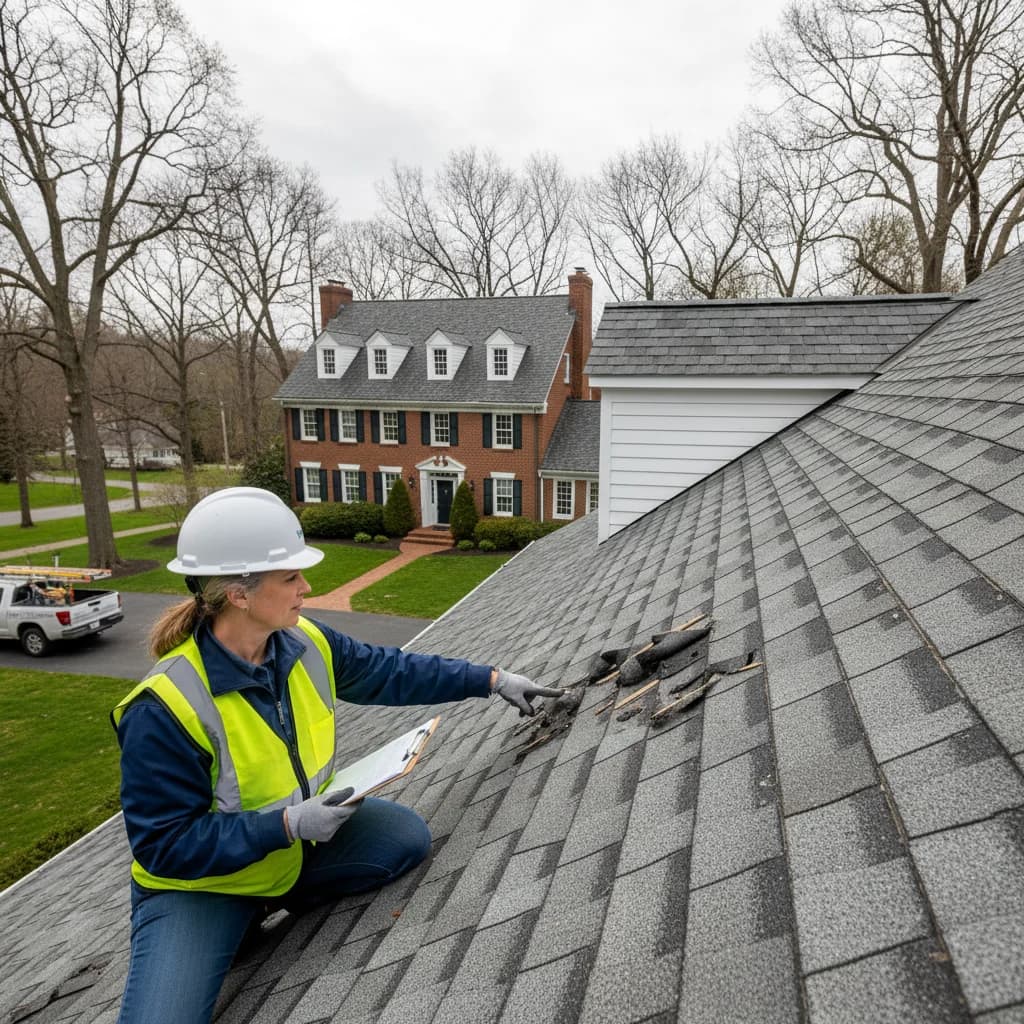
Always be present during the adjuster's inspection. Walk the property with them and point out every area of damage you documented. Bring your independent estimate, your photos, and weather reports from the date of the storm. The adjuster should be willing to review everything you present.
Pay attention to what the adjuster does and does not inspect. A thorough roof inspection typically takes 45 minutes to over an hour. If the inspection feels rushed — the adjuster stays less than 30 minutes, does not check the attic, or does not get on the roof — note this in writing. You can request a re-inspection if you believe the assessment was incomplete.
If you disagree with findings, do not argue on-site. Wait for the written scope of loss, then submit your formal disagreement in writing with your independent estimate as supporting evidence.
Review and Negotiate the Settlement
Within 45 days of filing (CT deadline)
Under Connecticut law (CGS Section 38a-816), your insurer must make a decision on your claim within 45 days. When you receive the written settlement offer, compare it line-by-line against your independent estimate. Common items that Connecticut adjusters frequently undervalue or omit include:
- Tear-off and disposal of existing roofing (often priced too low)
- Ice and water shield underlayment (required in CT under building code for valleys, eaves, and penetrations)
- Drip edge replacement (required by current CT building code)
- Step flashing at walls and chimney re-flashing
- Ridge vent replacement or attic ventilation improvements
- Decking repairs for rotted or damaged plywood (discovered during tear-off)
- Code upgrade costs if your current roof does not meet 2021 CT Building Code
- Overhead and profit (“10 and 10”) if using a general contractor
If the offer is lower than your independent estimate, submit a written response identifying each discrepancy with supporting documentation. You have the right to negotiate, and Connecticut law requires the insurer to provide a reasonable explanation for any disputed amount.
Choose Your Contractor and Complete Repairs
After settlement is agreed upon
In Connecticut, you have the absolute right to choose your own contractor. Your insurer cannot require you to use their “preferred vendor.” Before signing any contract, verify that the contractor holds a valid Connecticut Home Improvement Contractor (HIC) registration through the CT Department of Consumer Protection (DCP). Any contractor performing roofing work over $200 in Connecticut must be HIC-registered.
If your contractor discovers hidden damage during tear-off (rotted decking, damaged underlayment), file a supplemental claim immediately. Document the hidden damage with photos before and after, and have your contractor provide a written supplement estimate. Supplemental claims are common and insurers are required to investigate them promptly.
If you have an RCV policy, remember that the insurer releases the depreciation holdback only after you complete the work and submit final invoices and receipts. If your claim payout goes through your mortgage company, be prepared for the escrow process — your lender will typically hold insurance funds and release them in stages as work progresses.
What CT Insurance Covers (and What It Does Not)
Connecticut homeowners insurance policies (HO-3) cover roof damage from “sudden and accidental” events. Understanding exactly what qualifies is the first step to a successful claim. Here is the breakdown for Connecticut.
Typically Covered
- ✓Wind and hail damage — Missing, cracked, or dented shingles from storms and nor'easters
- ✓Fallen trees and branches — Tree strikes from storms, including debris removal from the roof
- ✓Lightning strikes — Direct hits or power surges that damage the roof or cause fire
- ✓Fire damage — Including fires from neighboring structures that spread to your roof
- ✓Weight of ice and snow — Structural damage from heavy accumulation exceeding design capacity
- ✓Ice dam damage — Sudden water intrusion from ice dams that form during winter storms
- ✓Vandalism — Intentional damage by others to your roofing system
Typically NOT Covered
- ✗Normal wear and tear — Aging shingles, granule loss over time, natural weathering
- ✗Maintenance neglect — Damage from failing to repair known issues or clean gutters
- ✗Roofs past expected lifespan — 3-tab past 20 years, architectural past 30 years may face reduced coverage
- ✗Gradual water damage — Slow leaks that developed over months without being addressed
- ✗Flood damage — Requires separate flood insurance (NFIP or private), not covered under HO-3
- ✗Cosmetic-only damage — Some CT policies exclude dents or marks that do not affect roof function
- ✗Improper installation — Damage caused by a previous contractor's faulty workmanship
CT-Specific: Nor'easter and Coastal Storm Coverage
Connecticut's coastline along Long Island Sound faces significant nor'easter and tropical storm exposure. Standard HO-3 policies generally cover wind and rain damage from these storms, but Connecticut homeowners should know these nuances:
- •Wind-driven rain is covered only if rain enters through a storm-created opening. If rain comes in through a pre-existing gap or worn sealant, the insurer may deny the claim.
- •Coastal properties in Fairfield, New Haven, and New London counties may have separate wind or hurricane deductibles (typically 1–5% of insured value) that apply during named storms.
- •Tropical storm damage from remnants moving through Connecticut is covered under standard wind coverage, but check whether your policy has a named-storm deductible that triggers at a higher threshold.
Documentation Checklist
Thorough documentation is the single most important factor in a successful roof insurance claim. Use this interactive checklist to make sure you have everything Connecticut adjusters and the CID expect to see.
Your Progress
0 of 28 items (0%)Exterior Photos
Interior Photos
Documents to Gather
Weather and Evidence
ACV vs. RCV Policies in Connecticut
The type of coverage you have dramatically affects your payout. Connecticut has been trending toward RCV (Replacement Cost Value) for newer roofs, but some insurers have added ACV (Actual Cash Value) endorsements to policies on homes with roofs over 15 to 20 years old. Understanding the difference can mean thousands of dollars in your settlement.
Depreciated Payout
ACV pays the current depreciated value of your roof. A 15-year-old architectural shingle roof (30-year lifespan) would be depreciated by about 50%, meaning you receive only half the replacement cost.
Full Replacement Payout
RCV pays the full cost to replace your roof with equivalent materials, regardless of age. Paid in two stages: initial payment minus depreciation, then recoverable depreciation after completing the work.
Connecticut ACV Trend: Roof Age Endorsements
In recent years, several Connecticut insurers have added “roof age” endorsements that switch roofs over a certain age from RCV to ACV coverage. This means your policy may have started as RCV but was quietly amended at renewal. Check your declarations page and any endorsement addenda carefully. Look for language like “Roof Surfaces Coverage Endorsement” or “Limited Roof Coverage.”
If your roof is over 15 years old, review your policy before filing a claim so you know your coverage type. If you have been switched to ACV without your knowledge, you may be able to negotiate with your insurer or shop for a new policy that provides RCV coverage.
Depreciation Schedules by Roof Material
Connecticut insurers depreciate different materials at different rates. Understanding your material's schedule helps anticipate your ACV payout or RCV holdback:
| Material | Expected Lifespan | Annual Depreciation |
|---|---|---|
| 3-Tab Shingles | 15–20 years | 5–6.7% |
| Architectural Shingles | 25–30 years | 3.3–4% |
| Standing Seam Metal | 40–60 years | 1.7–2.5% |
| Slate | 75–100+ years | 0.8–1.3% |
| Cedar Shakes | 20–30 years | 3.3–5% |
| Flat/TPO/EPDM | 20–30 years | 3.3–5% |
Working with Adjusters in Connecticut
Understanding the different types of adjusters and when to bring in your own representation can significantly impact your claim outcome.
Company Adjuster
Works directly for your insurance company. Salaried employee with incentives aligned to the insurer's interests. They assess damage and determine payout.
Cost: Free (paid by insurer)
Independent Adjuster
Freelance contractor hired by insurance companies to handle overflow claims, often after major storms. Works for the insurer, not you, but may be more objective than a company adjuster.
Cost: Free (paid by insurer)
Public Adjuster
Works exclusively for you. Licensed by the CT Insurance Department. Handles documentation, negotiation, and supplemental claims. Typically recovers 30–50% more than company adjusters offer.
Cost: 10–15% of settlement (contingency)
When to Hire a Public Adjuster in Connecticut
Not every claim needs a public adjuster. For straightforward claims under $8,000 where the insurer's estimate is reasonable, you can often handle the process yourself. However, consider hiring a public adjuster when:
- Your claim involves significant damage (over $10,000)
- The insurer's initial offer is 25% or more below your independent estimate
- Your claim has been denied and you believe it should be covered
- You are dealing with complex damage (structural issues, ice dam with interior damage, multiple areas affected)
- The insurer is delaying beyond the 45-day decision deadline
- You do not have the time or expertise to negotiate effectively
Connecticut public adjusters must be licensed by the CT Insurance Department. Verify any public adjuster's license before hiring them. They work on contingency, meaning you pay nothing upfront and they earn their fee only from the additional recovery they secure for you.
CT Consumer Protections
Connecticut provides strong regulatory protections for homeowners filing insurance claims. Knowing your rights under state law gives you significant leverage when dealing with your insurer.
Connecticut Unfair Insurance Practices Act (CGS 38a-816)
This is your most powerful protection as a Connecticut homeowner. Under CGS Section 38a-816, your insurer is prohibited from engaging in unfair claim settlement practices. Specifically, your insurer cannot:
- Fail to acknowledge your claim within 15 business days of receiving notice
- Fail to make a decision on your claim within 45 days
- Misrepresent relevant facts or policy provisions related to your claim
- Refuse to pay a claim without conducting a reasonable investigation
- Offer substantially less than the amount ultimately owed in cases where liability is clear
- Delay investigation or payment by requiring duplicate or unnecessary documentation
- Fail to provide a reasonable explanation for claim denial or partial payment
If your insurer violates any of these provisions, file a complaint with the Connecticut Insurance Department. Repeated violations can result in significant fines, license revocation, and enforcement actions.
CT Home Improvement Contractor (HIC) Protection
Connecticut's Home Improvement Act (CGS Chapter 400) provides critical protections when choosing a contractor for insurance-funded roof work:
- Any contractor performing roofing work over $200 must be registered as a HIC with the CT Department of Consumer Protection
- Contracts over $200 must be in writing and include the contractor's HIC registration number
- Homeowners have a 3-day right to cancel any home improvement contract
- The Home Improvement Guaranty Fund provides up to $15,000 in restitution if a registered contractor fails to perform
Verify any contractor's HIC registration at portal.ct.gov/DCP before signing any contract.
CT Non-Renewal and Cancellation Rules
Connecticut insurers have been increasingly non-renewing homes with older roofs, even without claims. Here is what the law says:
- Mid-term cancellation is prohibited solely because you filed a claim (CGS Section 38a-323)
- Non-renewal requires at least 60 days written notice before the policy expiration date
- Reason required: The insurer must state the specific reason for non-renewal in writing
- Roofs over 20 years: Some insurers now require a roof inspection before issuing or renewing policies on homes with roofs over 20 years old
If you are non-renewed, the Connecticut Insurance Placement Facility (CT FAIR Plan) provides basic property insurance to homeowners who cannot obtain coverage in the voluntary market. Contact the CT Insurance Department at portal.ct.gov/CID or call (860) 297-3900.
Connecticut Consumer Protection Resources
- CT Insurance Department (CID): (860) 297-3900 — File complaints, verify adjuster licenses, report unfair claims practices — portal.ct.gov/CID
- CT Department of Consumer Protection (DCP): (860) 713-6100 — Verify contractor HIC registration, file contractor complaints — portal.ct.gov/DCP
- CT Attorney General: (860) 808-5318 — Report insurance fraud, scams, or deceptive business practices
- CT FAIR Plan: (860) 528-9546 — Insurance of last resort for homeowners who cannot get voluntary market coverage
Getting Accurate Repair Estimates
An accurate, independent estimate is your most powerful tool throughout the insurance claim process. It establishes a fair baseline, identifies damage the adjuster may miss, and provides concrete evidence for negotiation.
Why Independent Estimates Matter for CT Claims
The insurance adjuster's estimate is a starting point, not a final number. Research consistently shows that homeowners who obtain independent estimates before or during the claims process receive higher settlements than those who accept the first offer. An independent estimate serves three critical purposes:
- Identifies damage the adjuster missed — Adjusters inspect hundreds of properties. They can miss items, especially when working from the ground level or during post-storm surges when claim volumes are high.
- Provides a line-item comparison — When the adjuster underprices materials, labor, or omits code-required upgrades, your independent estimate gives you the documentation to challenge each specific line item.
- Documents the full scope of code-compliant repair — Connecticut building codes require specific materials and methods. An estimate from a CT-licensed contractor ensures the scope meets current code requirements.
Supplemental Claims: When the Initial Estimate Falls Short
Supplemental claims are common in Connecticut roof replacements. When your contractor begins tear-off and discovers hidden damage — rotted decking, deteriorated underlayment, damaged flashing that was not visible during the initial inspection — you have the right to file a supplemental claim for the additional costs.
To file a successful supplement:
- Have your contractor stop work and document the hidden damage with photos before removing anything
- Get a written supplement estimate from your contractor detailing the additional work and materials required
- Contact your adjuster immediately with photos and the supplement estimate
- The insurer must investigate the supplement claim and respond within a reasonable timeframe
Choose a contractor experienced in insurance restoration work who understands the supplemental claims process. This expertise can recover thousands in additional legitimate costs that a less experienced contractor might simply absorb or pass on to you.
Mortgage Company Escrow: What CT Homeowners Need to Know
If you have a mortgage on your Connecticut home, your lender has a financial interest in your property. Insurance claim payouts above a certain threshold (typically $10,000 to $20,000, depending on your lender) are often made payable to both you and your mortgage company. This triggers the escrow process:
- You must endorse the check and send it to your mortgage servicer
- The servicer holds the funds in escrow and releases them in stages (typically 1/3 at start, 1/3 at midpoint, 1/3 at completion)
- An inspector from the mortgage company may visit to verify progress at each stage
- Final release requires a completion certificate or final inspection
This process can take 2 to 4 weeks per release. Plan your contractor payment schedule accordingly. Some contractors are accustomed to the escrow process and will work with staged payments; others may require different arrangements.
Compare instant roof replacement quotes from pre-vetted Connecticut contractors:
RoofVista provides satellite-based roof estimates that measure your roof area and provide material-specific pricing from pre-vetted contractors in your area. Having this independent assessment before the adjuster arrives puts you in a stronger negotiating position.
Get Your Free Connecticut Roof EstimateFrequently Asked Questions
Answers to the most common Connecticut roof insurance claim questions from homeowners.
How long do I have to file a roof insurance claim in Connecticut?
What does Connecticut homeowners insurance cover for roof damage?
How do I file a complaint against my insurance company in CT?
What is the difference between ACV and RCV roof insurance in Connecticut?
Should I hire a public adjuster for my CT roof claim?
Can my Connecticut insurance company drop me after a roof claim?
What if my CT roof insurance claim is denied?
Does Connecticut insurance cover roof damage from nor'easters?
Related Resources
Connecticut Roof Replacement Costs (2026)
Average costs by material, city, and roof size for Connecticut homeowners.
CT Storm Damage Roof Repair Guide
What to do immediately after storm damage to your Connecticut home.
General Insurance Claims Guide
National overview of the roof insurance claim process for all states.
Consumer Protection Resources
Your rights as a homeowner when dealing with contractors and insurers.