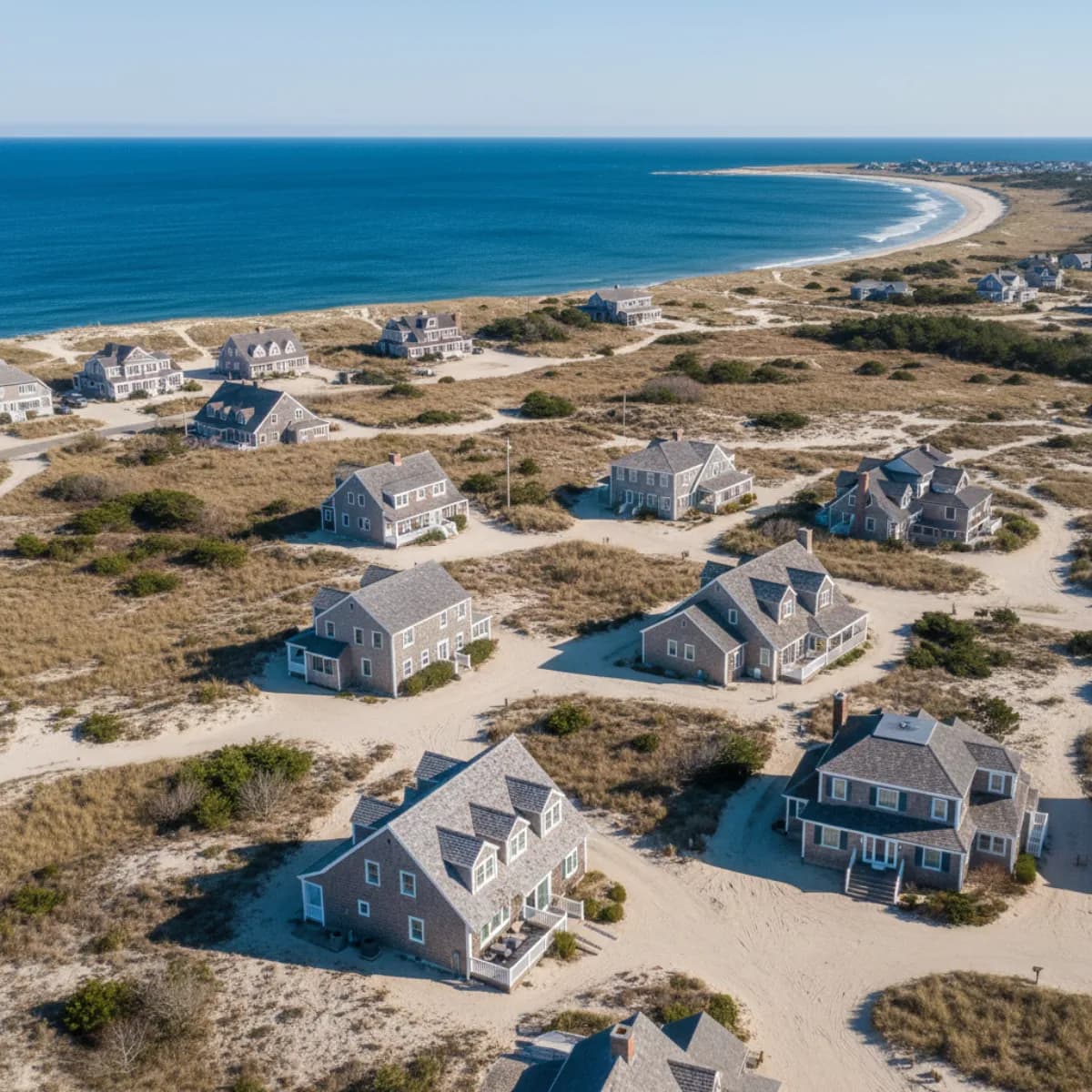
Roof Replacement Quotes in Cape Cod, MA
Get instant quotes from pre-vetted contractors who specialize in coastal roofing across all 15 Barnstable County towns. Compare prices for salt air resistant materials, hurricane-rated installations, and cedar shake replacements — no phone calls, no spam, no obligation.
Free Quotes
no obligations ever
Contractors
licensed, insured, reviewed
Until You Choose
no spam, no lead resale
Contractor Bids
standardized scope comparison
Cape Cod is not just a location — it is a roofing environment unlike anything else in Massachusetts. This narrow peninsula extending 65 miles into the Atlantic Ocean subjects every home in Barnstable County to a combination of salt air corrosion, hurricane-force winds, relentless nor'easters, and sand-blasting storms that can shorten a roof's useful life by 20 to 30 percent compared to homes just 30 miles inland. The roughly 215,000 year-round residents — a number that more than doubles during the summer tourist season — live in homes ranging from antique sea captain estates in Chatham and Brewster to mid-century Cape Cod colonials in Dennis and Yarmouth, and modern waterfront construction in Mashpee and Falmouth. Each style faces distinct roofing challenges shaped by the Cape's unique geography and severe coastal weather.
This guide covers everything a Cape Cod homeowner needs to know about roof replacement: the specific environmental threats that make Cape Cod roofing different from the rest of Massachusetts, realistic costs across all 15 towns in Barnstable County, the best materials for salt air and hurricane resistance, historic district requirements that limit your material choices in several towns, permit and licensing rules, cedar shake maintenance and alternatives, and a town-by-town breakdown of the sub-regions you need to understand when planning a roofing project on the peninsula. Whether you own a shingled cottage in Wellfleet, a year-round colonial in Barnstable, or an oceanfront property in Chatham, comparing quotes from contractors who genuinely understand coastal roofing is the most important step you can take.
Why Cape Cod Roofing Is Different from Inland Massachusetts
Four environmental factors make every roofing decision on Cape Cod more demanding than the same decision made 30 miles off the peninsula.
Salt Air Corrosion
Cape Cod extends 65 miles into the Atlantic Ocean, and no home on the peninsula is truly safe from salt-laden air. This relentless marine exposure is the single biggest factor that differentiates Cape Cod roofing from any inland Massachusetts project. Salt air corrodes standard galvanized steel fasteners, gutters, and flashing within 5 to 10 years. It strips protective granules from asphalt shingles, accelerates UV degradation, and causes premature failure of adhesive sealant strips that hold shingles in place during high winds. Properties within 1,500 feet of the shoreline experience the most severe salt deposition, but even homes in the interior of the peninsula — which is never more than a few miles from the ocean — see measurably faster roofing material deterioration than homes on the mainland. Every component of a Cape Cod roof system, from underlayment to ridge cap, must be specified for marine environment performance.
Hurricane and Nor'easter Exposure
Cape Cod sits directly in the path of both Atlantic hurricanes tracking up the eastern seaboard and powerful nor'easters that form off the mid-Atlantic coast. The peninsula's exposed geography amplifies storm impacts that would be moderated by terrain on the mainland. Hurricane Bob in 1991 brought sustained winds of 100 mph and gusts to 125 mph across the Cape, stripping hundreds of roofs. Major nor'easters in 2018 and 2022 delivered 80 to 95 mph gusts with driving horizontal rain that penetrated vulnerable roof systems and caused widespread interior water damage. The Massachusetts building code classifies Cape Cod as a high-wind coastal zone, requiring enhanced fastening schedules, sealed roof deck systems, and materials rated for minimum 110 mph wind resistance. For exposed oceanfront properties, 130 mph ratings are strongly recommended.
Sandy Soil and Foundation Movement
Cape Cod was formed by glacial deposits, and much of the peninsula sits on sandy, shifting soil. This geological reality means that many Cape Cod homes experience subtle foundation settlement and structural movement over time, which can stress roof framing connections, open gaps at flashing points, and crack rigid roofing materials. Sandy soil also drains quickly, leading to uneven settlement patterns that affect roof plane alignment. Roofers working on Cape Cod must assess structural integrity before installation and account for the slight movement tolerance that every roof system on the peninsula needs. This is one reason flexible materials like architectural shingles and standing seam metal panels outperform rigid tiles and slate on many Cape properties.
Historic District Preservation Requirements
Many Cape Cod towns maintain active historic commissions that regulate exterior modifications, including roofing materials, colors, and styles. Sandwich, one of the oldest towns in Massachusetts (incorporated 1637), has some of the strictest historic preservation guidelines on the Cape. Chatham, Barnstable Village, and portions of Provincetown also enforce historic district standards. In these regulated areas, homeowners may be required to use specific materials — often cedar shake or architecturally appropriate alternatives — and must submit plans for review before work begins. Violating historic district guidelines can result in mandatory removal and reinstallation at the homeowner's expense. Always verify whether your property falls within a local historic district before selecting roofing materials.
Cape Cod Architecture and Roofing Considerations
The region's architectural heritage directly influences roofing requirements, material selection, and project costs.
Classic Cape Cod Style
The Cape Cod house style originated here in the 17th century as a practical response to the harsh coastal climate. These one-and-a-half story homes feature steep-pitched roofs (typically 9:12 to 12:12 pitch) designed to shed snow, resist wind uplift, and minimize the surface area exposed to horizontal rain. The steep pitch means more roofing material per square foot of floor space, which increases material costs but also provides better wind performance and water shedding capability.
- Steep pitch aids wind resistance and water shedding
- Dormer windows create additional flashing and valley complexity
- Central chimney adds a critical penetration point requiring expert flashing
Cedar Shake Tradition
White cedar shake has been the defining roofing material of Cape Cod since colonial times. The natural weathering process that turns fresh cedar from golden-tan to the distinctive silver-gray patina is inseparable from the Cape Cod visual identity. However, maintaining a cedar shake roof in a full marine environment is significantly more demanding and expensive than maintaining one in a protected inland location. Salt accelerates fiber breakdown, constant moisture promotes biological growth, and wind-driven sand acts as an abrasive on exposed surfaces.
- Annual inspection and maintenance is mandatory on the Cape
- Wood preservative application every 3-5 years extends lifespan
- Synthetic cedar alternatives gaining acceptance in non-historic areas
Wind code note: The Massachusetts State Building Code (780 CMR) classifies Cape Cod as a coastal high-wind zone. The minimum design wind speed for Barnstable County is 110 mph, with structures within 600 feet of the mean high water line subject to additional exposure category requirements. Roof assemblies must comply with ASTM D3161 (wind resistance of steep slope roofing products) and ASTM D7158 (wind resistance using the uplift force method) at the designated wind speed. Contractors who do not understand these code requirements should not be installing roofs on Cape Cod.
Best Roofing Materials for Cape Cod Homes
Not every roofing material can handle Cape Cod's coastal environment. Here is how the leading options compare for salt air, wind, and longevity on the peninsula.
Cape Cod Material Comparison
| Material | Cost Range | Cape Cod Lifespan | Wind Rating | Salt Resistance |
|---|---|---|---|---|
| Cedar Shake (Traditional) | $18,000-$35,000 | 15-20 years (Cape Cod conditions) | 80-110 mph | Moderate |
| Architectural Shingles (Wind-Rated) | $10,000-$22,000 | 20-25 years | 110-130 mph | Good (with SBS-modified formulations) |
| Standing Seam Metal | $20,000-$35,000 | 40-60 years | 140-180 mph | Excellent (with Kynar 500 finish) |
| Impact-Resistant Shingles | $12,000-$26,000 | 25-30 years | 110-130 mph | Good |
Cedar Shake (Traditional)
Best for: Historic districts, traditional Cape Cod aesthetics
White cedar shake is the quintessential Cape Cod roofing material, weathering to the iconic silver-gray patina that defines the peninsula's architectural character. However, cedar shake faces an uphill battle in the Cape Cod environment. Salt air accelerates wood fiber degradation, constant moisture promotes moss and lichen growth, and the combination of UV exposure and salt spray shortens lifespan to 15-20 years — well below the 25-30 year expectancy for cedar in protected inland locations. Annual maintenance including moss removal, preservative application, and prompt replacement of cracked or curled shakes is mandatory, not optional, on Cape Cod. Despite these challenges, cedar shake remains required in many historic districts, and its visual harmony with the Cape Cod landscape is unmatched by any synthetic alternative.
Architectural Shingles (Wind-Rated)
Best for: Best value for most Cape Cod homes
Premium architectural shingles with SBS-modified asphalt formulations are the most popular roofing choice on Cape Cod outside of historic districts, and for good reason. Modern high-wind shingles rated for 110-130 mph provide reliable hurricane resistance at a fraction of the cost of metal or cedar. SBS polymer modification gives the asphalt flexibility that prevents cracking in cold nor'easter conditions while maintaining adhesion in summer heat. The key to longevity on Cape Cod is using shingles with enhanced granule adhesion to resist salt air erosion, paired with stainless steel fasteners in a six-nail pattern. Avoid three-tab shingles entirely — they lack the wind resistance and dimensional stability required for Cape Cod's exposure level.
Standing Seam Metal
Best for: Maximum wind resistance and longevity
Standing seam metal roofing with a Kynar 500 (PVDF) fluoropolymer paint finish is the premium coastal roofing solution for Cape Cod homes not bound by historic district cedar requirements. The concealed fastener system eliminates the most common point of salt air failure — exposed nails and screws that corrode and create leak paths. Kynar 500 coatings are specifically engineered for marine environments and resist salt, UV, and chalk degradation for 40 or more years. Standing seam panels also shed snow loads efficiently, resist wind uplift forces beyond anything a shingle can match, and require almost zero maintenance in the Cape Cod environment. The higher upfront cost is offset by a lifespan two to three times longer than architectural shingles.
Impact-Resistant Shingles
Best for: Storm debris protection, insurance savings
Class 4 impact-resistant shingles use a reinforced mat and SBS-modified asphalt to withstand impacts from windborne debris — a significant concern during Cape Cod hurricanes and nor'easters when tree branches, loose building materials, and other projectiles become airborne. Many insurance companies offer premium discounts of 5-20% for Class 4 rated roofing, which can partially offset the higher material cost over the roof's lifespan. Impact-resistant shingles also tend to have superior granule retention compared to standard architectural shingles, giving them an advantage in the salt air environment.
Cape Cod Roof Replacement Cost Breakdown
Costs on Cape Cod run 10 to 20 percent above mainland Massachusetts averages due to coastal material specifications, bridge access constraints, and specialist labor requirements.
Price Variation Across the Cape
Upper Cape (Lowest Cost)
Bourne, Sandwich, Falmouth, and Mashpee benefit from closest proximity to the mainland and the shortest contractor travel distances from off-Cape companies. Material deliveries cross the canal bridges with minimal delay outside peak summer weekends. Expect costs 5-10% below mid-Cape averages. The Upper Cape also has the most sheltered harbor conditions, meaning slightly less extreme salt air exposure for homes not directly on the Buzzards Bay or Vineyard Sound shoreline.
Mid-Cape (Average Cost)
Barnstable, Yarmouth, and Dennis represent the baseline pricing for Cape Cod roofing. These towns have the highest population density on the Cape, supporting a local contractor base that keeps labor costs competitive. The Mid-Cape is home to the Cape's commercial infrastructure along Route 28 and Route 6A, making material sourcing convenient. Most Cape Cod roofing cost estimates reference mid-Cape pricing as the benchmark.
Lower Cape (Moderate Premium)
Brewster, Harwich, Chatham, and Orleans see costs 5-10% above mid-Cape rates. Chatham in particular commands premium pricing due to its strict historic commission, high property values, and direct Atlantic Ocean exposure on its east-facing shoreline. The elbow of the Cape at Orleans faces strong currents and wind patterns from both Cape Cod Bay and the open Atlantic, requiring maximum-specification installations.
Outer Cape (Highest Cost)
Eastham, Wellfleet, Truro, and Provincetown are the most expensive locations for roofing on Cape Cod, with costs running 10-15% above mid-Cape averages. Route 6 narrows to two lanes beyond Orleans, creating access bottlenecks for material trucks. Provincetown, accessible only via a single road or ferry, has the most extreme logistics challenge. These towns also experience the most severe Atlantic weather exposure, requiring the highest-specification materials and installation methods.
Current Massachusetts Roofing Material Prices
Live pricing data for all roofing materials in Massachusetts, updated regularly from contractor bids on the RoofVista marketplace. Cape Cod installations typically add 10-20% to these base state rates for coastal-grade specifications.
Cape Cod Building Permits and Code Requirements
Every Cape Cod town has its own building department, and several have historic commissions that add an additional layer of review for roofing projects.
MA State Requirements
- Building permit required in all 15 Cape Cod towns
- Contractor must hold Construction Supervisor License (CSL)
- Home Improvement Contractor (HIC) registration required
- Minimum 110 mph wind rating for coastal zone (780 CMR)
- Ice and water shield from eave to 24 inches past interior wall
Historic District Rules
- Sandwich Historic District Commission (oldest town, 1637)
- Chatham Historic Business District Commission
- Barnstable Village historic area guidelines
- Provincetown Historic District Commission
- Cedar shake or approved alternatives may be mandatory
Coastal Storm Protection
- Hurricane clips required connecting rafters to wall plates
- Sealed roof deck systems for wind-driven rain protection
- Six-nail shingle pattern required in high-wind coastal zones
- Enhanced flashing at all penetrations and valley intersections
- Stainless steel or copper fasteners within 1,500 ft of shoreline
Cape Cod Commission
- Regional regulatory body for Barnstable County
- Development of Regional Impact (DRI) review for large projects
- Environmental review for properties near wetlands or coastline
- Standard residential re-roofing usually exempt from DRI review
- Check with your town building department before starting any project
All 15 Cape Cod Towns We Serve
RoofVista covers every town in Barnstable County — from the canal bridges at Bourne to the tip of Provincetown. Get instant quotes from pre-vetted contractors serving your specific Cape Cod community.
Barnstable
Mid-Cape
County seat, largest town by population
Bourne
Upper Cape
Gateway to Cape Cod, canal bridges
Brewster
Lower Cape
Historic sea captain homes
Chatham
Lower Cape
Strict historic commission, oceanfront
Dennis
Mid-Cape
North and south shore exposure
Eastham
Outer Cape
National Seashore begins here
Falmouth
Upper Cape
Second-largest town, island ferry
Harwich
Lower Cape
Cranberry country, harbor villages
Mashpee
Upper Cape
Wampanoag tribal lands, New Seabury
Orleans
Lower Cape
Elbow of the Cape, dual shore access
Provincetown
Outer Cape
Tip of Cape, maximum Atlantic exposure
Sandwich
Upper Cape
Oldest town on Cape Cod (1637)
Truro
Outer Cape
Sparse population, extreme wind exposure
Wellfleet
Outer Cape
National Seashore, harbor village
Yarmouth
Mid-Cape
Route 28 commercial corridor
Cape Cod Sub-Region Guide
Upper Cape: Bourne, Sandwich, Falmouth, Mashpee
The Upper Cape is closest to the mainland and the first area you reach after crossing the Bourne or Sagamore bridges. These towns benefit from slightly more sheltered conditions along Buzzards Bay, easier contractor access, and lower material delivery costs. Sandwich is the oldest town on Cape Cod (incorporated 1637) and has active historic preservation requirements. Falmouth is the second-largest Cape town by population and serves as the ferry terminal for Martha's Vineyard.
Mid-Cape: Barnstable, Yarmouth, Dennis
The commercial and population center of Cape Cod. Barnstable is the county seat and the largest town by both area and population. Yarmouth and Dennis straddle the peninsula from Cape Cod Bay to Nantucket Sound, meaning homes face different weather exposures depending on whether they are on the north or south side of Route 6. The Mid-Cape has the strongest local contractor base, keeping labor costs competitive for roofing projects.
Lower Cape: Brewster, Harwich, Chatham, Orleans
The Lower Cape transitions from the sheltered bay side to full Atlantic exposure. Chatham sits at the elbow of the Cape where currents from the Atlantic and Nantucket Sound collide, creating some of the most aggressive weather conditions on the peninsula. Orleans marks the boundary where Route 6 narrows from a highway to a two-lane road, affecting contractor and material access to all points east. Brewster is known for its grand sea captain homes along Route 6A, many with original or restored cedar shake roofs.
Outer Cape: Eastham, Wellfleet, Truro, Provincetown
The Outer Cape is dominated by the Cape Cod National Seashore and experiences the most extreme Atlantic weather on the peninsula. Homes here face unobstructed ocean wind, maximum salt air exposure, and limited road access via two-lane Route 6. Provincetown, at the very tip, is accessible only by this single road or by ferry. Truro has the smallest year-round population and the most sparse settlement pattern, meaning contractors must travel significant distances between jobs. All Outer Cape installations require maximum-specification materials and fastening systems.
Frequently Asked Questions About Cape Cod Roofing
Common questions from Cape Cod homeowners about roof replacement costs, materials, permits, and coastal challenges.
How much does a roof replacement cost on Cape Cod?
What roofing materials best resist Cape Cod salt air?
How should I prepare my Cape Cod roof for hurricane season?
Do Cape Cod towns require permits for roof replacement?
How do I maintain a cedar shake roof on Cape Cod?
When is the best time to replace a roof on Cape Cod?
Related Resources and Nearby Areas
Massachusetts Roofing
Statewide roofing options and pricing
Instant Roof Cost Calculator
AI-powered satellite estimate for your roof
Plymouth Roofing
30 miles northwest of the canal
Barnstable Roofing
Cape Cod county seat, Mid-Cape
South Shore Roofing
Coastal communities north of the canal
New Bedford Roofing
50 miles west, Buzzards Bay coast
Fall River Roofing
60 miles west, Mount Hope Bay
Roofing Cost Guide
Complete material pricing breakdown
Materials Comparison
Side-by-side comparison of all materials
Get Your Cape Cod Roof Quote in 60 Seconds
Enter your Cape Cod address below for an instant AI-powered satellite estimate. Compare roof replacement quotes from pre-vetted contractors who specialize in coastal roofing, salt air protection, and hurricane-rated installations — no phone calls, no spam.
Serving all 15 Cape Cod towns: Barnstable, Bourne, Brewster, Chatham, Dennis, Eastham, Falmouth, Harwich, Mashpee, Orleans, Provincetown, Sandwich, Truro, Wellfleet, and Yarmouth.
Compare 571+ vetted roofers near Cape Cod, Massachusetts
See independent reviews, BBB ratings, and Google data — then compare quotes side-by-side from pre-vetted local contractors.