Instant Roof Replacement Quotes on the South Shore, MA
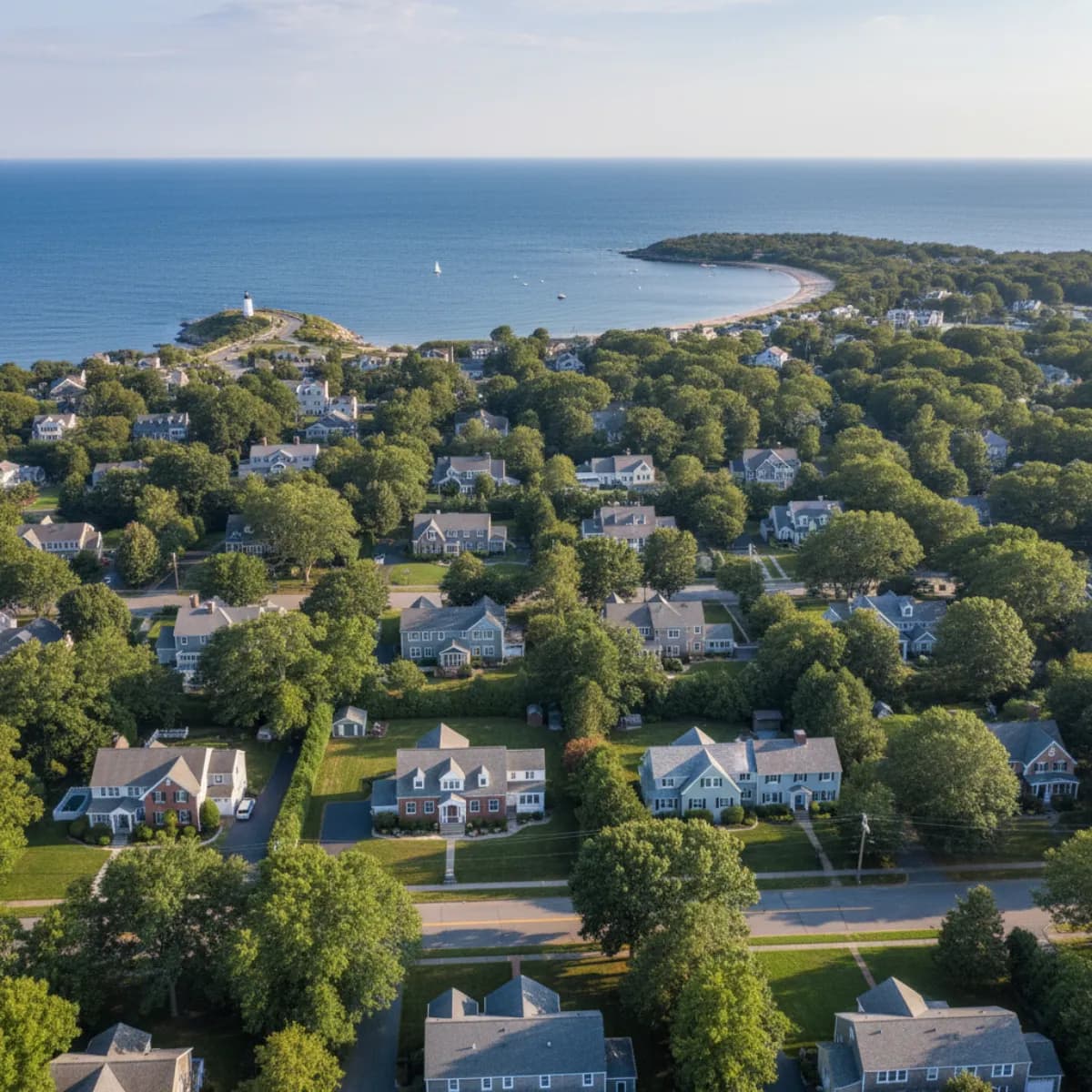
Massachusetts' South Shore stretches from Quincy to Plymouth along some of the most storm-exposed coastline in New England. Get instant quotes from pre-vetted contractors who specialize in coastal wind protection, salt air corrosion resistance, and nor'easter-ready roofing systems for 17+ communities across Plymouth and Norfolk counties.
Free Quotes
no obligations ever
Contractors
licensed, insured, reviewed
Until You Choose
no spam, no lead resale
Contractor Bids
standardized scope comparison
The South Shore of Massachusetts is one of the most demanding environments for residential roofing in the northeastern United States. Stretching from Quincy at the northern edge of Norfolk County through the coastal communities of Hingham, Cohasset, Scituate, Marshfield, and Duxbury, and inland through Braintree, Weymouth, Rockland, and Hanover to Plymouth at the southern boundary, this region faces a unique combination of Atlantic hurricane exposure, relentless nor'easters, corrosive salt air, and the freeze-thaw cycles that make New England roofing particularly challenging. What works for a roof in central Massachusetts or the Pioneer Valley is often inadequate for a South Shore home, especially one within sight of the ocean.
This guide covers the specific roofing challenges facing South Shore homeowners, the materials and installation techniques that perform best in this coastal environment, community-by-community considerations for all 17+ towns in the region, current pricing for Massachusetts roofing materials, and the questions every South Shore homeowner should ask before committing to a contractor. Whether you own a historic colonial in Hingham, a waterfront cottage in Scituate, a suburban ranch in Braintree, or a newer development home in Plymouth, the goal is the same: a roof system that protects your home against everything the Atlantic coast can deliver, installed by a contractor who understands the difference between inland and coastal roofing.
Coastal Roofing Challenges on the South Shore
The South Shore's direct Atlantic exposure creates roofing challenges that inland Massachusetts communities rarely face. Understanding these factors is essential to choosing the right materials and contractor.
Hurricane and Nor'easter Exposure
The South Shore sits directly in the path of Atlantic nor'easters and is vulnerable to hurricane-force winds during tropical systems. The region experienced significant damage from the 1991 Perfect Storm, the 2013 Blizzard Nemo, and repeated nor'easters in the winter of 2018 that devastated Scituate, Marshfield, and Hull. Homes along the coast regularly face sustained winds exceeding 60 mph with gusts past 90 mph during major storm events. Roofing systems must be designed and installed to withstand these forces, with shingles rated for 110 mph or higher and enhanced fastening patterns that exceed standard building code minimums.
Salt Air Corrosion
Homes within a half mile of the Atlantic Ocean experience aggressive salt air exposure that corrodes standard metal roofing components years ahead of their normal lifespan. Galvanized steel flashing, drip edges, and valleys that would last 25-30 years inland may fail in 10-15 years on a coastal South Shore home. The salt aerosol is most concentrated during storm events when ocean spray carries inland on high winds. Every metal component of a coastal roof system — flashing, fasteners, drip edges, valleys, and vents — should be specified in corrosion-resistant materials like copper, stainless steel, or aluminum. This adds $1,500 to $4,000 to a typical roofing project but prevents premature failure that could compromise the entire roof system.
Coastal Flooding and Water Intrusion
Scituate and Hull rank among the most flood-prone communities in Massachusetts. During major storm events, coastal flooding combines with wind-driven rain to create extreme water intrusion risk from both below and above. The South Shore experienced historic flooding during the January 2018 bomb cyclone, when homes in Brant Rock, Humarock, and Hull took on several feet of seawater. While roofing alone cannot prevent flood damage, proper waterproofing, ice and water shield extending well past exterior walls, and sealed roof-to-wall flashing transitions prevent wind-driven rain from compounding flood damage. Homeowners in FEMA V-zones and A-zones should discuss elevated building codes with their roofing contractor.
Winter Ice Dams and Snow Load
The South Shore receives 40 to 55 inches of snow annually, and the freeze-thaw cycles common to coastal Massachusetts create prime conditions for ice dam formation. When attic heat melts snow on the upper roof, water runs down and refreezes at the colder eaves, creating ice dams that force water backward under shingles and into the home. Older colonial homes in Hingham, Cohasset, and Norwell with inadequate attic insulation are particularly vulnerable. Prevention requires R-49 or higher attic insulation, balanced soffit-to-ridge ventilation, and ice and water shield membrane installed at least three feet past the exterior wall line on all eaves. Heated cables are a Band-Aid, not a solution.
South Shore Wind Codes and Building Requirements
Massachusetts building code imposes specific requirements on roofing systems in coastal wind zones. South Shore contractors must understand and comply with these standards.
Wind Speed Design Requirements
- Coastal zone (Hull, Scituate, Marshfield): 120 mph design wind speed per ASCE 7-22
- Near-coastal (Hingham, Cohasset, Duxbury): 115 mph design wind speed
- Inland communities (Braintree, Hanover, Rockland): 110 mph design wind speed
- FEMA V-zones: Additional structural requirements for homes in coastal high hazard areas
Installation Code Requirements
- Six-nail pattern required for shingles in high-wind zones (versus four-nail standard)
- Ice and water shield required at least 24 inches past the interior wall line on all eaves
- Enhanced starter strip installation with high-wind adhesive
- Sealed flashing at all roof penetrations, valleys, and roof-to-wall transitions
Important:Massachusetts requires all roofing contractors to hold a valid Construction Supervisor License (CSL) or Home Improvement Contractor (HIC) registration. Verify your contractor's license at mass.govbefore signing any contract. Unlicensed roofing work is uninsured and may void your homeowner's insurance coverage.
Best Roofing Materials for the South Shore
Material selection on the South Shore should prioritize wind resistance, salt air durability, and water intrusion prevention. Here are the top performers for coastal Massachusetts.
Architectural Shingles (Wind-Rated)
The workhorse of South Shore roofing. Wind-rated architectural shingles from manufacturers like CertainTeed, GAF, and Owens Corning provide excellent protection for the majority of homes in the region. For coastal properties, specify shingles rated for 110 mph or higher with enhanced nailing patterns (six nails per shingle versus the standard four). Class 4 impact-resistant versions add $1-$2 per square foot but qualify for insurance premium discounts of 10-28% with many carriers.
Standing Seam Metal Roofing
The premium choice for South Shore waterfront properties. Standing seam panels mechanically lock together without exposed fasteners, providing superior wind resistance that exceeds any shingle system. For coastal installations, aluminum or galvalume panels outperform painted steel because salt air will not corrode them. The higher upfront cost is offset by a lifespan two to three times longer than shingles and near-zero maintenance. Particularly recommended for homes in Scituate, Hull, Cohasset, and oceanfront properties in Marshfield and Duxbury.
Impact-Resistant Shingles
Class 4 impact-resistant shingles use a rubberized polymer-modified asphalt that resists cracking from hail and wind-blown debris. On the South Shore, where storms drive tree branches and coastal debris onto roofs, these shingles provide meaningful additional protection. The primary financial benefit comes from insurance: many Massachusetts carriers offer 10-28% premium discounts for Class 4 roofing systems. Over a 30-year roof life, insurance savings alone can offset the higher material cost.
Synthetic Slate
Engineered composite materials that replicate the appearance of natural slate at a fraction of the weight. Synthetic slate is a practical option for colonial-era homes in Hingham, Cohasset, and Duxbury where homeowners want historic character without the structural reinforcement required for natural stone. Class 4 impact ratings and wind resistance exceeding 110 mph make synthetic slate a strong performer in the South Shore coastal environment.
Current Massachusetts Roofing Prices
Live pricing data for roofing materials in Massachusetts. South Shore coastal installations typically run 5-15% above these state averages due to wind-rated material requirements and enhanced installation labor.
South Shore Communities We Serve
From Quincy at the Norfolk County border to Plymouth at the region's southern edge, RoofVista connects homeowners across 17+ South Shore communities with pre-vetted roofing contractors who understand coastal construction.
Quincy
Norfolk Co.The "City of Presidents" with diverse housing from waterfront condos in Marina Bay to colonials in Wollaston and West Quincy.
Braintree
Norfolk Co.Suburban community with post-war capes and ranches transitioning to larger colonials in South Braintree neighborhoods.
Weymouth
Norfolk Co.The largest town on the South Shore with coastal exposure in North Weymouth and Wessagusset Beach areas.
Hingham
Plymouth Co.Historic harbor town with well-preserved colonial-era homes, stately center-chimney colonials, and waterfront estates along the harbor.
Scituate
Plymouth Co.One of Massachusetts' most flood-prone communities with direct Atlantic exposure along nearly 12 miles of coastline.
Marshfield
Plymouth Co.Beachfront community where Brant Rock and Green Harbor neighborhoods face direct ocean exposure and frequent nor'easter damage.
Plymouth
Plymouth Co.America's Hometown spans from historic waterfront properties to newer inland developments in the fastest-growing South Shore community.
Hull
Plymouth Co.Narrow peninsula community where virtually every home faces significant wind and water exposure from all directions.
Cohasset
Norfolk Co.Affluent coastal town with exposed rocky coastline, large estate homes, and a historic village center requiring premium materials.
Norwell
Plymouth Co.Inland South Shore town with larger lots and predominantly colonial and contemporary homes set among mature tree canopy.
Hanover
Plymouth Co.Commercial hub of the South Shore with a mix of older village homes near the center and newer developments along Route 53.
Rockland
Plymouth Co.Working-class community with affordable housing stock predominantly built in the mid-twentieth century.
Brockton
Plymouth Co.The largest city in Plymouth County with diverse housing from Victorian-era triple-deckers to modern suburban developments.
Duxbury
Plymouth Co.Affluent coastal community with significant waterfront exposure along Duxbury Bay and premium residential construction.
Kingston
Plymouth Co.South Shore gateway community with a mix of historic village properties and newer commuter-oriented developments.
Abington
Plymouth Co.Compact inland community with primarily mid-century single-family homes and well-established neighborhoods.
Whitman
Plymouth Co.Small inland town with a traditional New England village center and residential neighborhoods of Cape Cods, ranches, and colonials.
South Shore Housing Stock and Roofing Considerations
Historic Colonials in Hingham, Cohasset, and Duxbury
The South Shore contains some of the oldest continuously inhabited communities in America. Hingham's historic center features colonial-era homes dating to the 1600s and 1700s, with center-chimney designs, steep roof pitches, and original timber framing that requires careful assessment before any roofing project. These homes often have complex roof geometries with multiple dormers, valleys, and chimney penetrations that demand experienced craftwork. Many homeowners in these communities choose architectural shingles that complement the historic character, or synthetic slate for homes that originally had wood or natural slate roofs. Cohasset's oceanfront estates add another layer of complexity with their scale: roof areas of 3,000 to 5,000 square feet are common, and the exposed coastal position demands premium wind-rated materials and fastening systems.
Waterfront Cottages in Scituate, Hull, and Marshfield
The coastal villages of Scituate, Hull, and Marshfield contain thousands of waterfront and near-waterfront cottages and bungalows built from the early 1900s through the mid-century period. Many of these homes were originally summer cottages that have been winterized and expanded over the decades. The roofing challenges are intense: direct ocean exposure means salt spray reaches the roof during every storm, wind loads are at their maximum, and many of these homes sit in FEMA flood zones that impose additional construction requirements. Hull's narrow peninsula geography means that homes face wind exposure from multiple directions, and virtually no property in town is more than a quarter mile from tidal water. Scituate's Humarock barrier beach and Minot neighborhoods have experienced repeated devastating nor'easter damage, making storm-resistant roofing a necessity rather than an upgrade. Standing seam metal roofing has gained significant popularity in these communities for its combination of wind resistance, salt air durability, and long service life.
Suburban Developments in Braintree, Weymouth, and Hanover
The inland and semi-coastal communities of Braintree, Weymouth, Hanover, and Rockland represent the South Shore's largest concentration of suburban housing stock. Neighborhoods built from the 1950s through the 1980s feature Cape Cods, ranches, split-levels, and raised ranches with straightforward roof geometries that make replacement efficient and cost-effective. These homes typically have 1,200 to 2,000 square foot roof areas and standard asphalt shingle systems. While they face less extreme wind exposure than oceanfront properties, they are still within the elevated wind zones of coastal Massachusetts and benefit from wind-rated materials. North Weymouth's coastal neighborhoods along the Fore River and Wessagusset Beach face conditions more similar to Scituate than to inland Braintree, and contractors should specify materials accordingly. Braintree's proximity to major highway corridors makes it highly competitive for roofing contractors, which tends to keep pricing in line with Greater Boston averages.
Growing Communities: Plymouth, Kingston, and Inland Towns
Plymouth is the fastest-growing community on the South Shore, with new residential developments expanding west from the historic waterfront. These newer homes, built from the 2000s onward, generally meet current building codes and use modern materials, but many early-2000s developments used builder-grade three-tab shingles that are now reaching end of life. Kingston, Abington, and Whitman offer the South Shore's most affordable housing stock, with cape cods, ranches, and colonials from the mid-twentieth century that provide straightforward roofing projects. Brockton, the largest city in Plymouth County, has a diverse housing stock including Victorian-era triple-deckers, post-war bungalows, and modern developments. The triple-decker roofing market in Brockton is significant, with these multi-family buildings requiring larger roof areas and often presenting access challenges on urban lots.
South Shore Roofing and Insurance Considerations
Insurance is a critical factor for South Shore homeowners considering a roof replacement. The region's coastal exposure means that homeowner's insurance premiums are significantly higher than inland Massachusetts communities, and the condition and material of your roof directly affects both your premium and your ability to obtain or maintain coverage.
Premium Reduction Opportunities
- Impact-resistant shingles (Class 4): 10-28% premium discount with many carriers
- Wind-rated materials (110+ mph): Required for policy renewal in some coastal zones
- New roof discount: Most carriers offer lower premiums for roofs less than 10 years old
- Metal roofing: Additional discounts available for standing seam systems from select carriers
Coverage Risks to Avoid
- Roof age over 20 years: Some carriers impose actual cash value (depreciated) coverage instead of replacement cost
- Three-tab shingles in coastal zones: May trigger non-renewal notices from carriers
- Unlicensed contractor work: Can void coverage if damage occurs due to improper installation
- Missing permits: Unpermitted roof work may void warranty and insurance claims
Contact your insurance agent before finalizing material choices. Many South Shore homeowners recover a significant portion of their roofing investment through insurance premium reductions over the life of the roof.
South Shore Roofing Season Guide
Timing your roof replacement around the South Shore's coastal weather patterns can save money and ensure optimal material performance.
Late April - June (Ideal)
The optimal window for South Shore roof replacement. Temperatures consistently above 45 degrees allow proper shingle adhesive activation. Spring scheduling avoids the summer booking rush and hurricane season. Longer daylight hours allow full work days. Book in February or March for priority spring scheduling with the best contractors.
July - September (Good, with caveats)
Peak roofing season with the longest days and warmest temperatures. However, this overlaps with the Atlantic hurricane season (June 1 - November 30). Tropical systems are infrequent in Massachusetts but can cause scheduling disruptions. Contractor availability is tightest during these months, so pricing may be 5-10% higher. Extreme heat days above 90 degrees can soften shingles during installation.
October - November (Acceptable)
Fall installations work well through mid-November. Cooler temperatures are actually ideal for roofing labor, and contractor pricing often drops as demand eases. The risk is an early nor'easter disrupting the project schedule. Shingle adhesive activation slows as temperatures drop below 50 degrees, so hand-sealing of shingles may be required for late fall installations.
December - March (Emergency Only)
Winter roofing on the South Shore is reserved for emergency repairs and leak mitigation. Cold temperatures prevent proper adhesive bonding, nor'easters create dangerous working conditions, and short daylight hours limit productivity. Full replacements during these months cost 10-20% more due to cold-weather material handling, snow removal from the work area, and reduced crew efficiency. If your roof fails in winter, get a temporary repair to stop active leaks and schedule the full replacement for spring.
Frequently Asked Questions About South Shore Roofing
How much does a roof replacement cost on the South Shore of Massachusetts?
Roof replacement on the South Shore typically costs $9,000 to $28,000 for a standard home, depending on size, material, and coastal proximity. Coastal zone homes in Scituate, Hull, and Marshfield often pay a 10-15% premium for wind-rated materials and enhanced installation.
What roofing materials are best for coastal South Shore homes?
Impact-resistant architectural shingles rated for 110+ mph winds are the baseline. Standing seam metal (aluminum or galvalume) is ideal for waterfront properties due to salt air corrosion resistance and wind ratings up to 180 mph.
Do South Shore homes need special wind-rated roofing?
Yes. Coastal communities fall in ASCE 7 wind zones with design speeds of 110-120 mph. Massachusetts building code requires wind-rated materials and six-nail installation patterns for shingles in these areas.
How do nor'easters and hurricanes affect South Shore roofs?
Nor'easters bring sustained winds of 40-70 mph with gusts over 90 mph. The most common storm damage includes shingle blow-off, flashing failure, and wind-driven rain intrusion. Wind-rated materials and proper installation dramatically reduce risk.
When is the best time to replace a roof on the South Shore?
Late April through October is ideal. Shingle adhesive strips need temperatures above 45 degrees to bond properly. Avoid scheduling during peak hurricane season (August-October) when possible.
Does salt air damage roofing materials on the South Shore?
Salt air accelerates corrosion on metal components like flashing, fasteners, and drip edges. Copper or stainless steel flashing is recommended over galvanized steel for homes within a half mile of the ocean.
South Shore City Pages
Get city-specific roofing information and instant quotes for individual South Shore communities.
Why South Shore Homeowners Choose RoofVista
Instant Satellite Estimates
Enter your address and get an AI-powered roof measurement and cost estimate in minutes. No waiting for a contractor to visit, no phone calls, no pressure. Our satellite analysis measures your roof area, identifies the pitch and complexity, and calculates material and labor costs specific to Massachusetts coastal pricing.
Pre-Vetted Coastal Contractors
Every contractor in the RoofVista marketplace is verified for Massachusetts licensing, active insurance, and documented experience with coastal roofing installations. We verify Construction Supervisor Licenses, general liability and workers' compensation coverage, and check references from completed South Shore projects.
Compare Standardized Quotes
Traditional roofing quotes are impossible to compare because every contractor formats them differently. RoofVista standardizes every bid with identical scope definitions, material specifications, labor breakdowns, and warranty terms. You compare apples to apples, choose the contractor that fits, and your information stays private until you decide to share it.
Get Your South Shore Roof Quote in Minutes
Enter your address to compare instant quotes from pre-vetted Massachusetts contractors who specialize in coastal roofing for the South Shore. No phone calls, no spam, no obligation.
Serving Quincy, Braintree, Weymouth, Hingham, Scituate, Marshfield, Duxbury, Kingston, Plymouth, Hull, Cohasset, Norwell, Hanover, Rockland, Abington, Whitman, Brockton, and surrounding communities.
Compare 571+ vetted roofers near South Shore, Massachusetts
See independent reviews, BBB ratings, and Google data — then compare quotes side-by-side from pre-vetted local contractors.