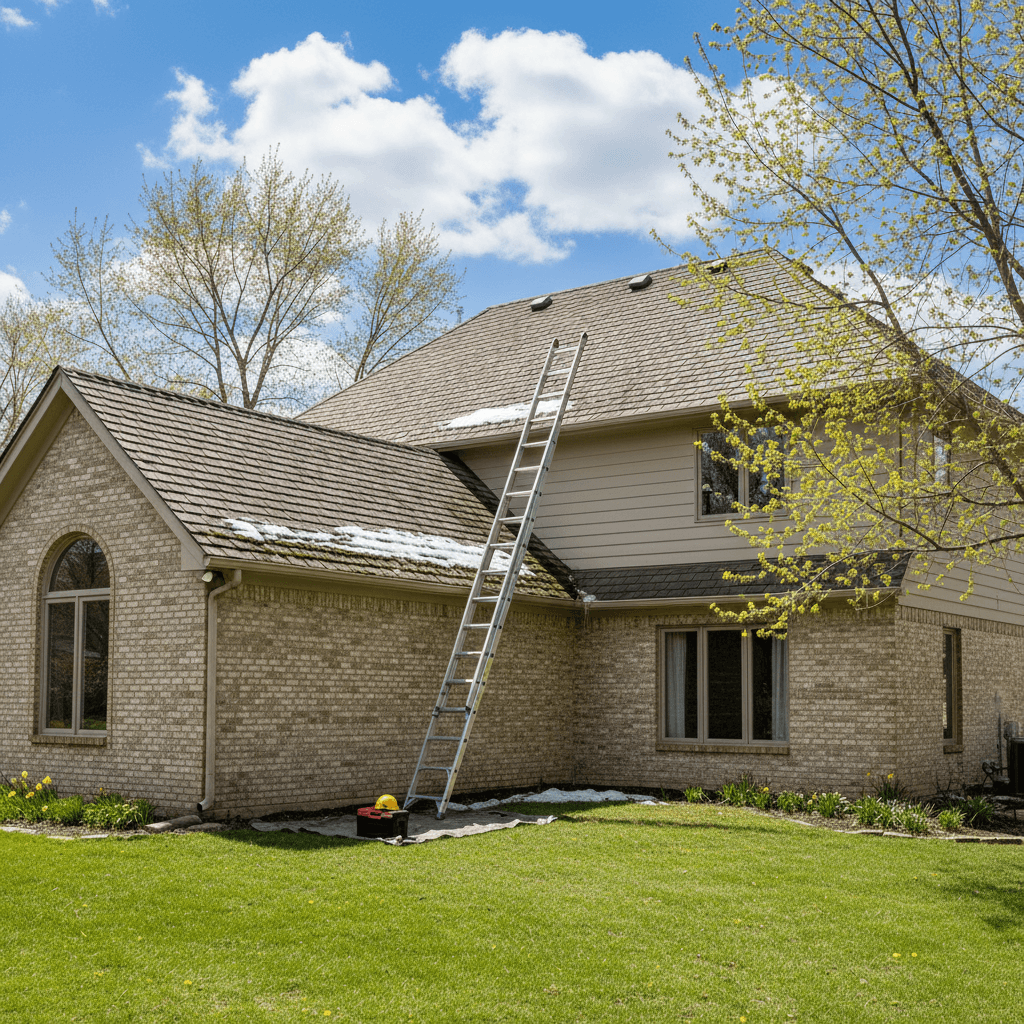
Spring Roof Inspection Checklist: Is Your Roof Ready for Storm Season?
Winter leaves a toll on every roof. Use our 12-point checklist to catch damage now — before summer storms turn a minor issue into an emergency repair.
Get a Free Instant Roof EstimateWhy Spring Inspections Matter
Winter is the harshest season for roofing systems. Freeze-thaw cycles force water into micro-cracks and expand them. Ice dams in the Northeast (ME, NH, VT, MA, RI, CT) back liquid water under shingles and past flashing. Heavy snow loads stress decking and rafters. Wind events lift shingles and break adhesive seals.
Most winter damage is invisible from the ground and develops slowly. A small flashing gap might only leak after a hard summer rain. A cracked pipe boot might not show interior staining for months — by then, mold may be growing in your attic insulation.
Catching damage now gives you time to compare quotes from pre-vetted contractors and avoid the premium pricing of emergency calls. RoofVista serves 12 states: ME, NH, VT, MA, RI, CT, NY, NJ, PA, TX, FL, and CA.
Common Winter Damage Types
- Ice dam backup under shingles and flashing
- Freeze-thaw cracking in caulk and sealants
- Wind-lifted shingles with broken seal strips
- Snow load stress on decking and rafters
- Gutter damage from ice weight
- Condensation damage in under-ventilated attics
12-Point Spring Roof Inspection Checklist
Work through each item systematically. Most can be checked from the ground or your attic — no ladder required for a complete assessment.
Missing or Damaged Shingles
Walk your perimeter and look for shingles on the ground or obvious gaps. Binoculars let you examine the roof field without climbing.
Flashing Around Chimneys & Vents
Look for rust, gaps, or lifted metal at masonry, skylights, and pipe penetrations. Ice dams frequently force water under flashing in northern climates.
Sagging or Uneven Roofline
Sight down the ridge and eaves from multiple angles. Any dipping or bowing indicates potential structural damage that requires immediate professional evaluation.
Gutters and Downspouts
Remove winter debris and check for sagging sections or detached hangers. Check that downspout extensions direct water away from your foundation.
Attic Water Stains or Daylight
Turn off your flashlight in the attic on a bright day and look for pinpoints of light. Check rafters for dark staining, soft spots, or musty odor.
Soffit and Fascia for Rot
Probe wood soffit and fascia with a screwdriver — soft spots indicate rot from ice dam backup. Painted surfaces may hide advanced rot underneath.
Moss, Algae, or Dark Streaks
Green moss traps moisture and physically lifts shingles. Dark streaks are algae feeding on limestone filler — treat early before granule loss occurs.
Caulking Around Skylights
Freeze-thaw cycles crack caulk around skylight frames. Check the interior curb for staining and the exterior bead for gaps or shrinkage.
Rubber Boots Around Pipe Vents
Neoprene pipe boots crack in cold climates after 10+ years. A cracked boot allows water to run directly down into the roof deck.
Granule Loss in Gutters
Heavy granule accumulation after winter indicates accelerated aging or hail impact that may warrant a professional assessment.
Lifted or Curling Shingle Edges
Wind events break the adhesive seal strip that holds shingle tabs down. Lifted edges expose the underlayment to wind-driven rain.
Ridge Caps and Hip Shingles
Ridge and hip shingles take the most weather exposure. Cracking, splitting, or missing caps leave the roof peak fully exposed to rain.
When to DIY vs. Call a Pro
Safety first. Ground-level and attic checks are safe for homeowners — getting on the roof is not.
Safe to DIY
- Visual inspection from the ground with binoculars
- Checking gutters and downspouts
- Attic inspection for staining and daylight
- Clearing gutters (single-story, stable ladder)
- Photographing and documenting visible damage
Hire a Professional
- Any roof work on a two-story or taller home
- Steep pitch (6:12 or greater) — even single-story
- Active leaks or visible interior water damage
- Structural issues: sagging, uneven roofline
- Flashing repair or replacement
- Roof age 15+ years — get a full assessment
Regional Spring Concerns by State
What to prioritize depends on what your region experienced this winter. RoofVista covers all 10 of these states.
New England
ME · NH · VT · MA · RI · CT
- →Ice dam damage — check eaves, valleys, and attic for water infiltration
- →Freeze-thaw cracking in pipe boot rubber and caulk around penetrations
- →Heavy snow load deflection — sight your roofline from street level
Mid-Atlantic
NY · NJ · PA
- →Nor'easter wind events lift and crack ridge caps — inspect the peak line
- →Condensation damage from temperature swings — check attic insulation
- →Gutter ice weight can pull gutters off fascia — check all attachment points
Texas
TX
- →Hail season starts in April — document condition now before storm season
- →Wind damage from winter fronts — check for lifted shingles and broken seals
- →Year-round UV degradation accelerates granule loss — check gutters after rain
Spring Maintenance Tips
A few proactive steps each spring extend your roof's lifespan and protect your home insurance coverage.
Trim Overhanging Branches
Trim limbs back at least 6 feet — they scrape shingles in wind and deposit moisture-holding debris.
No Pressure Washer on Shingles
Use a soft brush or garden hose only. Pressure washing strips granules and voids most manufacturer warranties.
Professional Inspection Every 3–5 Years
A licensed inspector identifies flashing corrosion, ventilation deficiencies, and deck issues invisible from the ground.
Document with Date-Stamped Photos
Spring photos showing pre-storm condition are powerful evidence for insurance claims and establish a wear baseline.
Review Your Warranty Terms
Most warranties require documented maintenance and can be voided by power washing or improper repairs — keep records.
Spring Inspection Revealed Damage? Here's What to Do Next.
Enter your address and RoofVista generates a free satellite-powered instant estimate in minutes — no contractor visit required. Our system measures your roof from aerial imagery and applies real local pricing for your material type and region.
Compare standardized quotes from pre-vetted contractors. Every contractor bids on the same written scope — so price differences reflect actual labor cost, not hidden material substitutions.
Your contact information stays private until you choose a contractor. No spam calls, no pressure. See also: insurance claims by state and how to read a scope of work.
Free satellite-powered instant estimate
No contractor visit needed to get a number
Standardized scope sent to all bidders
True price comparison, not apples to oranges
Pre-vetted contractors only
Licensed, insured, and background-checked
Contact stays private until you choose
No spam calls, no pressure sales
Frequently Asked Questions
How often should I inspect my roof?
Inspect your roof at least twice a year — once in spring after winter ends and once in fall before winter arrives. Also inspect after any major storm with high winds, hail, or heavy snowfall.
Can I inspect my roof myself?
You can safely perform a ground-level visual inspection and an attic inspection without climbing. For anything requiring you to get on the roof — especially a two-story home or steep pitch — hire a professional.
What does a professional roof inspection cost?
Professional roof inspections typically cost $150–$400 depending on roof size and region. Many contractors offer free inspections alongside a replacement quote. RoofVista's satellite estimate is always free.
When is the best time for a spring inspection?
Late March through May — after the last freeze but before summer storm season peaks. In Texas, finish your inspection before April when hail season begins.
Should I inspect after every storm?
Yes — do a quick ground-level visual after any storm with hail, winds over 50 mph, or heavy snow. Check gutters for granule accumulation. Even minor hail can accelerate shingle deterioration.
How do I document damage for insurance?
Take date-stamped photos from multiple angles — ground level, from a ladder at the eaves, and from your attic. Note the storm date, gather weather reports, and keep copies with your insurance submission.
Get Your Free Instant Roof Estimate
Spring inspection found damage? Enter your address and get a satellite-powered estimate in minutes. Compare quotes from pre-vetted contractors — no spam, no pressure.
Get Instant Roof Replacement Quotes