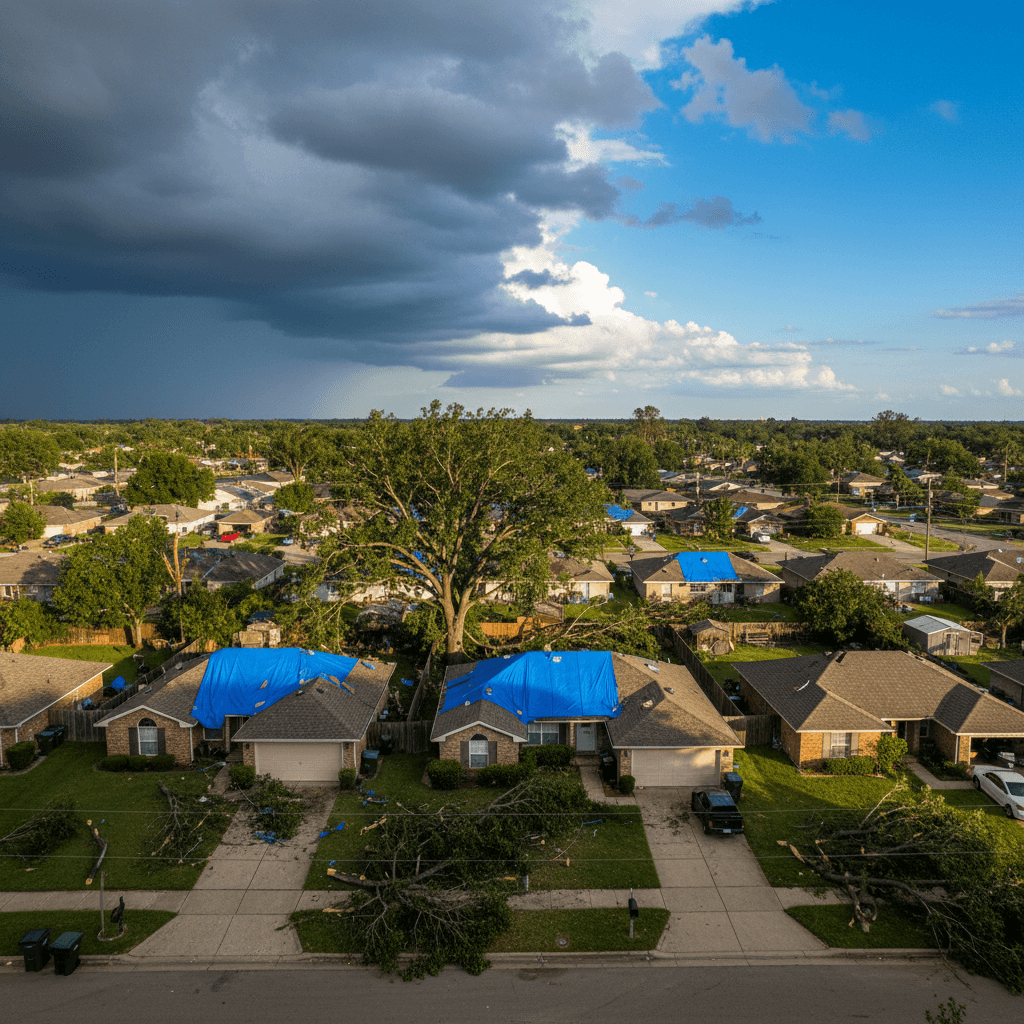
Filing a Hail or Wind Damage Roof Insurance Claim
A state-by-state guide covering adjuster timelines, documentation requirements, and common denial pitfalls for Texas, New Jersey, Connecticut, Massachusetts, and New York.
Get Your Free Damage EstimatePeak storm season: April through September. If your roof sustained hail or wind damage this season, file your claim promptly — delays give insurers grounds to dispute the cause and timing of damage.
The 5-Step Claim Process
Regardless of your state, this sequence gives you the strongest possible claim.
Document Damage
Photos + video, timestamped
File the Claim
Within 24-48 hours of event
Adjuster Inspection
Schedule and attend
Independent Estimate
Get before adjuster visit
Negotiate / Settle
Use appraisal clause if low
State-Specific Details
Filing rules, regulators, and key watch-outs differ by state. Find yours below.
Texas
No statutory deadline — act within days- Highest hail claim volume in the US — insurers scrutinize closely
- Watch for storm chasers soliciting immediately after events
- Assignment of Benefits (AOB) rules — be cautious signing over claim rights
- Prompt notice required; delays invite "when did damage occur?" disputes
Regulator: Texas Department of Insurance (TDI)
New Jersey
"Reasonable time" — file within weeks, not months- NJ DOBI offers consumer complaint process for denied or delayed claims
- Appraisal clause is common — use it if the settlement seems low
- Supplemental claims allowed when hidden damage found during repair
- Hail less frequent than wind; many claims are wind-driven rain
Regulator: NJ Department of Banking & Insurance (DOBI)
Connecticut
1-year suit limitation typical in CT policies- Wind damage more common than hail in CT — coastal exposure matters
- CT Insurance Department handles formal complaints and mediations
- Prompt notice clauses enforced — do not wait to file
- Cosmetic damage (dented gutters, scuff marks) often excluded
Regulator: CT Insurance Department
Massachusetts
Prompt notice required; varies by policy- Nor'easter and ice dam claims are common — document attic insulation
- Ice dams: covered as sudden/accidental, but maintenance denials are common
- MA DOI consumer advocacy unit assists with disputed claims
- Separate wind/hail deductibles are increasingly used in coastal zones
Regulator: MA Division of Insurance (DOI)
New York
1-year suit limitation typical; check your policy- Highest wind claim volume in the Northeast
- NY DFS accepts complaints at 1-800-342-3736 or online
- Policies vary widely — some allow 2 years; read your declarations page
- Supplemental claims must generally be filed within the original claim window
Regulator: NY Department of Financial Services (DFS)
6 Common Claim Denial Reasons
Knowing why claims are denied is the first step to avoiding it.
Missed Filing Deadline
Filing weeks or months after a storm gives insurers grounds to deny, citing inability to verify cause.
Pre-Existing Damage
Adjusters document prior wear. Maintenance records and inspection reports help distinguish old from new damage.
Maintenance Neglect
Policies exclude damage that results from failure to maintain the roof. Annual inspections provide a paper trail.
Cosmetic Damage Exclusion
Many policies now exclude cosmetic dents or scuffs that do not affect function — read the exclusions section.
Insufficient Documentation
Vague photos or no contractor estimate weakens your claim. Timestamped images and written scopes are essential.
Wrong Deductible Applied
Separate wind/hail deductibles (often 1-2% of dwelling value) can be much larger than standard deductibles.
How to Strengthen Your Claim
Document with timestamped photos
Shoot date/time-stamped images of every damaged shingle, gutter, and flashing point.
Get an independent estimate first
Obtain pre-vetted contractor estimates before the adjuster visits so you have a baseline for negotiation.
Keep all receipts and communications
Save every email, letter, and phone log. Written records protect you if the claim is disputed.
Know your policy limits and deductibles
Separate wind/hail deductibles can be 1-2% of dwelling value — far higher than a flat deductible.
For Texas-specific hail damage guidance, see our detailed Texas Hail Damage Claim Guide.
Frequently Asked Questions
How long do I have to file a roof insurance claim in Texas?
What is the filing window for roof claims in New Jersey?
Does Connecticut have a deadline for wind damage claims?
How does Massachusetts handle ice dam damage claims?
What is the filing deadline for roof damage claims in New York?
Can I get a second estimate if my insurance adjuster is too low?
Get Your Free Roof Damage Estimate
Before you meet the adjuster, get instant roof replacement quotes from pre-vetted contractors. A written scope is your strongest negotiating tool.
Get Instant Quotes