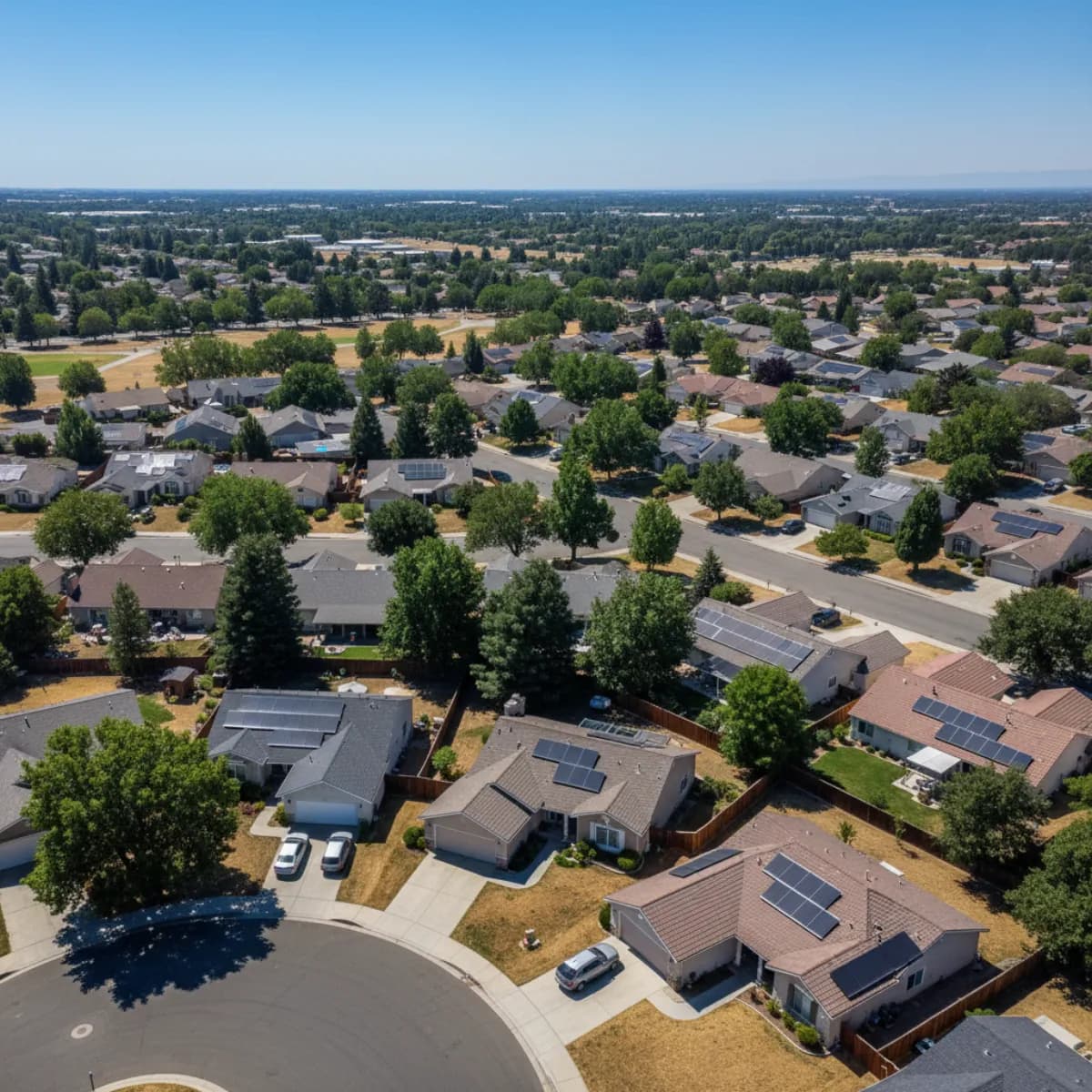
Key Takeaways
- •Central Valley summer roof surfaces hit 160–180°F then drop 100° overnight, producing thermal shock that asphalt shingles are not engineered to survive long-term.
- •A 25–30 year architectural shingle typically only delivers 15–22 years in Sacramento; 3-tab shingles frequently fail at 12–15 years.
- •Title 24 cool roof compliance is mandatory in Sacramento (Climate Zones 11, 12, 13) and narrows product and color selection on every re-roof.
- •Concrete tile, clay tile, and standing-seam metal are inert to Central Valley heat and usually win on 50-year total cost of ownership despite higher upfront pricing.
- •Proper soffit-and-ridge attic ventilation can extend shingle lifespan by 2–4 years and is dramatically cheaper to install during a re-roof than as a retrofit.
In This Guide
Sacramento Roof Replacement Cost Overview
Sacramento roof replacement in 2026 generally runs $6 to $10 per square foot installed for the most common choices, with premium tile and metal installations pushing $13 to $18. For a typical 2,200 square foot single-family home in Elk Grove, Roseville, Folsom, or the City of Sacramento, that translates to a planning range of roughly $13,000 to $22,000 for an architectural shingle replacement and $24,000 to $40,000 for a concrete or clay tile install. These figures reflect labor at Central Valley rates, current material pricing as of April 2026, and standard permit and tear-off costs for a single-layer replacement.
Costs in the Sacramento metro cluster tightly because the market is mature and competitive. The difference between a low-end Elk Grove shingle bid and an Old City Sacramento historic home with steeper pitch and third-layer tear-off is more about project complexity than geography. What moves the number most is material choice, roof pitch (steeper pitches carry labor premiums), and any tear-off beyond a single layer.
What's Driving Sacramento Prices in 2026
- April 2026 manufacturer price increases pushed GAF, Owens Corning, and CertainTeed shingle pricing up roughly 4-7% from late 2025, following a similar hike the prior spring.
- Title 24 cool roof compliance is mandatory in Climate Zones 11, 12, and 13, which covers all of the Sacramento metro. This constrains color and product selection and can add $0.10-$0.40 per square foot for qualifying shingles.
- Labor pricing in Sacramento sits mid-range for California, typically $3.50-$5.50 per square foot for shingle install and $6-$9 for tile, reflecting both the competitive contractor pool and California prevailing wage norms.
- Permits and inspections across the Tri-Cities add $300-$800 to most projects, depending on jurisdiction and the specific cool-roof product submittal requirements.
How Central Valley Heat Destroys Roofs
If you only learn one thing from this guide, make it this: the roof you buy in Sacramento will not last as long as the marketing implies, because Central Valley heat is an aggressive failure accelerant that manufacturers rarely account for in warranty marketing. Understanding the physical mechanisms helps you choose a material that actually matches how long you plan to own the home.
The Thermal Shock Cycle
On a typical July afternoon in Sacramento, a dark asphalt shingle roof surface can reach 160 to 180 degrees Fahrenheit in direct sun. Overnight, the same surface drops to 65 to 75 degrees. That 90 to 110 degree daily swing happens roughly 100 times per summer. Every cycle expands and contracts the bitumen binder holding granules to the shingle mat and holding the mat itself together. Eventually the binder fatigues, the mat delaminates, and shingles begin to curl, cup, or crack. This is not a defect; it is expected material behavior, but the speed at which it occurs in Sacramento is two to three times faster than in mild coastal California climates.
UV Degradation of Granules and Binders
Sacramento averages 270+ clear-sky days per year, which means roofs are absorbing ultraviolet radiation essentially every daylight hour for most of the year. UV breaks down the adhesive that bonds granules to shingles, which is why the first visible sign of a tired Sacramento roof is granule loss accumulating in gutters and downspouts. Once the granule layer thins, the underlying bitumen is exposed directly to UV, which accelerates binder failure exponentially. Darker colors absorb more UV and heat and fail noticeably faster than cool-rated light colors, which is one reason Title 24 pushes toward reflective products.
Attic Heat Feedback
The damage is not only top-down. An under-ventilated Sacramento attic can run 140 to 160 degrees in summer, which cooks shingles from underneath. Asphalt binder softens above about 150 degrees, so a poorly ventilated roof essentially bakes its own mat every afternoon. This is why two identical shingle roofs in the same Roseville tract can reach end-of-life several years apart based on nothing more than whether one has proper soffit-and-ridge ventilation.
Why Warranties Are Misleading in Sacramento
Manufacturer warranties of 25, 30, or 50 years sound impressive but almost always pro-rate steeply after the first 5 to 10 years and exclude labor for most of their life. In practice, Central Valley shingle warranty claims are rare and small because degradation tends to be “normal wear” from the warranty’s perspective, even when the roof has failed at well under its advertised life. Plan around realistic Sacramento lifespan, not the marketing number on the package.
Real-World Material Lifespan in Sacramento
Here is what Sacramento contractors see in the field, cross-referenced with regional utility surveys and insurer claim data. These are the numbers you should use when comparing total cost of ownership across materials.
| Material | Advertised | Sacramento Reality | $/sqft installed |
|---|---|---|---|
| 3-Tab Asphalt Shingle | 20-25 yr | 12-15 yr | $5-$7 |
| Architectural Shingle | 25-30 yr | 15-22 yr | $7-$10 |
| Premium / Impact Shingle | 30-50 yr | 22-28 yr | $10-$13 |
| Concrete Tile | 50+ yr | 50-75 yr | $10-$14 |
| Clay Tile (Spanish / Mission) | 50-100 yr | 75-100+ yr | $13-$18 |
| Standing Seam Metal (Kynar) | 40-50 yr | 40-50 yr | $12-$18 |
The pattern is clear: asphalt shingles lose 5 to 10 years of advertised life in Sacramento, while tile and metal largely hold their ratings because they are inert to heat and UV. For a homeowner planning to stay in the home 20+ years, clay or concrete tile frequently wins on total cost despite costing nearly twice as much upfront, because you avoid one or two additional tear-off-and-replace cycles.
When Architectural Shingle Still Wins
Shingle is the right choice when (1) you plan to sell within 8-10 years, so longevity is not critical, (2) the existing roof framing was not designed to carry tile load and you would pay $3,000-$6,000 for structural upgrades to switch, or (3) local HOA or tract character strongly favors shingle and tile would create resale friction. In those cases, a premium architectural shingle with a light cool-rated color will get you the best possible Sacramento lifespan from an asphalt product.
See Your Sacramento Roof Estimate in 30 Seconds
Skip three contractor visits. Our satellite measures your roof in seconds and matches you with pre-vetted California contractors — no phone number, no sign-up required.
Sacramento Heat & 50-Year Cost Calculator
Model your specific situation. Adjust the material, attic ventilation quality, and tree shade coverage to see how Central Valley heat affects your realistic roof lifespan, then compare 50-year total cost of ownership across every common Sacramento material.
Sacramento Heat Lifespan & 50-Year Cost Calculator
Model how Central Valley heat, attic ventilation, and tree shade affect real-world roof lifespan. Compares 50-year total cost of ownership across materials.
The most common Sacramento roof. Real-world lifespan is 15-22 years despite 25-30 year warranties that pro-rate heavily after year 10.
Poor venting can add 10-15°F to attic temps, cooking shingle binders from below.
Mature oak / elm canopy can cut peak surface temps 20-40°F and meaningfully extend shingle life in Sacramento, Davis, and mature East Sac neighborhoods.
Estimated Sacramento Lifespan
21 years
vs 28 year mild-climate rating — Central Valley heat shortens useful life by ~8 years before shade/ventilation adjustments.
50-Year Total Cost of Ownership (2,200 sqft Sacramento tract home)
Concrete TileLOWEST TCO
~55 yr Sacramento lifespan · 1 install in 50 years
$24,200
$24,200 per install
Clay Tile (Spanish / Mission)
~70 yr Sacramento lifespan · 1 install in 50 years
$30,800
$30,800 per install
3-Tab Asphalt Shingle (budget)
~13 yr Sacramento lifespan · 4 installs in 50 years
$48,400
$12,100 per install
Premium / Impact-Rated Shingle
~27 yr Sacramento lifespan · 2 installs in 50 years
$48,400
$24,200 per install
Architectural / Dimensional Shingle
~20 yr Sacramento lifespan · 3 installs in 50 years
$52,800
$17,600 per install
Standing Seam Metal
~47 yr Sacramento lifespan · 2 installs in 50 years
$61,600
$30,800 per install
TCO assumes flat pricing. Real labor and material costs tend to rise 3-5% annually, so tile and metal’s advantage grows over time because you avoid repeat installs at future labor rates.
Planning estimates for Sacramento and Central Valley, based on pre-vetted contractor rates as of April 2026. Real lifespan varies with slope, color, install quality, and specific micro-climate. Get a satellite-measured quote for your address below.
Get Instant Sacramento Quotes →Title 24 Cool Roof Compliance (Mandatory in Sacramento)
California Title 24 Part 6 imposes mandatory cool-roof reflectance and emittance requirements on re-roofing projects in Climate Zones 10 through 15. Sacramento and the entire Central Valley fall into Climate Zones 11, 12, and 13, which means cool roof compliance is not optional for your 2026 replacement.
What Counts as a Cool Roof
A cool roof is one that reflects a qualifying fraction of incoming solar radiation and emits absorbed heat back to the sky instead of transferring it into the attic. The measured properties are solar reflectance (0.0 to 1.0) and thermal emittance (0.0 to 1.0), certified by the Cool Roof Rating Council (CRRC). Your product must carry a current CRRC listing that meets or exceeds the Title 24 prescriptive value for your climate zone and roof slope.
- Low-slope (<2:12): minimum 0.63 initial solar reflectance and 0.75 thermal emittance (or SRI 75). This effectively requires a white or light-colored TPO/PVC membrane or a reflective coating.
- Steep-slope (≥2:12) residential: minimum 0.20 solar reflectance and 0.75 thermal emittance (or SRI 16). Most light and medium-tone architectural shingles, concrete tile, and metal roofing meet this without issue; very dark shingles may not.
- Steep-slope non-residential: higher bar at 0.23 reflectance with SRI 23, plus optional performance paths via extra insulation or PV offsets.
How It Affects Your Sacramento Project
Practically, Title 24 narrows color and product selection toward lighter shades and cool-rated specialty shingles. GAF Timberline HDZ, Owens Corning Duration Cool, and CertainTeed Landmark all offer Sacramento-qualifying cool-roof shingle options. For tile, virtually all natural terracotta and light-colored concrete meet the requirement; painted dark tile may need a cool coating. For metal, factory-applied reflective Kynar finishes in light colors qualify easily, while raw dark metal may not. Your contractor should specify the exact CRRC listing on the proposal, and the building department will verify on plan review.
Tri-Cities Permits: Sacramento vs Roseville vs Folsom
Roof replacement permits in the Sacramento metro are generally straightforward, but each jurisdiction has its own quirks. Understanding the local workflow helps you vet contractor proposals and avoid surprises at inspection time.
City of Sacramento
Online permit portal, typically same-day issuance for like-for-like replacement. Final inspection after tear-off and install. Cool-roof product listing required on the permit application. Typical fees $300-$550.
Roseville (Placer Co.)
More formal plan-review step; cool-roof submittal required up front. Higher fees than City of Sacramento, typically $400-$700. Mid-reroof (deck) inspection sometimes added for tile conversions.
Folsom
Similar workflow to Roseville with a plan-review step and cool-roof verification. Properties near the WUI edge (El Dorado Hills border, foothill neighborhoods) may also face Chapter 7A fire-hardening requirements.
Elk Grove
Sacramento County workflow, streamlined online. Typical fees $300-$600. Most re-roofs complete inspection the same week as install. HOA approval often the slower path in newer master-planned communities.
Davis (Yolo County)
Strict cool-roof enforcement; product submittal scrutinized carefully. Permit processing can take 3-7 business days. Davis also has a strong solar-ready preference and may ask about future PV compatibility during review.
Unincorporated County
Sacramento County, Placer County, El Dorado County each have their own building departments. Foothill areas in El Dorado and Placer are often in mapped FHSZ zones and require Chapter 7A fire-rated assemblies on top of Title 24.
Attic Ventilation: The Hidden Lifespan Multiplier
Ventilation is the single most under-appreciated factor in Sacramento roof lifespan. A properly ventilated attic can stay within 15-20 degrees of outside air temperature even on a 105-degree day, while a poorly ventilated attic can run 40-50 degrees hotter. That heat transfers directly into the bottom of the roof deck and shingles, compounding the surface-temperature damage covered earlier.
The 1:150 Rule
California code requires 1 square foot of net free ventilation area per 150 square feet of attic floor, split evenly between intake (soffit) and exhaust (ridge or gable) paths. A continuous soffit vent paired with a continuous ridge vent is the most balanced and maintenance-free system and should be the default for any Sacramento re-roof. Turbine vents and box vents can work but are less consistent and more prone to leaks at flashing.
Solar Attic Fans
For homes where passive ventilation is limited by roof geometry or existing soffit configuration, a solar-powered attic fan can drop peak attic temperatures by 20-40 degrees. Typical products move 800-1,600 CFM and install for $400-$900. Because they run on their own solar panel, there is no wiring and no operating cost. Avoid traditional line-powered attic fans: they consume grid power and can depressurize the attic, pulling conditioned air out of the living space and raising AC load.
Do It During the Re-Roof
If you are already replacing your roof, upgrading ventilation at the same time costs a fraction of a standalone retrofit because the deck is exposed and cutting vent openings is fast. A full ridge-and-soffit continuous vent upgrade adds $600-$1,400 to a re-roof and typically extends shingle life by 2 to 4 years, which pays for itself on the next replacement cycle alone.
Atmospheric River & Flood Preparation
Sacramento's climate is not just hot — it also routinely absorbs atmospheric river events that dump 3 to 10 inches of rain in 24 to 48 hours. Roofs that handle summer heat fine can still fail at valley flashing, kick-out flashing, and low-slope transitions when a real soaker comes through. Preparing for AR season is the other half of a good Sacramento roof.
Steep-Slope Priorities
- Gutter sizing: upgrade from standard 5-inch to 6-inch gutters with oversized downspouts if you are already re-roofing. Worth every dollar on Sacramento homes with large roof areas.
- Valley flashing: closed-cut valleys with proper ice-and-water shield underneath handle AR volume far better than open metal valleys that have aged and developed pinholes.
- Kick-out flashing: the single most common leak origin in older Sacramento tract homes. Every roof-to-wall junction where water runs off the roof into a sidewall needs a formed kick-out diverter, not just caulk.
- Starter strip and drip edge: verify the eave-line detailing. AR rain driven sideways by wind finds any gap at the roof edge.
Low-Slope and Flat Roofs
Mid-century Sacramento homes, newer modern tracts, and commercial buildings often have low-slope or flat roof sections where ponding water is the primary failure mode during AR events. Before winter, confirm that all scuppers and internal drains are clear, the membrane is fully sealed at every penetration, and any chronic ponding areas have been addressed with tapered insulation or additional drains. A TPO or PVC membrane in good condition can handle sustained AR rainfall; a 20-year-old built-up or mod-bit roof often cannot.
Neighborhood-Level Flood Exposure
South Sacramento, Natomas, riverfront Rio Linda, and low-lying parts of West Sacramento have the highest flood exposure in the metro. In these areas, the roof is just one piece of the water-management plan: downspouts should dump well clear of foundations, grading should slope away from the house, and yard drains should be clear before AR season. Schedule any roof replacement to finish by mid-October so you are not racing the first AR events of the season with an exposed deck.
Get an Instant Sacramento Roof Replacement Quote
Enter your Sacramento-area address to get satellite-measured roof data and instant estimates from pre-vetted local contractors who understand Central Valley heat, Title 24 compliance, and AR-season flood prep. Compare quotes side by side.
Sacramento-Area Neighborhood Pricing
Pricing across the Sacramento metro is more similar than different, but there are meaningful patterns tied to home age, roof pitch, and HOA preferences in each community.
City of Sacramento (East Sac, Land Park, Pocket, Natomas)
Wide age range from 1920s Land Park bungalows to 2010s Natomas tracts. Historic homes often have steeper pitches and multi-layer tear-offs that push projects to the higher end of the range. Mature tree canopy in East Sac and Land Park helps shingle lifespan measurably.
Elk Grove
Largely 1990s-2010s tract construction, moderate pitches, minimal tree shade. Typical architectural shingle replacement runs $13,000-$20,000 on a 2,200 sqft home. HOA approval is often the longest lead item; confirm approved product list before signing a contract.
Roseville
Mix of older West Park and newer Westpark/Fiddyment tracts. Placer County permit workflow is more formal than Sacramento County; budget an extra week of lead time. Many Roseville neighborhoods use concrete tile as the default, so tile-for-tile replacement is the common path.
Folsom
1980s-2010s suburban mix. Foothill-adjacent neighborhoods (Empire Ranch, Broadstone edge) may fall into mapped fire hazard severity zones that trigger Chapter 7A fire-rated assemblies. Verify WUI status before selecting materials.
Davis
University town with strong cool-roof and solar-ready preferences. Yolo County building department enforces Title 24 carefully. Older central Davis neighborhoods often have mature tree cover; newer West Davis tracts run hotter with less canopy protection.
Citrus Heights, Carmichael, Fair Oaks
Older 1960s-1980s inner-ring suburbs. Mature tree canopy helps shingle lifespan, but older deck condition can add tear-off complexity and deck-repair costs to a re-roof. Budget a contingency line for any dry-rot discovered during tear-off.
Sacramento Roof Replacement FAQ
Why do asphalt shingles fail faster in Sacramento than in mild climates?
Sacramento and the Central Valley subject roofs to one of the most punishing thermal cycles in California. Summer roof surface temperatures routinely hit 160 to 180 degrees Fahrenheit in direct sun, then drop to the 65-75 degree range overnight, producing a 100-degree daily swing for three to four months each year. This thermal shock expands and contracts the bitumen binder in asphalt shingles, eventually causing granule loss, mat delamination, and curling. At the same time, Central Valley UV exposure is extremely high because clear-sky summer days are the norm. UV radiation breaks down granule adhesives and the bitumen matrix directly. The combined effect is that 3-tab shingles marketed for 20 years typically only last 12 to 15 years in Sacramento, and architectural shingles advertised for 25 to 30 years typically reach only 15 to 22 years of serviceable life before needing replacement.
What is the best roof material for Central Valley heat?
Concrete tile and clay tile are the strongest performers in Sacramento and the Central Valley because they are essentially inert to heat and UV. The tile itself can easily last 50 to 75 years, and the only real wear item is the underlayment, which typically needs replacement once in the lifetime of the tile. Clay and concrete also provide meaningful thermal mass, which buffers attic temperatures and reduces cooling load. Standing seam metal with a reflective Kynar 500 finish is the second-best choice and often beats tile on total weight, making it suitable for retrofits where the frame was not designed for tile. Premium architectural shingles are acceptable but should be chosen with realistic expectations: even top-tier products rarely exceed 22 years in Central Valley heat. If you plan to stay in the home long term, tile or metal typically wins on total cost of ownership despite costing roughly twice as much per square foot upfront.
Does Sacramento require Title 24 cool roofs?
Yes. Sacramento and most of the Central Valley fall into California Climate Zones 11, 12, and 13, where Title 24 Part 6 imposes mandatory cool roof requirements on most re-roofing projects. For low-slope roofs (less than 2:12 pitch), a minimum solar reflectance of 0.63 and thermal emittance of 0.75 are generally required, which effectively mandates a CRRC-rated cool roof membrane or reflective coating. For steep-slope residential roofs (2:12 or greater), a solar reflectance of 0.20 or higher is typically required, which is easily met by most light-colored architectural shingles, concrete tiles, and metal roofing. Dark black shingles may require a cool-rated alternative or offset through additional insulation. Your permitting jurisdiction (City of Sacramento, Sacramento County, Roseville, Folsom, Elk Grove, or Davis) will verify compliance during plan review. Confirm with your contractor that the specific product selected carries a current CRRC listing and matches the requirement for your climate zone.
How do permits differ between Roseville, Folsom, and the City of Sacramento?
Permit workflows vary meaningfully across the Tri-Cities and surrounding jurisdictions, and these differences affect both project timing and cost. The City of Sacramento typically issues straightforward re-roofing permits online with same-day issuance for like-for-like replacement and a standard final inspection after tear-off and install. Roseville, which sits in Placer County, generally has a more structured plan-review step and may require a cool-roof product submittal upfront; permit fees tend to be slightly higher than Sacramento city. Folsom follows a similar pattern to Roseville with a moderate plan-review step. Elk Grove operates under Sacramento County or city depending on exact address and tends to be streamlined. Davis, in Yolo County, enforces cool-roof and energy requirements carefully and can add a few days to permit issuance. Unincorporated county areas generally use the county building department and require HOA or fire district review in any WUI-adjacent foothill location. Your contractor should know the local workflow and bundle the permit into their proposal.
Do I need attic fans or additional ventilation in Sacramento?
Proper attic ventilation is one of the most underrated factors in Sacramento roof lifespan. Poorly ventilated attics in Central Valley heat can run 140 to 160 degrees, which cooks shingle binders from below and shortens useful life by years. The baseline target is 1 square foot of net free ventilation area per 150 square feet of attic floor, split evenly between intake (soffit) and exhaust (ridge or gable). Continuous soffit vents paired with a continuous ridge vent is the most effective passive system for Sacramento homes. Solar-powered attic fans can be a cost-effective upgrade for homes with limited passive ventilation, typically pulling 800 to 1,600 CFM and adding 400 to 900 dollars installed. Traditional electric attic fans are less favored because they consume power and can create negative pressure that pulls conditioned air out of the living space. If you are re-roofing, adding or upgrading ventilation during the project is dramatically cheaper than retrofitting it later and can extend shingle life by 2 to 4 years.
How should I prepare my roof for atmospheric river season in Sacramento?
Sacramento sits at the confluence of the American and Sacramento Rivers and routinely absorbs atmospheric river events that dump 3 to 10 inches of rain in 48 hours. For steep-slope roofs, the main priorities are gutter and downspout capacity (6-inch gutters and oversized downspouts are worth the upgrade), valley flashing condition, and kick-out flashing at roof-to-wall intersections which is a common leak origin during heavy sustained rain. For low-slope and flat roofs, which are common on mid-century Sacramento homes and commercial properties, standing water is the critical failure mode. Before the rainy season, verify that scuppers and internal drains are clear, the membrane is fully sealed at all penetrations, and any ponding areas have been addressed with tapered insulation or additional drains. Homes in South Sacramento, Natomas, and riverfront Rio Linda areas face the highest flood exposure; verify that roof drainage does not dump onto foundations already at risk. Schedule any roof work to finish by mid-October before the first atmospheric river events typically arrive.