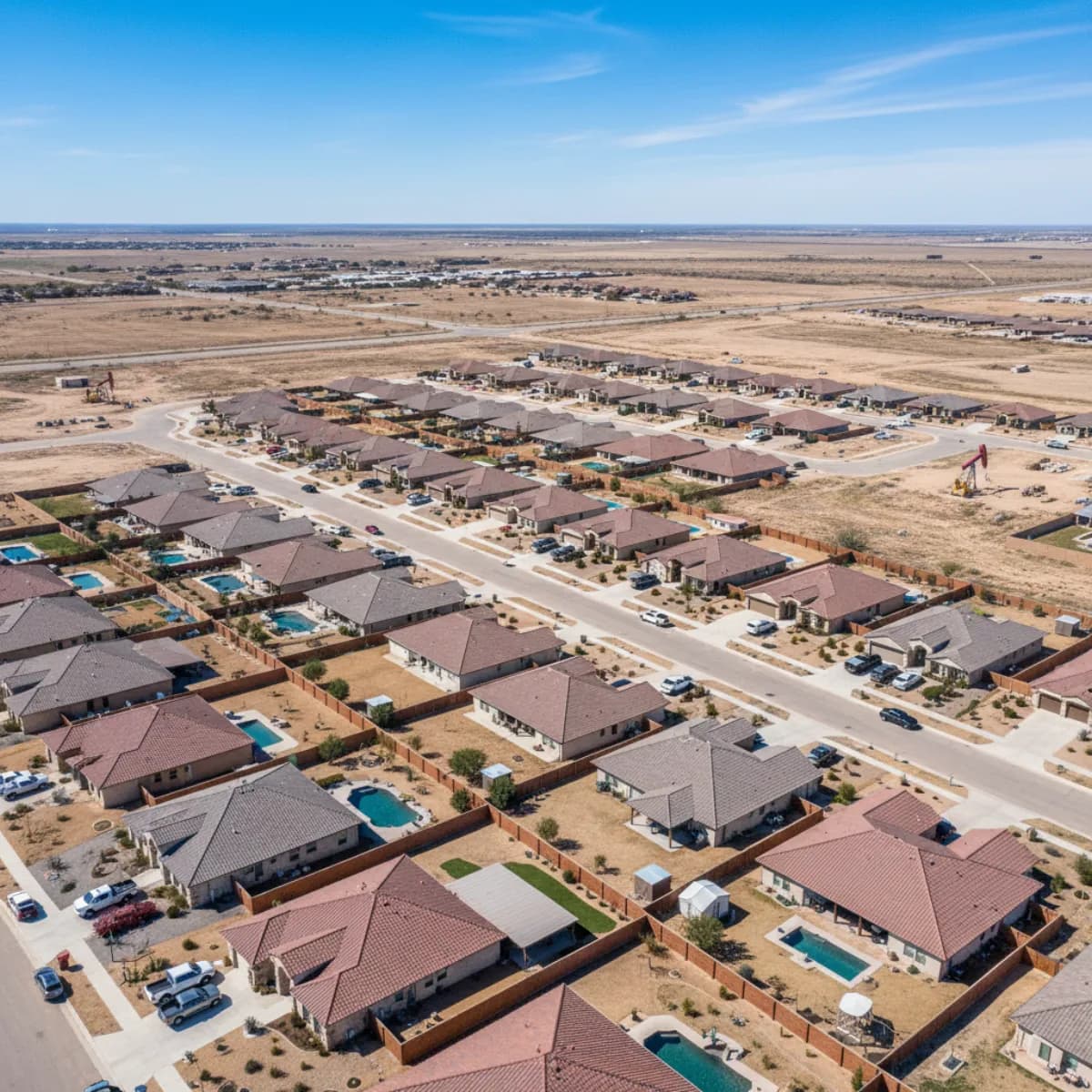
Instant Roof Replacement Quotes in West Texas
From the Panhandle to the Permian Basin and the Trans-Pecos, West Texas homeowners face extreme wind, massive hailstorms, and relentless UV exposure that demand expert roofing. Get instant quotes from pre-vetted contractors who understand your region — no phone calls, no spam, no obligation.
Free Quotes
no obligations ever
Contractors
licensed, insured, reviewed
Until You Choose
no spam, no lead resale
Contractor Bids
standardized scope comparison
West Texas is a roofing environment unlike anything else in the state. Spanning roughly the western half of Texas — from the Panhandle communities of Amarillo, Borger, and Pampa in the north, through the South Plains cities of Lubbock, Plainview, and Big Spring, across the booming Permian Basin oil centers of Midland and Odessa, south to the ranching hub of San Angelo, and west to the border metropolis of El Paso — this vast region covers more square miles than most eastern states combined. The common thread across all of West Texas is an unforgiving climate defined by extreme wind, intense sun, severe hailstorms, dramatic temperature swings, and an arid landscape that generates abrasive dust storms. Every one of these conditions accelerates roof deterioration and demands materials and installation techniques specifically suited to the region.
The good news for West Texas homeowners is that roofing labor costs across most of the region are lower than in the Dallas-Fort Worth, Houston, Austin, or San Antonio metros. A roof replacement that costs $14,000 in Plano or $15,000 in The Woodlands may cost $10,000 to $12,000 in Lubbock, Abilene, or Amarillo for the same scope of work. The exception is the Permian Basin, where oil-industry competition for skilled labor periodically inflates roofing costs above the regional average. Remote communities throughout the region may also see higher material delivery charges due to the vast distances between supply distributors. This guide covers everything West Texas homeowners need to know about roof replacement: climate challenges specific to the Panhandle, South Plains, Permian Basin, and Trans-Pecos, material recommendations for extreme conditions, cost expectations by sub-region, and how to compare quotes from pre-vetted contractors on the RoofVista marketplace.
West Texas also has a unique relationship with its weather. Communities here have been shaped by catastrophic storm events that are seared into local memory. The 1970 Lubbock tornado remains one of the deadliest urban tornadoes in American history. Amarillo residents prepare for severe weather season the way coastal Texans prepare for hurricanes. Midland and Odessa homeowners navigate the boom-bust cycle of an oil economy where contractor availability and pricing fluctuate with the price of crude. Understanding these regional dynamics is essential for any homeowner planning a roof replacement in West Texas, and it is exactly the kind of local knowledge that separates experienced West Texas roofing contractors from out-of-area companies that may not appreciate the specific demands of this extraordinary region.
Roofing Challenges Unique to West Texas
Extreme wind, massive hailstorms, relentless UV, dust storms, and vast distances between communities set West Texas apart from every other roofing market in the state.
Extreme Wind Exposure
West Texas has the highest average wind speeds in the state, with sustained winds of 15 to 20 mph year-round and gusts frequently exceeding 60 mph during spring and fall frontal passages. The flat, open terrain of the Llano Estacado and the Panhandle offers no natural windbreak, subjecting every roof to relentless wind loading that strips granules from asphalt shingles, lifts improperly secured tabs, and drives rain horizontally under flashings. Lubbock averages wind speeds above 12 mph across all twelve months of the year, and Amarillo regularly records gusts above 70 mph during spring thunderstorm season. Six-nail shingle installation patterns, high-wind starter strip adhesive, and enhanced flashing details are not optional in West Texas — they are survival requirements for any roof expected to last its rated lifespan.
Massive Hailstorms and Tornado Alley
The Texas Panhandle and South Plains sit squarely within Tornado Alley, producing some of the most severe hailstorms in the United States. Lubbock and Amarillo each average 3 to 5 significant hail events per year, with stones regularly exceeding 1.5 inches in diameter. The May 11, 1970 Lubbock tornado — an F5 that killed 26 people and destroyed over 1,000 homes — remains one of the most devastating urban tornadoes in American history and underscores the extreme weather risk in this region. Supercell thunderstorms during the March through June severe weather season produce hail, straight-line winds exceeding 80 mph, and occasional tornadoes across the entire West Texas corridor from Abilene through the Panhandle. Class 4 impact-resistant roofing materials are not just recommended — they are the economically rational choice given the frequency and severity of hail exposure.
Extreme UV Radiation and Solar Degradation
West Texas receives some of the most intense ultraviolet radiation in the continental United States. With over 300 days of sunshine per year and a UV index that regularly reaches 8 to 10 during summer months, roofing materials are subjected to relentless photodegradation. Standard asphalt shingles lose volatile oils at an accelerated rate, causing the binder to become brittle and granules to loosen and wash away in the next rainstorm. A shingle rated for 25 years in a temperate climate may show significant deterioration within 15 years in the West Texas sun. Reflective roofing materials, light-colored metal panels, and shingles with UV-stabilized ceramic-coated granules outperform standard products by a wide margin. Cool roof coatings can reduce surface temperatures by 50 to 60 degrees Fahrenheit, lowering both material degradation and cooling costs.
Severe Thermal Cycling
West Texas experiences extreme daily temperature swings that subject roofing materials to punishing thermal cycling. Summer daytime temperatures regularly exceed 100 degrees Fahrenheit while nighttime lows can drop 30 to 40 degrees, creating a daily expansion-contraction cycle that stresses every joint, seam, and fastener point on the roof. Winter brings even more dramatic swings — a January afternoon in Lubbock can reach 65 degrees before plunging below freezing overnight. These rapid temperature changes cause asphalt shingles to expand and contract repeatedly, loosening adhesive strips and accelerating granule loss. Metal roofing panels must be installed with proper expansion gaps and floating clip systems to accommodate thermal movement without buckling. Proper attic ventilation is critical to moderate the temperature differential between the roof surface and the interior.
Dust Storms and Abrasive Particulate
West Texas dust storms — known locally as haboobs when they form a wall of dust — are a distinct roofing hazard found nowhere else in the state. The arid terrain of the Permian Basin and the plowed agricultural fields of the South Plains generate massive dust clouds during spring wind events, with visibility dropping to near zero and wind-driven sand and soil particles sandblasting exposed surfaces. This abrasive action strips granules from asphalt shingles at an accelerated rate, particularly on windward-facing roof slopes. Over time, dust accumulation in valleys and behind dormers can retain moisture and promote localized deterioration. Metal roofing with durable paint finishes resists abrasion far better than asphalt, and smooth-surfaced standing seam panels shed dust more effectively than textured materials.
Limited Contractor Availability and Remote Delivery
The vast distances between West Texas communities create logistical challenges that homeowners in metro Texas never face. The drive from Midland to El Paso is over 300 miles. Amarillo to Abilene is 280 miles. Many smaller communities — Big Spring, Plainview, Borger, Pampa, Pecos, Alpine, and Marfa — are 60 to 150 miles from the nearest roofing supply distributor. Material delivery surcharges of $500 to $2,000 are common for remote properties, and some contractors add a mobilization fee for projects requiring their crew to travel more than 100 miles from their home base. During oil-boom cycles in the Permian Basin, roofing labor is further strained as workers shift to higher-paying oilfield construction jobs, extending project wait times to 4 to 8 weeks in Midland and Odessa.
West Texas Roof Replacement Cost Breakdown
Lower labor costs than metro Texas but limited contractor availability and remote delivery premiums affect pricing across the region.
Roof Replacement Costs by West Texas Sub-Region
Average installed cost for 1,500 sqft roof with architectural shingles
| Sub-Region | Architectural Shingles | Standing Seam Metal | Impact-Resistant |
|---|---|---|---|
| Lubbock / South Plains | $6,500-$12,000 | $14,000-$24,000 | $8,000-$14,500 |
| Midland-Odessa / Permian Basin | $7,500-$14,000 | $16,000-$27,000 | $9,500-$16,500 |
| Amarillo / Panhandle | $6,000-$11,500 | $13,500-$23,000 | $7,500-$14,000 |
| Abilene / Big Country | $6,000-$11,000 | $13,000-$22,500 | $7,500-$13,500 |
| El Paso / Far West Texas | $7,000-$13,000 | $15,000-$26,000 | $8,500-$15,500 |
| San Angelo / Concho Valley | $6,000-$11,000 | $13,000-$22,000 | $7,500-$13,500 |
Cost Factors Unique to West Texas
Lower Base Labor Costs
Outside the Permian Basin oil patch, West Texas labor costs are among the lowest in the state. The lower cost of living in Lubbock, Amarillo, Abilene, and San Angelo translates directly to lower roofing crew rates. A crew that charges $90 to $120 per hour in the DFW metroplex typically charges $65 to $90 per hour in West Texas communities. On a standard two-to-three-day roof replacement, this translates to $1,500 to $3,000 in labor savings compared to a comparable project in North Texas or the Gulf Coast. The quality of workmanship is equivalent — many West Texas roofers are multi-generational operations with decades of experience handling the region's extreme weather conditions.
Permian Basin Labor Premium
Midland and Odessa represent the exception to West Texas's lower labor costs. When oil prices are high and drilling activity is robust, the Permian Basin experiences intense competition for all skilled trades workers. Oilfield service companies offer entry-level positions at $20 to $30 per hour with overtime, pulling workers away from residential construction trades. During boom cycles, roofing labor rates in Midland-Odessa can match or exceed DFW levels, and wait times stretch considerably. When oil prices drop, labor becomes more available and prices moderate. Understanding the current oil cycle is essential context for any Permian Basin roofing project.
Remote Delivery Surcharges
Major roofing supply distributors in West Texas are concentrated in Lubbock, Midland, Amarillo, Abilene, and El Paso. Communities between these hubs — places like Pecos, Alpine, Marfa, Fort Stockton, Monahans, Seminole, and Lamesa — are 60 to 150 miles from the nearest distributor. Material delivery surcharges of $500 to $2,000 are standard for these remote locations, adding roughly 5 to 15 percent to total project costs depending on the scope. Some contractors also add a mobilization fee when their crew must travel more than 100 miles from their home base. Despite these surcharges, the net cost for most West Texas homeowners remains below what homeowners pay in the state's major metro areas.
Insurance Discount Opportunity
West Texas homeowners have perhaps the strongest financial case in the state for upgrading to Class 4 impact-resistant roofing. Insurance premiums in hail-prone West Texas communities are among the highest in Texas, with annual homeowners policies ranging from $2,000 to $4,500 depending on location and coverage level. The 10 to 35 percent premium discount for Class 4 roofing translates to $200 to $1,575 in annual savings. Over a 25-year roof lifespan, that is $5,000 to $39,000 in cumulative savings — a return that dwarfs the $1,500 to $3,000 upgrade cost. Talk to your insurance agent before selecting materials to understand your specific discount level.
Current Texas Roofing Material Prices
Live pricing data for all roofing materials in Texas, updated regularly from contractor bids on the RoofVista marketplace. West Texas prices typically fall at or below these statewide averages outside of the Permian Basin.
West Texas Communities We Serve
From the Panhandle to the Rio Grande, West Texas spans a vast region with diverse communities and housing stock — all united by extreme weather that demands expert roofing.
Concho Valley
San Angelo region
- San Angelo
- Sonora
- Brady
- Ballinger
- Junction
North Texas Border
Wichita Falls region
- Wichita Falls
- Vernon
- Burkburnett
- Iowa Park
- Graham
West Texas Architecture and Housing Stock
From Permian Basin oil-boom subdivisions to Panhandle ranch homes and El Paso adobe-style architecture, West Texas housing reflects the region's diverse economies and cultural heritage.
Permian Basin Boom-Era Housing
Midland and Odessa have experienced multiple construction booms driven by oil-industry cycles. Each boom has left its mark on the housing stock: 1950s ranch homes from the early Permian Basin development, 1970s and 1980s brick-and-siding subdivisions from the second oil rush, and modern tract homes from the 2010s shale revolution. The older ranch homes typically have simple hip or gable roofs that are efficient to replace, while the newer subdivisions feature more complex rooflines with multiple valleys and dormers. Roofing contractors in the Permian Basin are experienced with all eras of construction, but homeowners should verify that any contractor bidding on an older home checks the decking condition during tear-off, as 1950s-era skip sheathing may need replacement with modern plywood decking.
Panhandle and South Plains Homes
Lubbock and Amarillo feature predominantly single-story ranch homes and one-story brick residences built from the 1950s through the 1990s. These low-profile homes with simple roof geometries are well-suited to the region's extreme wind conditions — a lower roofline presents less wind resistance than multi-story structures. Texas Tech University and West Texas A&M University communities include older bungalows and craftsman-style homes near the campuses. Newer subdivisions on the outskirts of both cities feature modern two-story homes with more complex rooflines. The Panhandle's clay-rich soil can cause foundation movement that affects roof alignment — contractors should check for visible settling or cracking before beginning roof work.
El Paso and Border Architecture
El Paso's architecture reflects its Chihuahuan Desert location and deep cultural heritage. Adobe and stucco-finished homes with flat or low-slope roofs are common in older neighborhoods, particularly in the Sunset Heights and Kern Place historic districts. Flat roofs in El Paso use modified bitumen, TPO, or built-up roofing systems rather than shingles. The city's newer subdivisions on the east side and in the Upper Valley feature pitched-roof homes more typical of mainstream Texas construction. El Paso's extremely arid climate — averaging less than 9 inches of rainfall per year — means water intrusion is less of a concern than UV degradation and thermal cycling. However, when rain does come, it often arrives in intense monsoon downpours during July and August that test drainage capacity on flat roofs.
Rural Ranch Properties
Beyond the cities, West Texas is characterized by vast ranching properties with homes that may sit 30 or more miles from the nearest town. These properties present unique roofing challenges: material delivery to remote locations requires advance planning and may incur significant surcharges, crew travel time must be factored into labor costs, and the lack of nearby fire departments makes Class A fire-rated roofing materials a wise investment. Metal roofing is especially popular on rural West Texas properties for its combination of fire resistance, wind performance, longevity, and the fact that it can withstand the impact of wind-blown debris from the open rangeland without damage. Standing seam panels are the premium choice, while exposed-fastener metal panels offer a budget-friendly alternative that still outperforms asphalt in this environment.
Recommended Roofing Materials for West Texas
Extreme wind, hail, UV radiation, and thermal cycling demand materials engineered for the harshest conditions on the Southern Plains.
Class 4 Impact-Resistant Shingles (Top Recommendation)
Class 4 impact-resistant shingles are the single best roofing investment for West Texas homeowners. Certified under UL 2218 to withstand repeated impacts from a 2-inch steel ball dropped from 20 feet, these shingles survive hail events that would destroy standard architectural shingles. The SBS-modified asphalt formulation provides superior flexibility across West Texas's extreme temperature range, resisting cracking during winter cold snaps and maintaining adhesion during 100-plus-degree summer days. Owens Corning Duration FLEX, GAF Timberline AS II, and CertainTeed Landmark IR are the most commonly specified Class 4 products in the region. The 10 to 35 percent insurance premium discount available from most Texas insurers makes this upgrade cost-negative over the roof's lifetime in hail-prone West Texas markets.
Standing Seam Metal Roofing (Best Wind Performance)
Standing seam metal roofing is engineered for the kind of sustained wind exposure that defines West Texas. Concealed-fastener standing seam panels are rated for wind speeds of 140 mph or higher — critical in a region where 60-plus mph gusts occur multiple times per season. The interlocking panel design eliminates the exposed fastener penetrations that are the primary failure point on screw-down metal roofs during high winds. Metal's reflective surface reduces cooling costs by 20 to 30 percent in the brutal West Texas summer heat, and its 40 to 60 year lifespan means many homeowners will never need another roof. Kynar 500 or Hylar 5000 paint finishes resist the UV degradation and dust abrasion that age other materials prematurely. For rural properties, the Class A fire rating provides critical wildfire protection in areas with long fire department response times.
Stone-Coated Steel Tiles (Aesthetics with Performance)
Stone-coated steel tiles offer the visual appeal of traditional tile or shake roofing with the wind and impact resistance of steel. These lightweight panels are installed over battens and interlock to resist wind uplift to 120 mph or higher. The stone-coated surface provides Class 4 impact resistance while maintaining the textured appearance that many homeowners prefer over the smooth lines of standing seam metal. The granular coating also provides better UV resistance than bare painted metal, and the steel core will not crack, split, or curl like asphalt. Popular brands in West Texas include DECRA, Gerard, and Tilcor. Stone-coated steel is particularly popular in El Paso and Midland neighborhoods where homeowners want a premium aesthetic without the weight of concrete tile.
Flat Roof Systems — TPO and Modified Bitumen (El Paso & Southwest Style)
Flat and low-slope roofs are common throughout El Paso and in southwestern-style homes across West Texas. TPO (thermoplastic polyolefin) has become the dominant flat roof material, offering excellent UV resistance with its white reflective surface that can reduce cooling costs by 25 to 35 percent in the West Texas sun. Modified bitumen provides a traditional multi-layer flat roof system with superior puncture resistance. For El Paso's monsoon season, proper drainage design is critical — the intense but infrequent rain events can overwhelm poorly designed flat roof drainage systems. All flat roof installations in West Texas should include a reflective coating or inherently reflective membrane to combat the extreme UV exposure.
Building Codes and Permits in West Texas
Texas does not require a statewide roofing license, but municipal building codes, permits, and wind-resistance standards apply across all West Texas cities.
Texas Code Requirements
- Building permit required in all incorporated cities for roof replacement
- IRC 2021 adopted by most Texas municipalities with local amendments
- Wind-speed design requirements per ASCE 7 based on local wind zones
- Maximum two layers of asphalt shingles before full tear-off required
- Underlayment and flashing requirements per manufacturer specifications
West Texas Wind Zone Considerations
- West Texas falls in ASCE 7 wind zones requiring 110-130 mph design speeds
- Shingles must meet minimum wind resistance per local code adoption
- Six-nail patterns recommended (sometimes required) in high-wind zones
- Enhanced starter strip and hip/ridge cap requirements in Panhandle
- Unincorporated areas may not require permits — verify with county
Important:Texas does not have a statewide roofing contractor license, but that does not mean licensing is unnecessary. Reputable contractors carry general liability insurance, workers' compensation coverage, and maintain manufacturer certifications (GAF Master Elite, Owens Corning Platinum Preferred, CertainTeed SELECT ShingleMaster). Under TX Insurance Code Section 27.02, it is illegal for any contractor to offer to waive or pay your insurance deductible. Any contractor making that offer is committing insurance fraud and should be reported to the Texas Department of Insurance.
Frequently Asked Questions About West Texas Roofing
Common questions from homeowners across the Panhandle, Permian Basin, South Plains, and Trans-Pecos about roof replacement costs, materials, and weather challenges.
How much does a roof replacement cost in West Texas?
What roofing materials are best for West Texas wind and hail?
How does the Permian Basin oil boom affect roofing costs in Midland and Odessa?
Is West Texas in Tornado Alley and how does that affect my roof?
How does UV exposure in West Texas damage roofing materials?
Do I get insurance discounts for impact-resistant shingles in West Texas?
Related Resources
Texas Roofing
Statewide roofing guide and pricing
Instant Roof Cost Calculator
AI-powered instant estimate for your roof
Lubbock Roofing
Quotes for Lubbock area homes
Midland Roofing
Quotes for Permian Basin homes
Amarillo Roofing
Quotes for Panhandle area homes
Abilene Roofing
Quotes for Big Country homes
El Paso Roofing
Quotes for Far West Texas homes
Texas Hail Damage Guide
Insurance claims and impact-resistant options
Texas Metal Roofing Guide
Standing seam, corrugated, and stone-coated steel
Roofing Cost Guide
Complete material pricing breakdown
Get Your West Texas Roof Quote in 60 Seconds
Enter your address below for an instant AI-powered satellite estimate. Compare roof replacement quotes from pre-vetted West Texas contractors — no phone calls, no spam.
Serving all West Texas communities including Lubbock, Midland, Odessa, Amarillo, Abilene, San Angelo, El Paso, Big Spring, Plainview, Borger, Pampa, Canyon, Hereford, Levelland, Pecos, Alpine, Marfa, and surrounding communities across the Panhandle, South Plains, Permian Basin, Big Country, Concho Valley, and Trans-Pecos regions.
Compare 1256+ vetted roofers near West Texas, Texas
See independent reviews, BBB ratings, and Google data — then compare quotes side-by-side from pre-vetted local contractors.