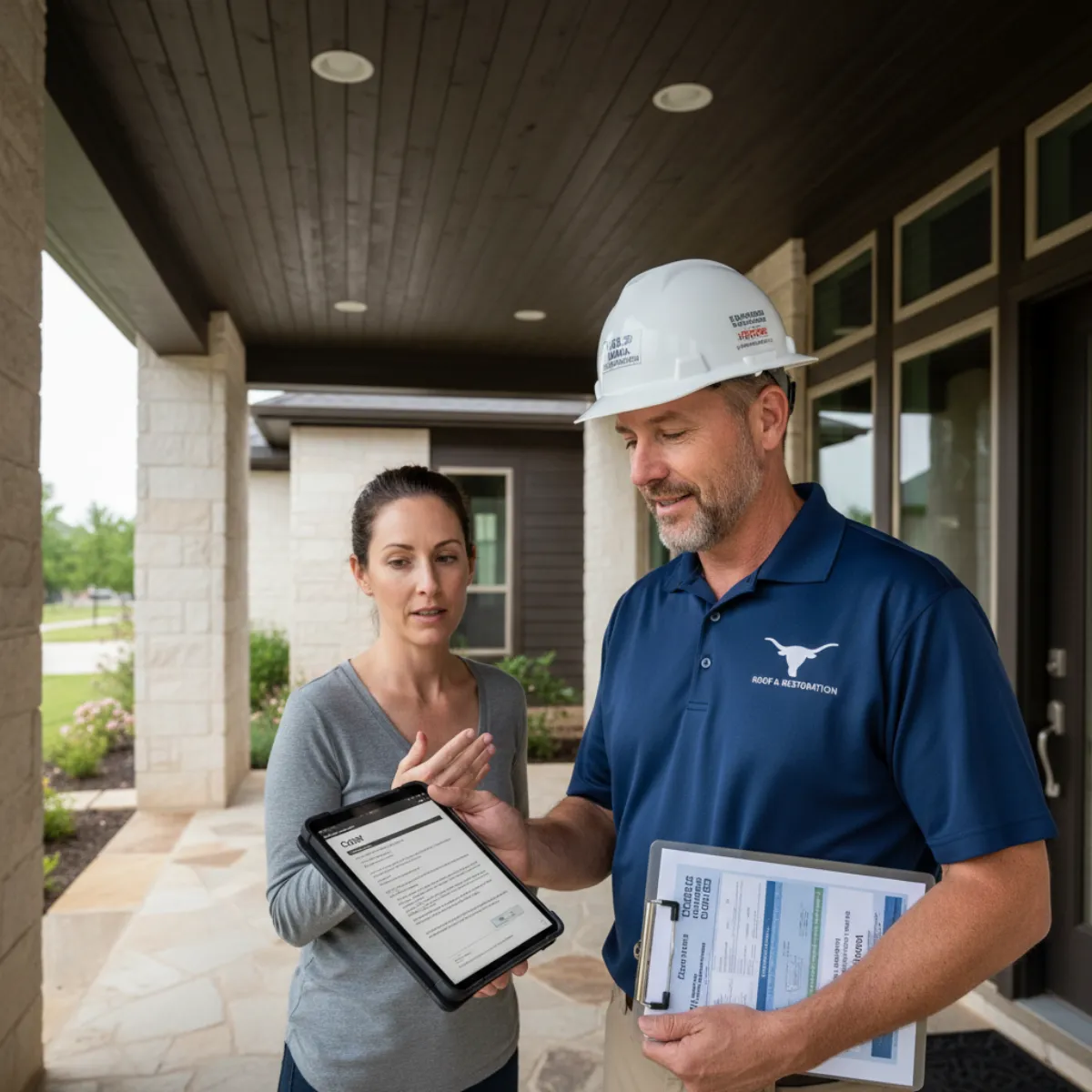
Texas Roofing Contractor
License Requirements
Texas has no statewide roofing contractor license. This makes it uniquely important to know what to verify before hiring a roofer.
Licensing is handled at the city and county level, with Houston, Dallas, San Antonio, Austin, Fort Worth, and El Paso each enforcing their own requirements. Here is everything Texas homeowners need to know.
Why Texas Is Different: No Statewide Roofing License
Texas is one of a handful of states in the U.S. that does not require a statewide license for roofing contractors. Unlike Massachusetts (which requires both a Construction Supervisor License and HIC registration) or Connecticut (which mandates HIC registration through the Department of Consumer Protection), Texas leaves contractor regulation almost entirely to individual cities and counties.
The Texas Department of Licensing and Regulation (TDLR) oversees licensing for many trades including electricians, plumbers, and HVAC technicians — but roofing is not among them. There is no state exam, no state registration number, and no state database where you can look up a roofing contractor.
This regulatory gap creates a significant challenge for Texas homeowners. Without a statewide licensing requirement, anyone can call themselves a roofing contractor. There is no minimum insurance requirement at the state level, no bonding requirement, and no state agency that homeowners can complain to if a roofing contractor does poor work or abandons a job.
The lack of statewide regulation is precisely why Texas is one of the most storm-chaser-affected states in the country. After major hail events, out-of-state crews flood Texas neighborhoods with no local license, no local insurance, and no intention of honoring warranties. Understanding your city’s specific requirements — and knowing what to verify regardless of where you live — is critical to protecting yourself.
TDLR and Roofing: Setting the Record Straight
There is a common misconception that the Texas Department of Licensing and Regulation (TDLR) licenses roofing contractors. This is not accurate. TDLR regulates over 40 industries and occupations in Texas, including electricians, plumbers, HVAC technicians, and property tax consultants — but roofing is not one of them.
However, TDLR does play an indirect role in the roofing industry. Contractors who advertise services related to insurance claims are required to include disclosure information, and TDLR oversees the registration of public insurance adjusters — a function that intersects with storm-damage roofing work. Additionally, if a roofing contractor also performs electrical or plumbing work as part of a roofing project, those specific trades require TDLR licensing.
Bottom line: do not assume that a roofing contractor is “licensed in Texas” because they have a TDLR number for a different trade. The only roofing-specific licenses in Texas are issued at the city or county level.
City-by-City Licensing Requirements
While Texas has no statewide requirement, major cities enforce their own contractor licensing or registration programs. Here is what each of the six largest Texas metro areas requires.
Houston
Population: 2.3M+
City of Houston Building Department
Houston requires roofing contractors to hold a city-issued license. Applicants must pass a trade examination, provide proof of general liability insurance (minimum $300,000), and maintain workers’ compensation coverage. Permits are required for every roofing project. The license must be renewed annually.
Dallas
Population: 1.3M+
City of Dallas Building Inspection Division
Dallas requires contractors to register with the city and obtain building permits for roofing work. Contractors must show proof of liability insurance and workers’ compensation coverage. The city tracks contractor complaints and can revoke registrations for repeated violations.
Fort Worth
Population: 950K+
City of Fort Worth Development Services
Fort Worth requires contractor registration and building permits for roofing projects. Contractors must provide proof of insurance and maintain good standing with the city. Repeated code violations can result in registration revocation and fines.
San Antonio
Population: 1.5M+
City of San Antonio Development Services Department
San Antonio requires roofing contractors to obtain a city license through the Development Services Department. Requirements include a trade exam, proof of insurance, and ongoing permit compliance. The city actively enforces permit requirements and issues stop-work orders for unpermitted projects.
Austin
Population: 1M+
City of Austin Development Services Department
Austin requires contractors to register with the city and pull building permits for roofing work. The city has stringent code enforcement, particularly in historic districts where roofing materials and methods may be subject to additional review by the Historic Landmark Commission.
El Paso
Population: 680K+
City of El Paso Development Services
El Paso requires roofing contractors to hold a city-issued contractor license. The city enforces building codes strictly and requires permits for all roofing projects. Contractors must demonstrate trade competency, carry liability insurance, and maintain workers’ compensation coverage.
What About Rural Texas?
Many rural Texas counties and smaller cities have no contractor licensing requirements at all. In these areas, virtually anyone can advertise roofing services. This makes it even more critical to independently verify insurance, references, and business history. If you live in a rural area, the verification checklist below is your primary protection.
What to Verify Instead of a State License
Since Texas has no statewide roofing license, these six credentials become your primary screening criteria. Every single one of these should be verified before you sign a contract or hand over a deposit.
General Liability Insurance ($1M Minimum)
Without a statewide license to enforce insurance minimums, you must verify insurance yourself. Ask for a Certificate of Insurance (COI) showing at least $1,000,000 in general liability coverage. Call the insurance company directly to confirm the policy is active and has not lapsed.
Workers’ Compensation Coverage
Texas does not require all employers to carry workers’ compensation — it is one of the few "opt-out" states. However, if a roofer’s employee is injured on your property and the contractor has no workers’ comp, you could be held liable. Always require proof of coverage before work begins.
Manufacturer Certifications
Since Texas lacks statewide licensing, manufacturer certifications become a critical quality signal. Look for GAF Master Elite, CertainTeed SELECT ShingleMaster, or Owens Corning Preferred Contractor designations. These programs require ongoing training, insurance verification, and workmanship guarantees.
BBB Rating & Complaint History
Check the Better Business Bureau for the contractor’s rating, complaint history, and whether complaints were resolved. A pattern of unresolved complaints is a major red flag — especially in a state with no licensing board to discipline bad actors.
Established Local Business Presence
Verify the contractor has a physical office or warehouse in Texas — not just a P.O. box or a cell phone. Check how long they have been operating in the state. Google Street View the address. A contractor with no local presence is likely a storm chaser.
Written Contract & Payment Terms
Texas law requires that home improvement contracts clearly state the scope of work, materials to be used, total price, payment schedule, start date, and estimated completion date. Never pay more than 10% upfront or any amount before materials are delivered. Get everything in writing.
Texas Workers’ Compensation: A Critical Gap
Texas is the only state in the U.S.where workers’ compensation insurance is entirely optional for private employers. This means your roofing contractor’s crew could be working on your roof with no injury coverage whatsoever.
Why does this matter to you? If a roofer is injured on your property and their employer does not carry workers’ comp, the injured worker can potentially sue you as the property ownerfor medical bills, lost wages, and damages. Your homeowner’s insurance may cover some liability, but the exposure can easily exceed your policy limits for a serious fall or injury.
Always require proof of workers’ compensation coverage before any roofing work begins on your property. This is non-negotiable — regardless of what Texas law requires or does not require.
TDI Requirements for Insurance Claim Work
The Texas Department of Insurance (TDI) regulates how contractors interact with insurance claims — a critical area given that Texas leads the nation in hail damage insurance claims. If your roofing project involves an insurance claim, these TDI rules apply.
Public Adjuster Licensing
Under Texas Insurance Code Chapter 4102, only licensed public adjusters may negotiate insurance claims on behalf of policyholders. Roofing contractors cannot act as public adjusters unless they hold a separate TDI-issued license.
Advertisement Disclosure
Any roofing contractor advertising services related to insurance claims must include their Texas Department of Licensing and Regulation (TDLR) registration number in all advertisements, per TDI regulations.
Assignment of Benefits Restrictions
While Texas does not outright ban AOB agreements, TDI strongly cautions homeowners against signing them. An AOB transfers your claim rights to the contractor, removing your control over the insurance negotiation process.
Prohibited Inducements
Texas Insurance Code Section 27.155 makes it illegal for contractors to offer to pay or rebate all or part of an insurance deductible as an inducement to obtain roofing work. Violations can result in criminal charges.
Key takeaway:If a roofing contractor tells you they will “handle everything with your insurance company,” ask exactly what that means. There is a legal line between a contractor helping you document damage (which is fine) and a contractor negotiating your claim on your behalf (which requires a TDI public adjuster license). Crossing that line exposes both you and the contractor to legal liability.
Texas Deceptive Trade Practices Act (DTPA) Protections
While Texas lacks a statewide roofing license, the Texas Deceptive Trade Practices Act (DTPA) provides significant legal protections for homeowners who are harmed by dishonest or incompetent contractors. Understanding your rights under the DTPA is one of the most important defenses available to Texas homeowners.
What the DTPA Covers in Roofing
Misrepresentation of Materials
Using lower-grade shingles than specified in the contract
Failure to Disclose Known Defects
Hiding structural damage discovered during tear-off
Bait-and-Switch Pricing
Quoting one price and charging significantly more
Failure to Perform Contracted Work
Collecting payment and abandoning the job
False Advertising
Claiming certifications or insurance not actually held
Unconscionable Actions
Taking advantage of a homeowner’s lack of knowledge
DTPA Damages & Enforcement
Homeowners who prevail in a DTPA claim can recover actual damages (the cost to fix the problem). In cases where the contractor acted knowingly, courts can award up to three times the actual damages. In cases of intentional misconduct, treble damages plus attorney fees are available. To pursue a DTPA claim, you must first send a written demand letter to the contractor giving them 60 days to respond before filing suit.
8 Red Flags: Storm Chasers & Roofing Scams in Texas
Texas is one of the most storm-chaser-targeted states in the country. After major hail events in the DFW Metroplex, San Antonio corridor, and Houston metro, out-of-state crews flood neighborhoods. Watch for these warning signs.
Door-to-door solicitation after storms
The number one storm chaser tactic. Legitimate Texas roofers don’t go door-to-door. If someone knocks on your door after a hailstorm offering a "free roof," they are almost certainly a storm chaser.
No local Texas business address
Ask for a physical address and verify it. Storm chasers use hotel rooms, P.O. boxes, or out-of-state addresses. Once they leave, your warranty is worthless.
Demands full payment upfront
No legitimate roofing contractor needs full payment before starting work. Standard terms are a small deposit (10% or less), progress payments tied to milestones, and final payment upon completion and inspection.
Offers to pay your insurance deductible
This is insurance fraud under Texas law. If a contractor offers to "waive" or "cover" your deductible, they are breaking the law and will make up the difference with substandard materials or shortcuts.
Pressures you to sign immediately
Claims like "this price is only good today" or "we have one crew left in your area" are high-pressure sales tactics. A reputable contractor will give you time to review proposals and check references.
No written estimate or scope of work
Verbal agreements provide zero protection under Texas law. Any legitimate contractor will provide a detailed written estimate including materials, labor, timeline, warranty terms, and total cost.
Asks you to sign an Assignment of Benefits (AOB)
An AOB gives the contractor direct control over your insurance claim. This can lead to inflated claims, delays, and disputes between your contractor and your insurance company — with you caught in the middle.
No proof of insurance or refuses to provide COI
If a contractor hesitates to provide a Certificate of Insurance, walk away immediately. In Texas, without statewide licensing, insurance is the single most important credential a contractor can show.
The Texas Storm Chaser Problem: By the Numbers
Texas consistently ranks among the top states for hail damage insurance claims. Major hailstorm events can generate billions of dollars in insured losses across the DFW Metroplex, San Antonio, and Houston metro areas. This volume of insurance money attracts storm chasers from across the country.
$10B+
Annual hail damage claims in Texas
#1
Most hail-prone state in the U.S.
Thousands
Storm chaser complaints filed annually
The pattern is predictable: a major hailstorm hits a Texas metro area, and within 24-48 hours, out-of-state crews arrive in branded trucks and polo shirts, going door-to-door. They offer “free inspections,” claim to see damage whether it exists or not, pressure homeowners into signing contracts on the spot, and collect large deposits. Many disappear before completing the work. Those who do complete it often use substandard materials with warranty-voiding installation techniques. By the time problems surface, the crew is in another state chasing the next storm.
Why RoofVista’s Vetting Matters More in Texas
In states with strong licensing requirements, the state government provides a baseline of consumer protection. In Texas, that baseline largely does not exist for roofing. This is exactly why RoofVista’s independent vetting process is even more critical for Texas homeowners.
Every contractor on the RoofVista marketplace has been independently verified across six dimensions — going far beyond what any city licensing program checks. You can compare standardized quotes from pre-vetted contractors knowing that each one has passed our screening process.
City & County Licenses Verified
We confirm every contractor holds the required local licenses for each city and county they serve. Houston, Dallas, San Antonio, Austin, Fort Worth, El Paso — every jurisdiction is individually checked.
$1M+ Insurance Confirmed
We verify a minimum of $1,000,000 in general liability insurance, confirm workers’ compensation coverage, and require contractors to notify us of any policy changes or lapses.
Manufacturer Certifications Validated
We confirm active manufacturer certifications from GAF, CertainTeed, Owens Corning, or equivalent programs. These certifications require ongoing training and offer extended warranty coverage for homeowners.
Project History & Reviews Audited
Only contractors with verified completed projects, positive customer ratings, and no unresolved BBB complaints are accepted. We review workmanship quality, timeline adherence, and communication.
TX Business Presence Required
Every contractor must maintain a physical Texas business address, demonstrate at least 3 years of established local operations, and have a verifiable track record in the communities they serve.
Storm Chaser Screening
We actively screen out contractors with no local history, out-of-state registrations, and patterns of operating only in storm-affected areas. Texas homeowners deserve contractors who will be here for the long term.
Filing an Insurance Claim for Roof Damage in Texas
Texas leads the nation in hail and wind damage insurance claims. If you are dealing with storm damage, follow these steps to protect yourself and maximize your claim.
Document the damage yourself first
Before any contractor touches your roof, take photos and video of all visible damage from the ground. Note the date, time, and weather event that caused the damage. This documentation establishes an independent baseline.
File the claim with your insurance company directly
Contact your insurance company yourself — do not let a contractor file the claim for you. Provide your documentation and request an adjuster inspection. You have the right to be present during the adjuster’s inspection.
Get multiple independent estimates
Before accepting your insurance company’s estimate, get at least two to three independent estimates from pre-vetted local contractors. RoofVista’s instant quote tool gives you a reliable baseline to compare against the insurance adjuster’s assessment.
Never sign an Assignment of Benefits (AOB)
An AOB transfers your insurance claim rights to the contractor. This removes your control over the process and can lead to inflated claims, delays, and disputes. Keep control of your own claim.
Understand your policy’s depreciation method
Texas insurance policies use either Actual Cash Value (ACV) or Replacement Cost Value (RCV). With RCV, you receive the depreciated amount initially and the remaining "recoverable depreciation" after repairs are completed. Make sure you understand which type you have before accepting a settlement.
Why Manufacturer Certifications Matter More in Texas
In states with statewide licensing, the license itself provides a basic quality assurance signal. In Texas, manufacturer certifications fill that gap. Here is what each major certification program requires — and why it matters for your roof.
GAF Master Elite
The top tier of GAF’s contractor program, representing the top 2% of roofing contractors nationwide. Requirements include:
- Proper licensing (where required by law)
- Adequate insurance coverage verified by GAF
- Proven reputation and commitment to training
- Offers GAF Golden Pledge warranty (50 years)
CertainTeed SELECT ShingleMaster
CertainTeed’s highest contractor credential, requiring comprehensive training and verification:
- Master Shingle Applicator certification
- Insurance and licensing verification
- Annual training requirements
- Offers SureStart PLUS warranty (extended)
Owens Corning Preferred
Owens Corning’s network of top-performing contractors with enhanced warranty capabilities:
- Background-checked and vetted
- Meets insurance and licensing standards
- Ongoing training and education
- Offers Platinum Protection warranty
Current Texas Roofing Material Costs
Understanding local pricing helps you identify contractors who are significantly overcharging — or suspiciously underpricing (a common storm chaser tactic). Here are current material costs for Texas roofing projects.
How to File a Complaint Against a Texas Roofing Contractor
Without a statewide licensing board for roofers, the complaint process in Texas is different from states like Massachusetts or Connecticut. Here are your options if a roofing contractor has failed to perform or engaged in deceptive practices.
City Building Department
If the contractor is required to be licensed in your city (Houston, Dallas, San Antonio, Austin, Fort Worth, El Paso), file a complaint with the city building department. They can investigate, fine the contractor, and revoke their local license.
Texas Attorney General
The Texas Attorney General’s Consumer Protection Division investigates complaints about deceptive trade practices. File online at texasattorneygeneral.gov or call (800) 621-0508.
Better Business Bureau (BBB)
Filing a BBB complaint creates a public record of the contractor’s behavior. While the BBB has no enforcement power, an unresolved complaint affects the contractor’s rating and can deter future customers.
DTPA Lawsuit
For serious losses, consult a Texas consumer protection attorney about filing a DTPA lawsuit. The potential for treble damages and attorney fee recovery makes this a viable option even for smaller claims.
Texas vs. Other States: Licensing Comparison
Understanding how Texas compares to other states helps illustrate why independent vetting is so important here.
| Requirement | Texas | Massachusetts | Connecticut |
|---|---|---|---|
| Statewide License | None | CSL + HIC | HIC |
| State Exam | |||
| State Insurance Minimum | None | $500K | $100K |
| Surety Bond Required | $15K | ||
| Workers’ Comp Required | Optional | ||
| State Guaranty Fund | |||
| State Complaint Database |
This comparison illustrates why Texas homeowners cannot rely on state-level protections the way homeowners in Massachusetts or Connecticut can. Independent vetting through a platform like RoofVista fills the gap that Texas’s regulatory framework leaves open.
Frequently Asked Questions
Does Texas require a statewide roofing contractor license?▼
What are the roofing contractor license requirements in Houston?▼
What insurance should a Texas roofing contractor carry?▼
What is the Texas Deceptive Trade Practices Act (DTPA) and how does it protect homeowners?▼
What are the TDI requirements for insurance claim roofing work in Texas?▼
How does RoofVista vet Texas roofing contractors?▼
What should I do if I hire an unlicensed roofing contractor in Texas?▼
Are storm chasers a big problem in Texas?▼
Explore More Texas Roofing Resources
Get Instant Roof Replacement Quotes from Pre-Vetted Texas Contractors
Texas has no statewide license to protect you — so RoofVista does the vetting instead. Every contractor on our marketplace has been verified for insurance, certifications, local licensing, and project history. Compare standardized quotes with complete confidence.
Compare 1256+ vetted roofers near Contractor Licensing, Texas
See independent reviews, BBB ratings, and Google data — then compare quotes side-by-side from pre-vetted local contractors.