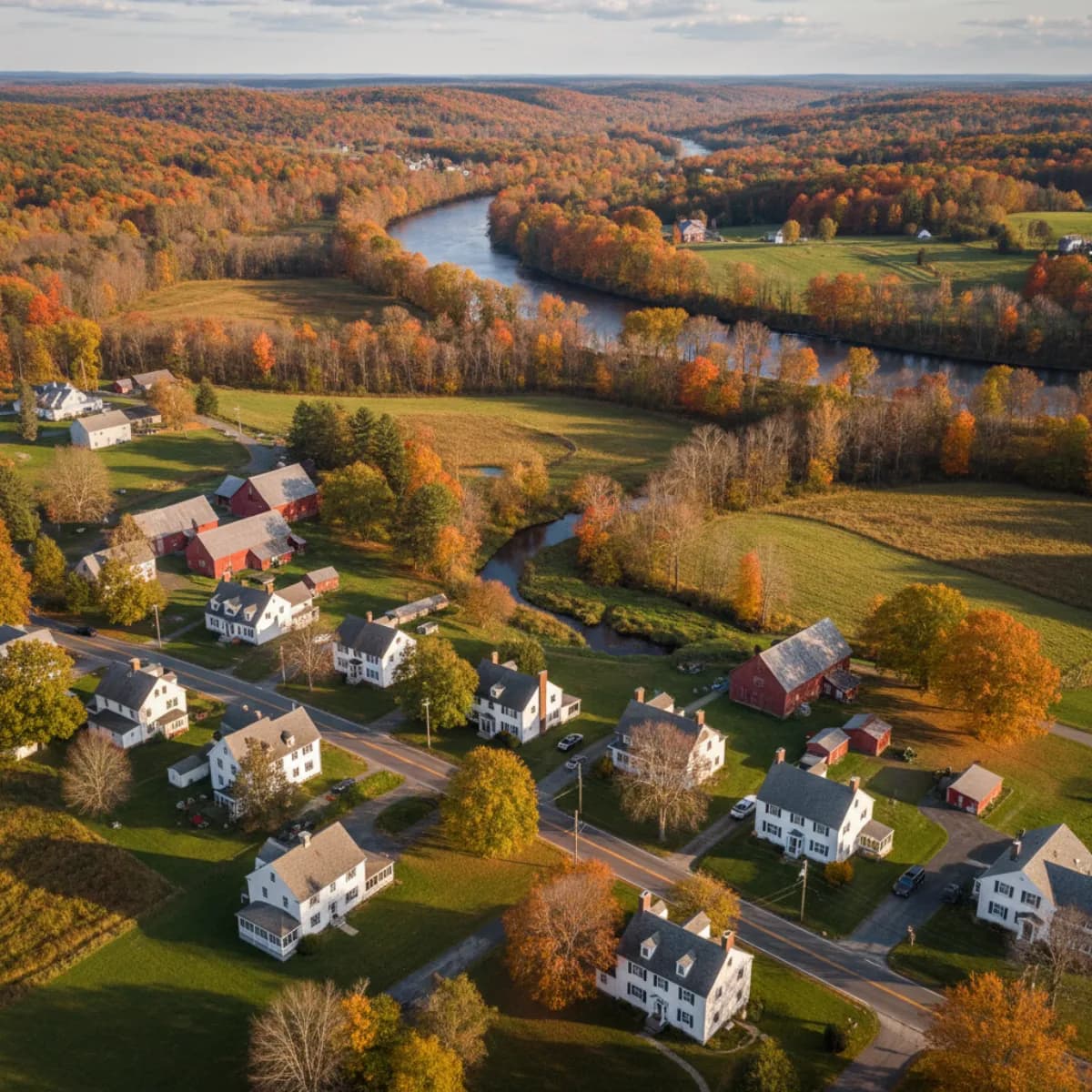
Instant Roof Replacement Quotes in Western Massachusetts
From the Pioneer Valley to the Berkshire Hills, Western MA homeowners face heavy snowfall, ice storms, and rural property challenges that demand expert roofing. Get instant quotes from pre-vetted contractors who understand your region — no phone calls, no spam, no obligation.
Free Quotes
no obligations ever
Contractors
licensed, insured, reviewed
Until You Choose
no spam, no lead resale
Contractor Bids
standardized scope comparison
Western Massachusetts is a distinct roofing market that bears little resemblance to the Greater Boston corridor. Spanning four counties — Hampden, Hampshire, Franklin, and Berkshire — the region stretches from the urban center of Springfield through the college towns of the Pioneer Valley and deep into the Berkshire Hills along the New York border. The geography is varied: the flat Connecticut River floodplain around Springfield and Northampton, the rolling hills of Hampshire County, the remote hilltowns of Franklin County, and the mountainous terrain of Berkshire County with peaks approaching 3,500 feet. Each of these environments creates specific roofing challenges that contractors from outside the region may not fully appreciate.
The good news for Western MA homeowners is that roofing costs here are meaningfully lower than in Eastern Massachusetts. Labor rates run 10 to 15 percent below Boston metro levels because of the lower cost of living, less competition for skilled trades workers, and reduced overhead for local roofing companies. A roof replacement that costs $18,000 in Cambridge or Brookline may cost $15,000 to $16,000 in Springfield or Northampton for the same scope of work and materials. Berkshire County prices are comparable to Pioneer Valley rates, though the most remote hilltowns may add a delivery premium for materials. This guide covers everything Western Massachusetts homeowners need to know about replacing a roof in this unique region: climate challenges, material recommendations, cost expectations, building code requirements, and how to compare quotes from pre-vetted contractors on the RoofVista marketplace.
Roofing Challenges Unique to Western Massachusetts
Heavy snowfall, ice storms, elevation-driven wind exposure, and rural access issues set Western MA apart from the rest of the state.
Heavy Snowfall and Snow Load
Western Massachusetts receives 60 to 80 inches of snow annually, with Berkshire County hilltowns often exceeding 80 inches. The combination of elevation and lake-effect moisture from the Connecticut River Valley creates conditions that test roofing materials and structural capacity. Snow loads regularly reach 30 to 40 pounds per square foot on flat or low-slope sections, and drifting against dormers or second-story walls can concentrate loads to dangerous levels. Every roof replacement in Western MA should include a snow load assessment to verify the structure meets current Massachusetts building code requirements for the specific municipality and elevation.
Ice Storms and the Connecticut River Valley Microclimate
The Pioneer Valley corridor from Springfield to Greenfield sits within a unique microclimate where warm air masses from the south ride over cold surface air trapped in the valley, creating ideal conditions for freezing rain. The December 2008 ice storm deposited over an inch of ice across the region, downing trees onto roofs across Hampden and Hampshire counties. The January 1998 and March 2010 ice events caused similar widespread damage. This recurring threat makes impact-resistant shingles and proper structural margins especially important for Valley properties. Tree management around rooflines is equally critical, as ice-loaded branches are the primary cause of storm-related roof punctures.
Berkshire Hills Elevation and Wind Exposure
Properties in the Berkshire Hills and along the ridgelines of the Hoosac and Taconic ranges face wind exposure that lowland homes do not. Elevations between 1,000 and 2,000 feet in towns like Williamstown, North Adams, Mount Washington, and the Route 2 corridor experience sustained winds 15 to 25 percent stronger than valley-floor communities. Winter storms tracking across the Hudson Valley hit the Berkshires with full force before dissipating as they descend into the Connecticut River Valley. Shingles must be rated for at least 110 mph wind resistance, and six-nail installation patterns are recommended for any property above 1,200 feet elevation.
Severe Freeze-Thaw Cycling
Western Massachusetts experiences 70 to 100 freeze-thaw cycles per year, one of the highest rates in New England. The Pioneer Valley sees particularly rapid temperature swings in late winter, when daytime temperatures above freezing are followed by sharp overnight drops. Each cycle allows moisture to penetrate roofing material seams, expand as ice, and gradually open gaps in flashing, sealant, and shingle adhesion strips. The cumulative effect accelerates roof aging by 20 to 30 percent compared to regions with more stable winter temperatures. Proper underlayment and high-quality flashing materials are the primary defense against freeze-thaw damage.
The 2011 Springfield Tornado and Storm Readiness
On June 1, 2011, an EF3 tornado tore through Springfield, West Springfield, Westfield, and surrounding communities with winds exceeding 160 mph. The storm destroyed or severely damaged hundreds of roofs across a 39-mile path, causing an estimated $175 million in property damage. While tornadoes of this magnitude are rare in New England, the event underscored the importance of impact-resistant materials, proper fastening patterns, and adequate homeowner insurance coverage for Western MA properties. Communities along the Connecticut River Valley are in a recognized severe weather corridor that produces damaging thunderstorms with large hail and straight-line winds multiple times each summer.
Rural Property Access and Material Delivery Costs
Many Western Massachusetts homes sit on rural roads in Franklin County hilltowns, Berkshire County mountain communities, or along the winding roads of Hampshire County. Properties in towns like Charlemont, Rowe, Florida (MA), Savoy, Peru, and other remote communities may add $500 to $2,000 to project costs due to longer material delivery distances from distribution centers in Springfield or Albany, NY. Steep driveways, limited staging areas, and the need for specialized equipment transport can add further costs. Despite these logistical considerations, the lower labor rates in Western MA still result in overall project costs below Boston metro averages for most homeowners.
Western Massachusetts Roof Replacement Cost Breakdown
Labor costs 10-15% below Boston metro make Western MA one of the most affordable roofing markets in the state, though rural delivery can add to material costs.
Roof Replacement Costs by Western MA Sub-Region
Average installed cost for 1,500 sqft roof with architectural shingles
| Sub-Region | Architectural Shingles | Standing Seam Metal | Impact-Resistant |
|---|---|---|---|
| Springfield / Hampden County | $8,500-$14,000 | $18,000-$28,000 | $10,000-$16,000 |
| Northampton / Hampshire County | $9,000-$15,000 | $19,000-$30,000 | $10,500-$17,000 |
| Greenfield / Franklin County | $8,000-$13,500 | $17,500-$27,000 | $9,500-$15,500 |
| Pittsfield / Berkshire County | $8,500-$14,500 | $18,500-$29,000 | $10,000-$16,500 |
Cost Factors Unique to Western Massachusetts
Lower Labor Costs
Western Massachusetts benefits from a significantly lower cost of living compared to the I-95 corridor. Roofing contractors in Springfield, Holyoke, Pittsfield, and surrounding communities have lower overhead, insurance costs, and wage expectations. A crew that charges $85-$110 per hour in Greater Boston typically charges $70-$95 per hour in Western MA. On a two-to-three-day roof replacement, this translates to $1,000 to $2,500 in labor savings. The quality of work is comparable, as many Western MA contractors are multi-generational family businesses with deep experience in the region's specific climate challenges.
Material Delivery Premiums
Major roofing supply distributors in the region are concentrated in the Springfield metro area. Deliveries to Pioneer Valley communities are straightforward, but homes in the Berkshire hilltowns, Franklin County hilltowns, or rural Hampshire County may incur delivery surcharges of $200 to $800 depending on distance and road conditions. Some Berkshire County projects source materials from Albany, NY distributors, which can actually reduce delivery costs for properties in North Adams, Williamstown, or Pittsfield. Your contractor should clarify delivery costs in the written scope of work.
Compressed Roofing Season
Western Massachusetts has a shorter optimal roofing window than coastal communities. Snow can arrive in the Berkshires as early as mid-October, and spring thaws in the hilltowns may not stabilize until late April. This compresses the prime roofing season into roughly five to six months, creating a scheduling crunch from June through September when demand peaks. Homeowners who book early in the spring or accept late April or early October installation dates can often negotiate better pricing and faster scheduling.
Historic Home Premium
Northampton, Amherst, Deerfield, and Stockbridge are home to some of Massachusetts's finest historic architecture, including Federal-period homes, Victorian mansions, and antique farmhouses dating to the 1700s. Properties within designated local historic districts may require period-appropriate materials, historical commission approval, and specialized installation techniques. These requirements can add 15 to 30 percent to project costs. However, maintaining historic character preserves the substantial property value premium that these homes command in the Western MA real estate market.
Current Massachusetts Roofing Material Prices
Live pricing data for all roofing materials in Massachusetts, updated regularly from contractor bids on the RoofVista marketplace. Western MA prices typically fall at or slightly below these statewide averages.
Western Massachusetts Communities We Serve
Four counties, dozens of communities, and a wide range of housing stock from urban multi-families to rural farmhouses and historic college town homes.
Hampshire County
Population: ~165,000
- Northampton
- Amherst
- South Hadley
- Easthampton
- Hadley
- Belchertown
- Williamsburg
Franklin County
Population: ~72,000
- Greenfield
- Turners Falls / Montague
- Deerfield
- Shelburne Falls
- Orange
- Sunderland
- Charlemont
Berkshire County
Population: ~130,000
- Pittsfield
- North Adams
- Williamstown
- Great Barrington
- Lee
- Lenox
- Stockbridge
Western Massachusetts Architecture and Housing Stock
From colonial farmhouses to Victorian college town homes and mid-century suburbia, Western MA has an exceptionally diverse housing stock.
Historic College Towns
Northampton and Amherst anchor the Five College Consortium, and their residential neighborhoods contain some of the finest preserved Victorian, Federal, and Greek Revival architecture in the state. Main Street Northampton's residential side streets feature meticulously maintained homes from the 1830s through the 1920s with steep gable roofs, slate accents, and ornate trim that requires careful attention during roof replacement. Amherst's historic village center, surrounding UMass and Amherst College, contains antique homes where historical commission review may apply. Roofing these properties demands contractors who understand period-appropriate materials and can work with complex roof geometries including turrets, dormers, and multi-valley intersections.
Springfield Metro Housing
The Springfield metropolitan area — including Holyoke, Chicopee, Westfield, West Springfield, and Agawam — contains the region's densest concentration of housing. Much of the stock consists of triple-decker multi-family homes, post-war Cape Cods, and ranch-style homes from the 1950s through 1970s. These relatively straightforward roof geometries are efficient to replace, keeping costs at the lower end of the Western MA range. Springfield's Forest Park and Longmeadow neighborhoods contain larger colonial and Tudor-style homes that command higher project costs due to increased square footage and complexity.
Rural Farmhouses and Hilltowns
Franklin County and the hilltowns of Berkshire and Hampshire counties are home to antique New England farmhouses, some dating to the mid-1700s. Towns like Deerfield (home to Historic Deerfield museum), Shelburne, Conway, Ashfield, and Worthington contain properties with original timber-frame construction and rooflines that have been modified over two or more centuries of additions. Roofing these homes requires careful assessment of framing capacity, attention to irregular roof planes, and willingness to work in locations that may require extended travel for crews and material deliveries. The character and value of these properties justify the investment in quality roofing materials that complement their historic significance.
Berkshire County Estates and Cottages
The Berkshires have been a retreat destination since the Gilded Age, and towns like Lenox, Stockbridge, and Great Barrington contain grand estates originally built as summer "cottages" by wealthy New York families. Many of these properties are now year-round homes or have been converted to inns and cultural venues. Their roofs are often large, complex structures with slate, copper accents, and intricate architectural details. Pittsfield and North Adams contain more typical New England housing stock — Victorian homes, workers' cottages, and post-industrial multi-family buildings. The contrast creates a wide range of roofing project sizes and complexity levels within a single county.
Recommended Roofing Materials for Western Massachusetts
Heavy snow loads, ice storms, and freeze-thaw cycling demand materials that can perform reliably for decades in one of New England's harshest climates.
Architectural Shingles (Most Popular)
Architectural (dimensional) shingles remain the most widely installed roofing material across Western Massachusetts, accounting for roughly 70 percent of residential replacements. For Western MA conditions, choose shingles with a Class 4 impact resistance rating and wind warranty of at least 110 mph. CertainTeed Landmark Pro, GAF Timberline HDZ, and Owens Corning Duration are the most commonly specified products in the region. A six-nail pattern is recommended for properties above 1,000 feet elevation or within the Connecticut River Valley wind corridor. Expected lifespan in Western MA conditions: 20 to 30 years with proper ventilation and ice protection.
Standing Seam Metal Roofing (Best for Snow Country)
Metal roofing has gained significant market share in the Berkshires and hilltowns where heavy snowfall makes snow shedding a priority. Standing seam panels allow snow and ice to slide off rather than accumulate, virtually eliminating ice dam formation and reducing the risk of structural overload from snow buildup. The higher upfront cost is offset by a 40 to 70 year lifespan and near-zero maintenance. Metal roofing also provides a Class A fire rating, which is relevant for rural Western MA properties where fire department response times can exceed 15 minutes. Snow guards are recommended above walkways and entry doors to control snow release.
Impact-Resistant Shingles (Best for Storm Country)
Given the Pioneer Valley's vulnerability to ice storms, hail-producing thunderstorms, and the documented tornado risk highlighted by the 2011 Springfield EF3 tornado, impact-resistant shingles are an increasingly smart investment for Western MA homeowners. Class 4 impact-resistant shingles withstand 2-inch hailstones and resist cracking from falling ice-loaded branches. Some insurance carriers offer premium discounts of 5 to 15 percent for Class 4 impact-resistant installations, which can offset the higher material cost over the roof's lifetime. The SBS-modified asphalt in these shingles also provides superior flexibility during freeze-thaw cycling.
Natural Slate (Historic Properties)
Slate remains the roofing material of choice for historic homes in Northampton, Amherst, Deerfield, Stockbridge, and Lenox. Many Western MA homes still carry their original 100-plus-year-old slate roofs, which speaks to the material's extraordinary longevity in this climate. Vermont quarries are the closest source of new roofing slate, keeping material costs reasonable for the region. For repair work, salvage slate matching the original profile and color is available through specialty suppliers in New England. Historic district commissions in several Western MA communities require slate replacement with slate on designated properties.
Building Codes and Permits in Western Massachusetts
Massachusetts enforces statewide building codes, but local municipalities administer permits, inspections, and historic district requirements.
Massachusetts State Requirements
- Building permit required for all roof replacements statewide
- Home Improvement Contractor (HIC) registration mandatory for all roofers
- Ice and water shield required at eaves, valleys, and penetrations
- Maximum two layers of asphalt shingles (full tear-off if two layers exist)
- R-49 attic insulation recommended (may be required at time of re-roof)
Western MA Historic Districts
- Northampton: Downtown, Elm Street, and Round Hill historic districts
- Amherst: Village center and Amherst College campus area
- Deerfield: Historic Deerfield village (National Historic Landmark)
- Stockbridge: Main Street and mission house area
- Springfield: McKnight District, Maple High-Six Corners
Important: If your property is within a designated historic district, contact your local historical commission before beginning any roofing project. Material choices, colors, and profiles may need approval before work starts. Replacing historic roofing material (such as slate) with modern alternatives (such as asphalt) may not be permitted in regulated districts. Your contractor should be familiar with the approval process for your specific municipality.
Frequently Asked Questions About Western MA Roofing
Common questions from homeowners across Hampden, Hampshire, Franklin, and Berkshire counties about roof replacement costs, timing, and materials.
How much does a roof replacement cost in Western Massachusetts?
What roofing materials are best for Western Massachusetts winters?
How do ice storms affect roofs in the Pioneer Valley?
Do I need a permit for roof replacement in Western Massachusetts?
When is the best time for roof replacement in Western Massachusetts?
Are roofing costs lower in Western Massachusetts than in Greater Boston?
Related Resources
Massachusetts Roofing
Statewide roofing guide and pricing
Instant Roof Cost Calculator
AI-powered instant estimate for your roof
Springfield Roofing
Quotes for Springfield metro homes
Westfield Roofing
Quotes for Westfield area homes
Roofing Cost Guide
Complete material pricing breakdown
Materials Comparison
Side-by-side comparison of all materials
Get Your Western MA Roof Quote in 60 Seconds
Enter your address below for an instant AI-powered satellite estimate. Compare roof replacement quotes from pre-vetted Western Massachusetts contractors — no phone calls, no spam.
Serving all Western Massachusetts communities including Springfield, Holyoke, Chicopee, Northampton, Amherst, Greenfield, Pittsfield, North Adams, Westfield, Agawam, West Springfield, and surrounding towns across Hampden, Hampshire, Franklin, and Berkshire counties.
Compare 571+ vetted roofers near Western Massachusetts, Massachusetts
See independent reviews, BBB ratings, and Google data — then compare quotes side-by-side from pre-vetted local contractors.