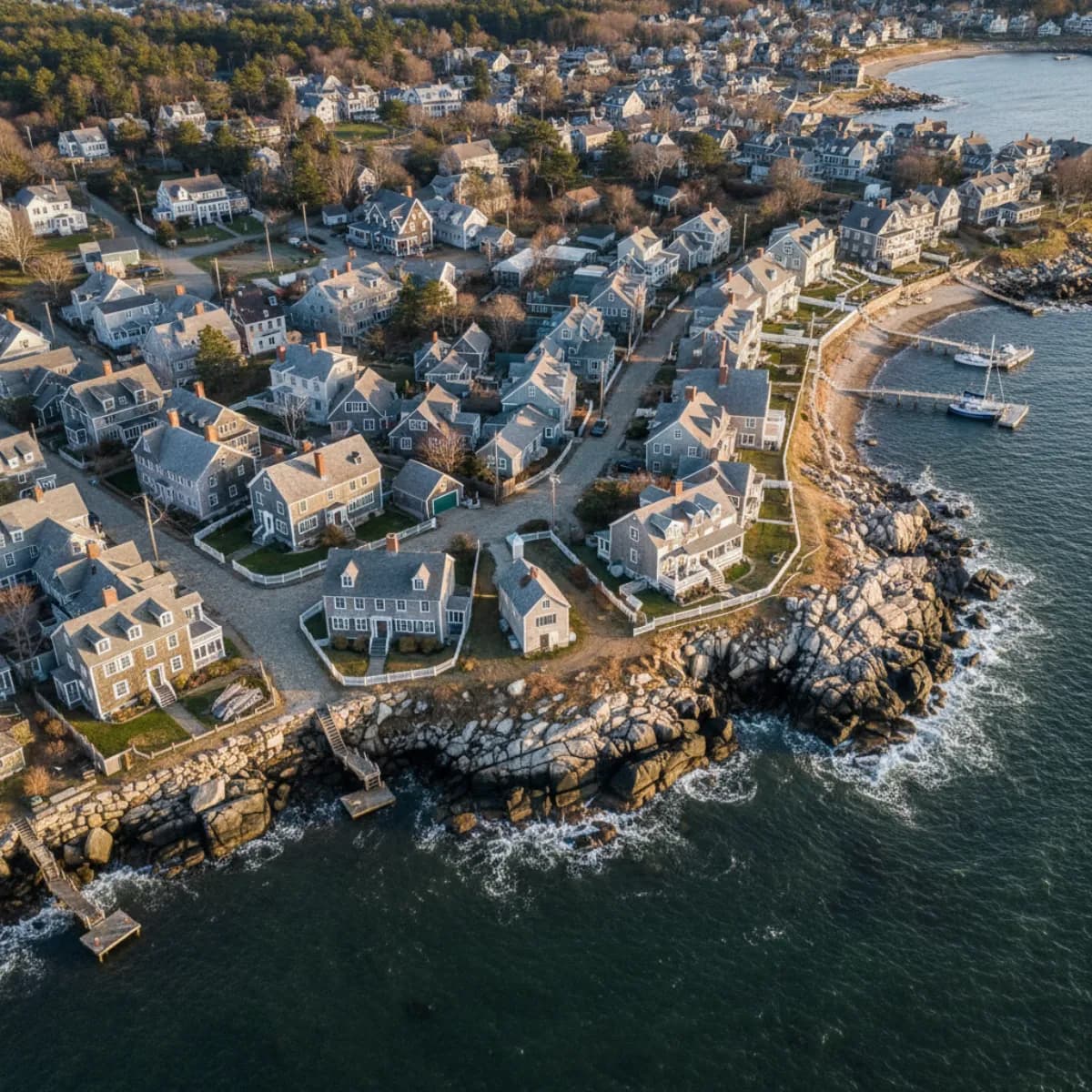
Instant Roof Replacement Quotes on the North Shore, MA
From Salem's historic districts to Gloucester's Atlantic headlands, get instant quotes from pre-vetted contractors who specialize in coastal roofing, salt spray protection, and historic home preservation across all of Essex County.
Free Quotes
no obligations ever
Contractors
licensed, insured, reviewed
Until You Choose
no spam, no lead resale
Contractor Bids
standardized scope comparison
The North Shore of Massachusetts stretches along more than 90 miles of Atlantic coastline from the rocky peninsula of Nahant northward through the historic seaports of Salem, Marblehead, and Gloucester to the barrier beaches and Federal mansions of Newburyport. This region encompasses the entirety of Essex County and is home to more than 800,000 residents living in some of the oldest continuously inhabited communities in North America. For homeowners across the North Shore, roof replacement is not a routine maintenance decision but a strategic investment shaped by a unique combination of coastal weather exposure, historic preservation requirements, and New England building traditions that date back nearly four centuries.
Roofing on the North Shore demands more from materials and contractors than almost any other region in Massachusetts. Salt spray from the Atlantic corrodes standard metal components in a fraction of their rated lifespan. Nor'easters slam the coastline with sustained winds of 40 to 70 mph and gusts exceeding 90 mph multiple times per winter. Ice dams plague the region's abundant stock of 18th and 19th century homes that were built without modern insulation or ventilation. And local historic district commissions in Salem, Newburyport, Marblehead, Ipswich, and Gloucester regulate everything from shingle color to flashing material on homes within their jurisdictions. This guide covers every factor a North Shore homeowner needs to evaluate when planning a roof replacement, from realistic cost expectations and material selection to permit requirements and contractor vetting.
Roofing Challenges Unique to the North Shore
Coastal exposure, historic architecture, and harsh New England winters create a roofing environment that demands specialized knowledge and materials.
Salt Spray Corrosion
The North Shore stretches along more than 90 miles of Atlantic coastline from Nahant to Newburyport, and every home within a mile of the water faces accelerated corrosion from airborne salt. Standard galvanized steel flashing, nails, and vents deteriorate two to three times faster in coastal zones than they do just a few miles inland. In waterfront communities like Marblehead Neck, Eastern Point in Gloucester, and Plum Island in Newburyport, salt spray is a year-round reality that shortens the effective lifespan of every metal component on a roof. The solution is upgrading all fasteners and flashing to stainless steel or copper, using marine-grade coated drip edges and vents, and specifying shingles with enhanced adhesive strips rated for salt environments. This coastal upgrade package typically adds $1,500 to $3,500 to a standard roof replacement but prevents premature failures that would cost far more to repair.
- Stainless steel or copper flashing required near coast
- Marine-grade fasteners resist salt corrosion
- Algae-resistant shingles prevent salt-fed growth
Nor'easter Wind Damage
The North Shore is one of the most nor'easter-exposed coastlines in New England. These powerful storms, which typically arrive between October and April, generate sustained winds of 40 to 70 mph with gusts exceeding 90 mph along exposed headlands in Gloucester, Rockport, Nahant, and Marblehead. The combination of high winds, heavy rain, and sometimes mixed precipitation creates extreme stress on roofing systems. Shingle blow-offs, flashing failures, and wind-driven rain penetration are the most common forms of nor'easter roof damage. Massachusetts building code requires wind-rated installations in coastal zones, and the North Shore falls within the 110+ mph design wind speed zone per ASCE 7. Six-nail patterns, starter strip adhesive reinforcement, and high-wind hip and ridge caps are mandatory for code compliance in these areas.
- 110+ mph wind rating required in coastal zone
- Six-nail installation pattern for shingle retention
- Enhanced starter strip adhesive for uplift resistance
Ice Dam Formation
The North Shore receives an average of 45 to 55 inches of snow per year, and many of the region's homes were built long before modern insulation standards existed. This combination creates ideal conditions for ice dam formation. Colonial-era homes in Salem, Federal-period houses in Newburyport, and Victorian-era properties across the region often have complex roof geometries with multiple valleys, dormers, and intersecting planes that concentrate ice dam risk. When heat escapes through an under-insulated attic, it melts snow on the upper roof. The meltwater flows down and refreezes at the colder eaves, building up a dam of ice that forces water backward under the shingles and into the building envelope. Massachusetts code requires ice and water shield membrane extending at least 24 inches past the interior wall line. Best practice on the North Shore, where roof geometries are often complex, is to extend ice and water shield coverage through all valleys and around every penetration.
- Ice and water shield 24 inches past interior wall line
- R-49 attic insulation to reduce heat loss
- Balanced soffit-to-ridge ventilation system
Historic Preservation Requirements
The North Shore contains some of the oldest continuously inhabited communities in America, and the architectural heritage of this region is both a point of pride and a practical consideration for every roofing project. Salem's McIntire Historic District preserves Samuel McIntire's Federal-era masterworks alongside witch trial-era structures dating to the 1670s. Newburyport's High Street features one of the finest collections of Federal-period mansions in the country. Marblehead's Old Town is a dense concentration of 17th and 18th century homes perched above the harbor. Gloucester's Rocky Neck is America's oldest art colony. Ipswich holds more pre-1725 homes than any other community in America. In all of these areas, local historic district commissions regulate exterior changes including roofing materials, colors, and installation methods. Replacing a slate or wood shake roof with standard asphalt shingles in a regulated historic district can result in violations, fines, and mandatory restoration at the homeowner's expense. The right approach is to work with contractors who understand historic commission requirements and can prepare applications that get approved the first time.
- Local historic commission approval required
- Period-appropriate materials may be mandated
- Slate and wood shake expertise for historic homes
North Shore Roof Replacement Costs
Costs vary by material, proximity to the coast, historic district status, and roof complexity. North Shore pricing runs 5-15% above inland Massachusetts averages due to coastal material requirements.
Regional Price Variation Across the North Shore
Coastal Premium Zone (Higher)
Marblehead, Nahant, Swampscott, Rockport, and Gloucester's Eastern Point command the highest roofing costs on the North Shore. These communities sit directly on the Atlantic with maximum salt spray exposure and wind load. Marine-grade material upgrades, stricter wind code compliance, and the logistical challenges of working on steep coastal lots push costs 10-15% above the North Shore average. Expect architectural shingles at $8-$12 per square foot and standing seam metal at $14-$22 per square foot in these areas.
Historic District Premium (Higher)
Salem's McIntire District, Newburyport's High Street, Marblehead Old Town, and Ipswich's historic core require period-appropriate materials and historic commission approval. When slate or wood shake is mandated, costs can be two to four times higher than standard shingle installations. The approval process itself adds two to six weeks to project timelines. However, maintaining historically appropriate roofing preserves the premium property values these designations protect.
Inland Communities (Average)
Peabody, Danvers, and inland sections of Beverly and Salem align with statewide Massachusetts averages. These communities face standard New England weather challenges (ice dams, freeze-thaw cycling) without the added burden of direct salt spray exposure. Standard architectural shingles at $6-$9 per square foot are appropriate for most homes in these areas. The broader pool of available contractors keeps labor rates competitive.
Merrimack Valley (Moderate)
Haverhill, Lawrence, and the northern reaches of Essex County sit along the Merrimack River, well inland from direct coastal exposure. Roofing costs here are comparable to or slightly below statewide averages. The primary challenges are ice dam prevention on the region's substantial inventory of triple-decker and Victorian multi-family homes, where complex roof geometries increase labor requirements. Expect $6-$9 per square foot for architectural shingles.
Roofing Materials for the North Shore Climate
Not all roofing materials perform equally in a coastal New England environment. Here is how the major options compare for North Shore conditions.
North Shore Roofing Material Comparison
| Material | Cost/sqft | Lifespan | Wind Rating | Best For |
|---|---|---|---|---|
| Architectural Shingles | $6-$10/sqft | 25-30 years | 110-130 mph | Most North Shore homes |
| Standing Seam Metal | $12-$20/sqft | 40-70 years | 110-180 mph | Exposed coastal properties |
| Natural Slate | $15-$30/sqft | 75-100+ years | 110-150 mph | Historic homes and districts |
| Impact-Resistant Shingles | $8-$13/sqft | 30-50 years | 130+ mph | Storm-prone areas, nor'easter zones |
| Cedar Shake (Where Permitted) | $10-$18/sqft | 20-40 years | 80-110 mph | Specific historic restorations |
Architectural Shingles
The workhorse choice for the majority of North Shore homes. Modern architectural shingles with algae-resistant granules handle the coastal climate well when paired with proper underlayment and flashing upgrades. Specify 130+ mph wind-rated products for homes within two miles of the coast. The SBS-modified (rubberized) varieties offer better flexibility in cold weather, reducing cracking during winter installations and freeze-thaw cycling. Cost-effective for standard residential neighborhoods in Peabody, Danvers, Beverly, and inland areas of Salem and Lynn.
Standing Seam Metal
The premium choice for homes directly exposed to Atlantic weather. Standing seam panels with Kynar 500 marine-grade coatings resist salt spray corrosion far better than any other material. The interlocking panel design provides superior wind uplift resistance, and the smooth surface sheds snow efficiently, reducing ice dam risk. Particularly well suited for waterfront homes in Marblehead, Nahant, Rockport, and Gloucester where wind exposure is extreme. The higher upfront cost is offset by a lifespan two to three times longer than shingles.
Natural Slate
The gold standard for the North Shore's historic properties. Slate is inherently impervious to salt spray, does not corrode, and carries a Class A fire rating. Victorian-era homes in Salem and Gloucester that originally had slate roofs should be re-roofed with slate to maintain architectural integrity and comply with historic district requirements. Natural slate from Vermont and Pennsylvania quarries is readily available through regional suppliers. The weight of slate (800-1,500 lbs per square) requires verification that the existing roof structure can support it, which is rarely an issue on homes that already had slate.
Impact-Resistant Shingles
Class 4 impact-resistant shingles are engineered with an SBS-modified asphalt core that absorbs impact energy from wind-driven debris during nor'easters and severe thunderstorms. These shingles qualify for insurance premium discounts of 10-28% from most Massachusetts carriers, which can offset the higher upfront cost within five to seven years. Recommended for exposed properties in Gloucester, Rockport, Nahant, and eastern Marblehead where storm debris impact is highest.
Cedar Shake (Where Permitted)
Wood shake was historically common on North Shore homes before the widespread adoption of slate in the Victorian era. Some historic commissions require or allow cedar shake for specific restoration projects. Modern fire-treated cedar shakes carry a Class B fire rating. However, cedar is more maintenance-intensive in coastal environments due to accelerated weathering from salt spray and moisture. Not recommended for primary coastal exposure unless historically mandated. Proper ventilation and annual treatment extend service life significantly.
Current Massachusetts Roofing Material Prices
Live pricing data for all roofing materials in Massachusetts, updated regularly from contractor bids on the RoofVista marketplace. North Shore coastal projects may run 5-15% above these statewide averages.
North Shore Communities We Serve
RoofVista connects homeowners across Essex County with pre-vetted roofing contractors who understand the specific challenges of each North Shore community.
Salem
Colonial, Federal, Victorian
Witch trial-era architecture, McIntire Historic District, Federal and Victorian homes
View Salem pageMarblehead
Colonial, Cape Cod, Georgian
Old Town 17th-18th century homes, harbor-front colonials, exposed coastal headlands
Gloucester
Victorian, Colonial, Cape Cod
America's oldest seaport, Rocky Neck art colony, Victorian-era homes, extreme coastal exposure
Newburyport
Federal, Colonial, Greek Revival
High Street Federal mansions, Plum Island waterfront, dense historic downtown
Beverly
Colonial, Victorian, Ranch
Beverly Farms estates, Prides Crossing grand homes, mixed suburban neighborhoods
Peabody
Ranch, Colonial, Cape Cod
Former leather tanning capital, South Peabody residential neighborhoods, diverse housing stock
View Peabody pageDanvers
Colonial, Split-level, Ranch
Salem Village historic sites, suburban residential, Danversport waterfront area
Lynn
Victorian, Triple-decker, Ranch
Diamond District Victorian mansions, Nahant Beach area, dense multi-family neighborhoods
View Lynn pageSwampscott
Colonial, Cape Cod, Victorian
Oceanfront homes along King's Beach, Phillips Beach estates, moderate coastal exposure
Nahant
Victorian, Cottage, Colonial
Peninsula community, maximum coastal exposure on all sides, salt spray year-round
Rockport
Cape Cod, Colonial, Cottage
Bearskin Neck artist colony, granite quarry heritage, exposed Atlantic coastline
Ipswich
First Period, Colonial, Federal
More pre-1725 homes than any U.S. community, Crane Beach coastal area, rural estates
Haverhill
Victorian, Triple-decker, Ranch
Merrimack River mill city, Bradford historic district, diverse Victorian and post-war housing
View Haverhill pageLawrence
Triple-decker, Victorian, Multi-family
Immigrant City mill architecture, dense triple-decker neighborhoods, Prospect Hill residential area
Building Codes and Wind Requirements
The North Shore falls within Massachusetts' highest wind speed design zones. Understanding these requirements is essential for a code-compliant roof replacement.
110+ MPH Design Wind Speed
Coastal North Shore communities fall within the 110 to 130 mph basic design wind speed zone per ASCE 7 standards adopted by the Massachusetts building code. This means all roofing materials, fasteners, and installation methods must be rated to withstand these wind speeds. In practice, this requires six-nail installation patterns for shingles (versus the standard four-nail pattern used inland), starter strip adhesive reinforcement at all eaves and rakes, and high-wind hip and ridge cap products. Metal roofing installations must use concealed clip systems rated for the specified wind zone. Any contractor working on the North Shore should be able to demonstrate familiarity with these requirements without being prompted.
Ice and Water Shield Requirements
Massachusetts building code requires ice and water shield membrane on all eaves, extending a minimum of 24 inches past the interior wall line. For the North Shore, where ice dams are prevalent due to older housing stock and complex roof geometries, best practice exceeds code minimum. Experienced North Shore contractors install ice and water shield in all valleys, around all penetrations (chimneys, skylights, vent pipes), and along all sidewall and headwall flashings. On homes with a history of ice dam problems, full-deck ice and water shield provides maximum protection at a cost premium of $800 to $2,000 for a standard home.
Historic District Regulations
Multiple North Shore communities maintain local historic district commissions with authority over exterior changes. Salem's Historic Commission oversees the McIntire District, Derby Street, and Chestnut Street areas. Newburyport's Historic Commission regulates the downtown and High Street corridor. Marblehead's Old Town, Ipswich's historic core, and Gloucester's Rocky Neck each have their own oversight bodies. In these districts, roofing material, color, profile, and even flashing type may be regulated. Applications for approval should be submitted before contracting for work, and most commissions meet monthly. Planning for a two to six week approval timeline is essential for projects in designated districts.
MA Contractor Licensing
Massachusetts requires all roofing contractors to hold a valid Home Improvement Contractor (HIC) registration through the Office of Consumer Affairs and Business Regulation. Contractors must also carry general liability insurance and workers' compensation coverage. On the North Shore, where marine environments create additional liability exposure, verifying insurance coverage is particularly important. Every contractor on the RoofVista marketplace has been verified for current HIC registration, insurance, and documented experience in the specific community where they bid on work.
Roofing for the North Shore's Historic Homes
The North Shore preserves some of the oldest and most architecturally significant homes in America. Each era presents distinct roofing considerations.
Salem's Witch Trial-Era and Federal Architecture
Salem's architectural heritage spans from the late 1600s to the mid-1800s, with significant concentrations of First Period (pre-1725), Georgian, and Federal-style homes. The McIntire Historic District, named for master builder Samuel McIntire, features some of the finest Federal-era residences in America along Chestnut Street and Essex Street. These homes were originally roofed with wood shingles and later upgraded to slate during the Victorian era. Today, the Salem Historic Commission typically requires slate, wood shingle, or architecturally sympathetic alternatives for roofing replacements within regulated districts. The steep-pitched roofs common on Federal-era homes actually provide excellent snow shedding but create challenging work conditions that increase labor costs. Chimney flashing on these older structures requires particular attention, as the original lime mortar joints are often deteriorated and must be repointed before new counter-flashing can be set.
Marblehead and Newburyport Colonial Homes
Marblehead's Old Town is a dense concentration of 17th and 18th century homes perched on narrow lanes above the harbor, many with original hand-hewn roof framing. Newburyport's High Street corridor preserves one of the finest collections of Federal-period mansions in the country, many topped with original or replacement slate roofs. Roofing these properties requires contractors who can assess the structural integrity of centuries-old timber framing, work on steep pitches without damaging fragile historic fabric, and navigate the approval processes of local historic commissions. In Marblehead, the compact lot sizes and narrow street access add logistical complexity and cost, as material staging and debris removal require careful planning. Newburyport's Federal mansions often have complex roof geometries with multiple dormers, widow's walks, and cupolas that increase both material waste and labor hours compared to simple gable or hip roofs.
Victorian-Era Slate Roofs in Salem and Gloucester
The late 19th century brought a wave of Victorian-era construction to the North Shore's growing commercial centers, and many of these homes were roofed with natural slate quarried from Vermont and Pennsylvania. Salem's North Street, Broad Street, and Lafayette Street neighborhoods retain significant concentrations of Victorian homes with original or replacement slate. Gloucester's inner harbor neighborhoods and Eastern Point estates feature similar Victorian slate roofing. When these roofs need attention, the first question is whether repair or full replacement is appropriate. If fewer than 20% of slates are damaged and the underlying deck is sound, repair with matching salvage slate is almost always the more economical option. Full slate replacement on a Victorian home with a complex roof geometry (turrets, multiple gables, decorative ridge work) typically costs $30,000 to $60,000 or more. The investment is justified by slate's 75 to 100+ year lifespan and its role in maintaining the architectural character that drives property values in these neighborhoods.
North Shore Roofing Season and Timing
Timing your roof replacement correctly saves money, ensures proper installation, and avoids weather-related delays.
Peak Season: May through September
The ideal window for North Shore roof replacements runs from mid-May through late September, when temperatures consistently exceed 45 degrees Fahrenheit. Shingle sealant strips require sustained warmth to activate properly, which is critical for wind resistance in the coastal zone. Summer installations offer the longest daylight hours and the most predictable weather windows. However, this is also the busiest season for contractors, and lead times of four to eight weeks are common for the best-reviewed crews. Booking in late winter or early spring secures priority scheduling.
Shoulder Season: October and April
October and April offer a balance of reasonable weather and reduced contractor demand. Pricing may be slightly lower as crews look to fill schedules between the peak and off seasons. October installations should be completed before the first nor'easters arrive, typically in late November. April projects need to wait for consistent above-freezing temperatures to ensure proper sealant activation. SBS-modified (rubberized) shingles are preferred for shoulder-season installations because they remain flexible at lower temperatures.
Off Season: November through March
Full roof replacements during the North Shore winter face significant challenges: snow and ice on existing roofs, shortened daylight hours, temperatures that prevent proper shingle sealing, and frequent nor'easters that halt work entirely. Emergency repairs and tarping are available year-round, but scheduling a full replacement during this period is not recommended unless the existing roof is actively leaking. Contractors who do winter work typically charge a 10-20% premium to compensate for reduced productivity and weather delays.
Storm Damage: Emergency Response
Nor'easters, hurricanes, and severe thunderstorms can damage North Shore roofs at any time of year. After a major storm event, demand for emergency tarping and repair surges, and wait times for permanent repairs can stretch to weeks or months. Having an existing relationship with a pre-vetted contractor through RoofVista means faster response when storm damage occurs. Homeowners should document damage with photos immediately and file insurance claims within 72 hours of a storm event for the strongest chance of full coverage.
Frequently Asked Questions About North Shore Roofing
Answers to the most common questions from North Shore homeowners planning a roof replacement.
How much does a roof replacement cost on the North Shore of Massachusetts?
Roof replacement on the North Shore typically costs $9,000 to $28,000 for architectural shingles. Coastal communities may see 10-15% higher costs for salt-spray-rated materials. Historic homes requiring slate can range from $25,000 to $50,000+.
What roofing materials are best for North Shore coastal homes?
Standing seam metal with marine-grade coatings is ideal for exposed coastal properties. Architectural shingles rated for 130+ mph winds are the most popular choice. For historic homes, natural slate offers unmatched durability and salt corrosion resistance.
How does salt spray affect roofs on the North Shore?
Salt spray accelerates corrosion on metal flashing, fasteners, and vents. Homes within one mile of the coast need stainless steel or copper flashing and marine-grade fasteners. Galvanized steel can fail in 10-15 years near the coast versus 25-30 years inland.
Do I need a permit for roof replacement on the North Shore?
Yes, all North Shore municipalities require building permits. Historic districts in Salem, Newburyport, Marblehead, and Gloucester require additional historic commission review. MA contractors must hold HIC registration.
When is the best time to replace a roof on the North Shore?
Late April through October is ideal. Booking in late winter secures priority spring scheduling. Emergency repairs happen year-round, but full replacements during nor'easter season face delays.
How do ice dams affect North Shore roofs?
Ice dams are a serious concern with 45-55 inches of annual snowfall and older housing stock. Prevention requires R-49 insulation, balanced ventilation, and ice and water shield extending 24 inches past interior walls per MA code.
Explore More Massachusetts Roofing Resources
Get detailed roofing information for specific North Shore communities or explore statewide resources.
Massachusetts Overview
Statewide roofing costs, materials, and contractor information for all of Massachusetts.
View MA pageInstant Quote Calculator
Get an AI-powered instant estimate for your North Shore home using satellite roof measurement.
Get your estimateSalem, MA
Historic district roofing, witch trial-era homes, and Victorian slate replacement in Salem.
View Salem pagePeabody, MA
Roofing quotes for Peabody's residential neighborhoods and diverse housing stock.
View Peabody pageLynn, MA
Diamond District Victorians, triple-deckers, and coastal roofing in Lynn.
View Lynn pageHaverhill, MA
Merrimack Valley roofing quotes for Haverhill's Victorian and post-war residential neighborhoods.
View Haverhill pageGet Your North Shore Roof Quote in Minutes
Enter your address to compare instant quotes from pre-vetted North Shore contractors who specialize in coastal roofing, historic home preservation, and salt spray protection across Essex County.
Compare 571+ vetted roofers near North Shore, Massachusetts
See independent reviews, BBB ratings, and Google data — then compare quotes side-by-side from pre-vetted local contractors.