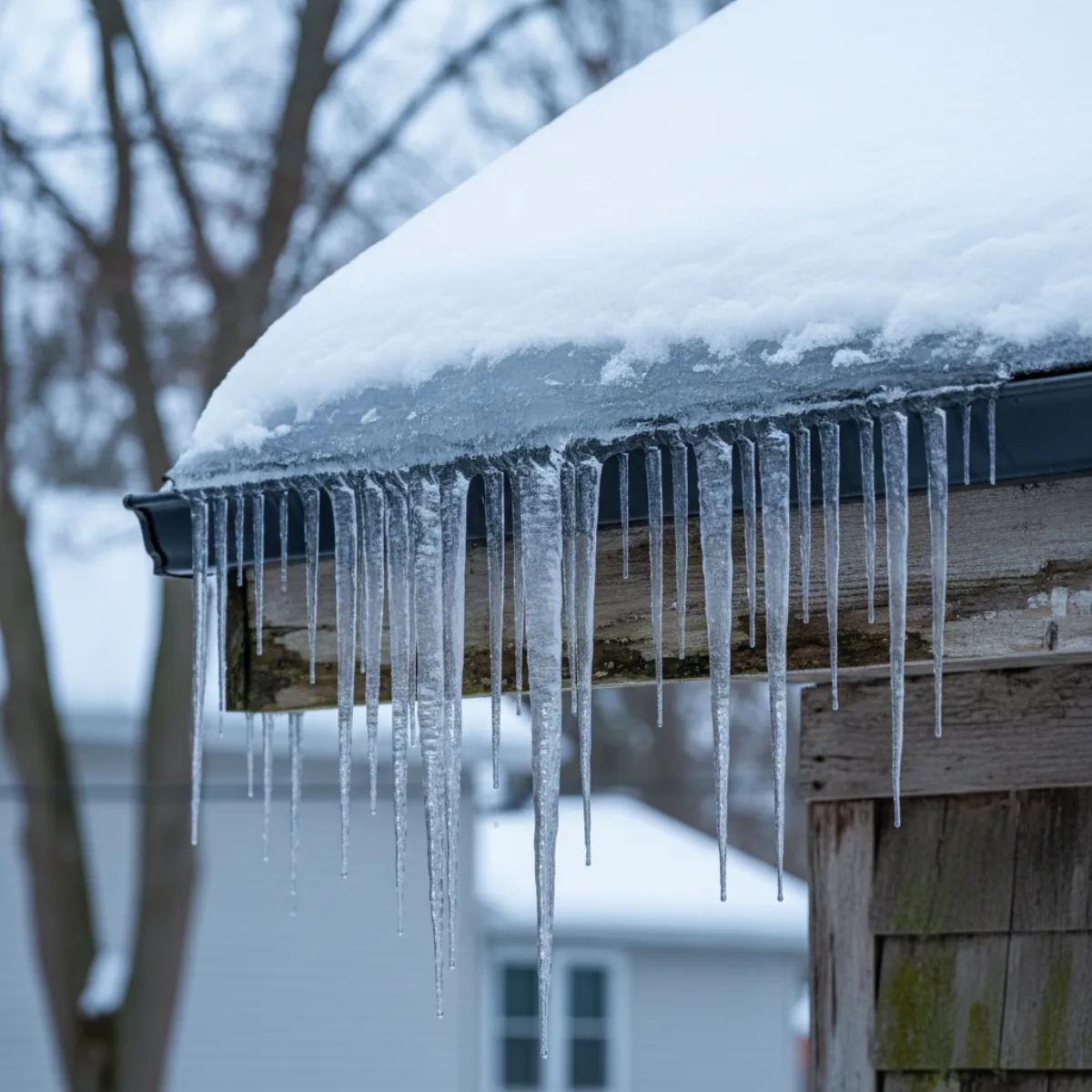
Ice dams are one of the most common and destructive winter roofing problems in Massachusetts. The state averages 50 to 60 inches of snowfall annually — with Western Massachusetts, the Berkshires, and Worcester County regularly exceeding 70 inches — creating the perfect conditions for ice dam formation on thousands of homes every winter. The damage is not limited to the roof: ice dams cause water infiltration into attics, ceilings, walls, and insulation, leading to structural damage, mold growth, and thousands of dollars in repair costs when left unaddressed.
The root cause of virtually every ice dam is the same: inadequate attic insulation and air sealing, which allows heat from the living space to escape through the roof and melt snow unevenly. Massachusetts has one of the oldest housing stocks in the nation — triple-deckers in Boston, Cambridge, and Somerville; colonials in the western suburbs; Cape Cod-style homes across the South Shore and Cape — many built decades before modern energy codes. This guide covers how ice dams form, emergency removal options, the permanent three-part prevention solution (air sealing, insulation, and ventilation), Massachusetts Building Code requirements, insurance coverage, costs, and which home types are most vulnerable. Whether you are dealing with an active ice dam emergency or planning to prevent ice dams permanently before next winter, this resource will help you make the right decisions.
How Ice Dams Form on Massachusetts Roofs
Understanding the ice dam cycle is essential to solving the problem. Ice dams are not caused by cold weather — they are caused by heat loss from the attic combined with snowfall.
Heat Escapes Through the Attic
Warm air from living spaces rises through air leaks around plumbing stacks, electrical wiring, recessed lights, attic hatches, and gaps in the ceiling plane. In older Massachusetts homes — especially triple-deckers, colonials, and Capes built before the 1970s — these air leaks can be extensive, delivering significant heat to the attic space even when the thermostat is set to moderate temperatures.
Snow Melts on the Upper Roof
The escaping heat warms the roof deck unevenly. Snow on the upper portions of the roof — directly above heated living spaces — begins to melt from the bottom up, even when outdoor temperatures are well below freezing. The meltwater flows downhill under the remaining snow pack, invisible from the ground, following the roof slope toward the eaves.
Water Refreezes at the Eaves
When the meltwater reaches the eaves — the portion of the roof that extends past the exterior walls with no heat source below — it refreezes. With each freeze-melt cycle, this ice ridge grows larger, creating a dam that blocks subsequent meltwater from draining off the roof. In heavy snowfall areas of Massachusetts, ice dams can grow to 6 inches thick or more.
Water Backs Up Under Shingles
As the ice dam grows, pooled water has nowhere to go but sideways and upward. It seeps under shingles, past the underlayment, and into the roof deck. From there, water infiltrates the attic, saturates insulation (destroying its R-value), runs along framing members, and emerges as stains, drips, and eventually mold on interior ceilings and walls. The damage is often widespread by the time homeowners notice it.
Key insight: Ice dams form because the roof is too warm, not because it is too cold. A properly insulated and ventilated attic keeps the roof deck at the same temperature as the outside air, preventing uneven snowmelt entirely. This is why ice dams appear on some houses on a street but not others — it is a building performance issue, not a weather issue.
Massachusetts Snowfall & Ice Dam Risk by Region
Ice dam risk in Massachusetts correlates directly with snowfall totals and the age of the housing stock. Every region of the state is affected, though severity varies.
Greater Boston & Eastern MA
High RiskBoston averages 49 inches of annual snowfall, with coastal storms (nor'easters) capable of dropping 12 to 24 inches in a single event. The dense housing stock of Boston, Cambridge, Somerville, and surrounding cities includes thousands of triple-deckers, row houses, and pre-war multifamily buildings with poor insulation and extensive air leakage. The combination of heavy, wet coastal snow and aging buildings makes Eastern Massachusetts one of the highest ice dam risk zones in the state.
Worcester County & Central MA
Very High RiskThe Worcester Hills and central Massachusetts receive 60 to 75 inches of snowfall annually — significantly more than the coast. The combination of higher elevation, colder average temperatures, and longer snow cover duration means ice dams have more time to develop and cause damage. Worcester, Leominster, Fitchburg, and surrounding communities see some of the most severe ice dam seasons in the state, particularly during sustained cold snaps in January and February.
Western MA & the Berkshires
Extreme RiskThe Berkshires and hilltowns of Western Massachusetts receive 70 to 90 inches of snowfall annually, with some locations exceeding 100 inches. Snow cover can persist from December through March, giving ice dams months to form and grow. Springfield, Pittsfield, Northampton, and surrounding areas have long, cold winters and a housing stock that includes many 18th and 19th century farmhouses and colonials with minimal insulation. Ice dam damage is a near-annual occurrence for homes that have not been upgraded.
South Shore & Cape Cod
Moderate-High RiskThe South Shore and Cape Cod receive less total snowfall than inland areas — averaging 35 to 50 inches — but nor'easters can dump heavy, wet snow that is particularly prone to ice dam formation. The high winds on the Cape also drive snow accumulation into valleys and dormers. Cape Cod-style homes, which dominate the region, have the knee wall insulation challenges that make them inherently ice-dam-prone regardless of total snowfall.
Permanent Ice Dam Prevention: The Three-Part Solution
The only way to permanently eliminate ice dams is to address the root cause: heat loss from the living space into the attic. This requires three coordinated improvements.
Attic Air Sealing
$1,000 - $3,000The single most important step in ice dam prevention. Air sealing stops warm, moist air from the living space from entering the attic through gaps around plumbing stacks, electrical penetrations, recessed can lights, attic hatches, chimney chases, and top plates of interior partition walls. In Massachusetts triple-deckers and multi-story colonials, balloon-frame construction creates hidden pathways that channel warm air from the basement directly to the attic — these must be identified and sealed with fire-rated materials. Professional air sealing typically costs $1,000 to $3,000 and can reduce attic heat loss by 30 to 50 percent on its own.
Attic Insulation Upgrade to R-49
$2,000 - $5,000Energy Star recommends R-49 attic insulation for Massachusetts homes in Climate Zone 5. Many older homes in Boston, Cambridge, Worcester, and Springfield have R-11 to R-19 — far below the recommended level. Blown-in cellulose or fiberglass is the most cost-effective upgrade for existing homes, as it can be installed over existing insulation without removing it. For cathedral ceilings and finished attics common in Cape Cod-style homes, spray foam insulation may be necessary to achieve adequate R-value in a limited space. Proper insulation keeps the roof deck cold, preventing the uneven snowmelt that triggers ice dam formation.
Balanced Soffit-to-Ridge Ventilation
$500 - $2,000A properly ventilated attic maintains a cold roof deck by allowing outdoor air to flow continuously from soffit vents at the eaves, across the underside of the roof deck, and out through ridge vents at the peak. This removes any residual heat that passes through the insulation and equalizes the temperature across the entire roof surface. Massachusetts homes often have blocked soffit vents — insulation pushed against the soffits during previous upgrades, or soffits that were never vented in the first place. Installing proper baffles to keep insulation away from soffit vents is critical. The 1:150 ventilation ratio (1 square foot of net free vent area per 150 square feet of attic floor) is the standard minimum.
Ice and Water Shield Membrane
Included in re-roof ($1.50 - $3.00/sqft extra vs. felt)Massachusetts Building Code (780 CMR) requires self-adhering ice and water shield membrane at all eaves, valleys, and roof penetrations on new construction and re-roofing projects. This rubberized membrane creates a waterproof barrier on the roof deck that prevents water penetration even if ice dams form. Code requires it to extend at least 24 inches past the interior face of the exterior wall. For homes in high-snowfall areas of Western Massachusetts and the Berkshires, many contractors recommend extending ice and water shield 3 to 6 feet up from the eaves for additional protection. This is installed during roof replacement — it is not a retrofit solution for an existing roof.
Total cost for permanent prevention: A comprehensive attic air sealing, insulation upgrade, and ventilation improvement for a typical Massachusetts single-family home costs $3,000 to $8,000. This one-time investment eliminates $300 to $800 per year in emergency ice dam removal costs, prevents thousands of dollars in potential water damage, and reduces heating bills by 10 to 30 percent — typically paying for itself within 3 to 5 years.
Massachusetts homeowners may qualify for rebates through the Mass Save program for insulation and air sealing upgrades. Get an instant estimate to compare quotes from pre-vetted contractors who handle both roofing and insulation upgrades.
Massachusetts Building Code & Ice Dam Protection
The Massachusetts Building Code (780 CMR) includes specific requirements designed to protect homes from ice dam damage. These apply to all new construction and re-roofing projects.
Ice and Water Shield Requirements
- Eaves protection: Self-adhering ice and water shield membrane required at all eaves, extending at least 24 inches past the interior face of the exterior wall
- Valleys: Ice and water shield required in all valleys — the intersections where two roof planes meet — where snowmelt concentrates
- Penetrations: Ice and water shield around all roof penetrations including plumbing vents, chimneys, skylights, and dormers
- Material standard: Must meet ASTM D1970 for self-adhering polymer modified bitumen sheet waterproofing
Insulation & Ventilation Requirements
- R-49 attic insulation: Energy Star recommendation for Climate Zone 5, which covers all of Massachusetts — the code minimum is R-38 but R-49 is the standard for new construction
- Ventilation ratio: Minimum 1:150 net free ventilation area to attic floor area, or 1:300 with a vapor barrier on the warm side
- Balanced ventilation: At least 50% of required ventilation must be provided by upper vents (ridge, gable) and 50% by lower vents (soffit) for proper airflow
- Air barrier: Continuous air barrier required between conditioned space and unconditioned attic in new construction
Important for re-roofing projects: When you replace your roof in Massachusetts, the 780 CMR requires installation of ice and water shield at all eaves, valleys, and penetrations. This is the ideal time to also upgrade attic insulation and ventilation to permanently prevent ice dams — the roof is already open, and the additional cost of insulation and ventilation improvements is significantly less than doing them as separate projects later. Schedule a roof inspection to assess your current condition.
Massachusetts Home Types Most Vulnerable to Ice Dams
Massachusetts has one of the oldest housing stocks in the United States. These common home types are particularly susceptible to ice dam formation due to their age and construction methods.
Triple-Deckers (Boston, Cambridge, Somerville)
The iconic New England triple-decker is one of the most ice-dam-prone building types in Massachusetts. Built primarily between 1870 and 1930, these three-story wood-frame buildings feature balloon-frame construction where wall cavities run continuously from the basement to the attic with no fire-stopping. Warm air from all three units funnels directly into the attic through these open wall cavities, creating massive heat loss that melts snow rapidly. The flat or low-slope roofs common on triple-deckers compound the problem by giving meltwater nowhere to drain quickly. Air sealing balloon-frame cavities and upgrading attic insulation can reduce ice dam formation by 80 to 90 percent in these buildings.
Colonial and Victorian Homes
Massachusetts has one of the oldest housing stocks in the nation, with thousands of Colonial, Federal, and Victorian-era homes in communities from Salem and Marblehead to Northampton and Stockbridge. These homes were built with no insulation and minimal regard for air sealing. Many have had insulation added over the decades, but the original air leakage paths remain — around plaster-and-lath walls, through pocket doors, up open balloon-frame cavities, and around the chimney mass. Knee walls in 1.5-story Cape Cod homes are another notorious weak point, allowing conditioned air to reach the underside of the roof deck.
Cape Cod-Style Homes
The Cape Cod is the most common residential architecture in Massachusetts, and its design creates unique ice dam challenges. The half-story second floor means the roof serves as both roof and wall for the upper bedrooms, with sloped ceilings that make achieving adequate insulation difficult. Knee walls — the short vertical walls on either side of the upper rooms — are often poorly insulated and air-sealed, allowing conditioned air to enter the triangular attic spaces behind them and warm the roof deck. Properly insulating and air-sealing a Cape Cod requires careful attention to the knee walls, the sloped ceiling sections, and the flat ceiling above the second-floor rooms.
Homes with Complex Roof Geometry
Dormers, valleys, skylights, and multi-level rooflines create areas where snow accumulates and drainage is restricted, making ice dams more likely even on well-insulated homes. Dormers are particularly problematic because their small attic spaces are difficult to insulate and ventilate properly, and the valleys where the dormer meets the main roof channel concentrated meltwater into a narrow path. Massachusetts homes with multiple dormers — common in Craftsman bungalows and Colonial Revival styles throughout the greater Boston area — should pay special attention to valley ice and water shield protection and dormer insulation during any roof replacement or upgrade project.
Emergency Ice Dam? Act Now
If you see water staining on ceilings, active leaks, or ice buildup more than 2 feet from the eaves, take immediate action.
Contain Interior Water Damage
Place buckets, towels, and tarps to catch active leaks. Move furniture and valuables away from affected areas. If water is pooling on a ceiling, poke a small hole at the lowest point to allow controlled drainage into a bucket — this prevents the weight of accumulated water from collapsing the ceiling.
Safely Remove Snow from the Roof Edge
Using a roof rake from the ground, remove snow from the lower 3 to 4 feet of the roof on all sides. This removes the insulating snow layer that traps heat and allows the ice dam to freeze solid. Never climb onto an icy or snow-covered roof — the risk of a fall is extreme. Roof raking alone will not remove an existing ice dam, but it stops the dam from growing larger.
Create Drainage Channels
Fill old pantyhose or fabric tubes with calcium chloride ice melt and lay them perpendicular to the ice dam, extending from the dam edge over the gutter. The calcium chloride melts through the ice and creates a channel for pooled water to drain. Never use rock salt (sodium chloride), as it corrodes aluminum gutters and flashing, stains roofing and siding, and kills landscaping below. One calcium chloride sock per 3 feet of ice dam is a reasonable starting point.
Call a Professional for Steam Removal
Professional ice dam removal using low-pressure steam is the safest method that will not damage your roof. The contractor uses a specialized steamer that melts ice at a controlled temperature without the mechanical force of chipping, prying, or pressure washing. Expect to pay $300-$800 per visit. Avoid any contractor who uses picks, chisels, axes, or high-pressure power washers — these methods routinely cause shingle, flashing, and gutter damage that exceeds the cost of the ice dam damage itself.
Document Everything for Insurance
Take photos and video of the ice dam from the ground, all interior water damage, any damaged personal property, and the condition of the roof after professional removal. Note the date, time, and weather conditions. Save all contractor invoices and receipts. File your insurance claim promptly — Massachusetts homeowners insurance covers water damage from ice dams under standard HO-3 policies, though the cost of ice dam removal itself is typically not covered.
Need emergency ice dam removal? Visit our Massachusetts emergency roofing page for immediate options, or get an instant estimate to compare quotes from pre-vetted contractors who offer professional steam removal services.
Insurance Coverage for Ice Dam Damage in Massachusetts
Understanding what your homeowners insurance covers — and what it does not — is critical for managing ice dam costs in Massachusetts.
Typically Covered
- Water damage to ceilings, walls, and floors caused by ice dam backup
- Damaged insulation, drywall, and paint from water infiltration
- Personal property damage (furniture, electronics, clothing) from ice dam leaks
- Mold remediation if resulting from a covered ice dam event (subject to policy sub-limits)
- Some policies include roof snow removal coverage to prevent imminent ice dam damage
Typically NOT Covered
- Cost of removing the ice dam itself (the removal service)
- Preventive measures: insulation upgrades, ventilation improvements, heat cables
- Damage classified as gradual deterioration or deferred maintenance
- Roof replacement solely due to ice dam damage (unless the damage is severe enough to warrant it)
- Repeated claims may trigger premium increases or non-renewal (though MA law protects against cancellation from a single claim)
Massachusetts consumer protection: Under Massachusetts General Laws Chapter 175, Section 99, insurers cannot cancel your homeowners policy solely due to a single weather-related claim, including ice dam damage. However, multiple claims within a 3-year period can impact your insurability and premiums. The most cost-effective approach is to file one claim for existing damage, invest in permanent prevention (air sealing, insulation, ventilation), and eliminate future claims entirely.
Ice Dam Repair & Prevention Costs in Massachusetts
Understanding the full cost picture helps you make the right decision between emergency band-aids and permanent solutions.
Massachusetts Ice Dam Service Costs
| Service | Cost Range | Duration | Effectiveness |
|---|---|---|---|
Emergency Steam Removal Per visit, professional service | $300 - $800 | 1-3 hours | Temporary |
Roof Snow Removal Professional roof raking | $200 - $500 | 1-2 hours | Preventive |
Heat Cable Installation Eaves and valleys | $500 - $1,500 | Half day | Band-aid |
Attic Air Sealing All penetrations sealed | $1,000 - $3,000 | 1-2 days | Permanent |
Insulation Upgrade to R-49 Recommended for MA homes | $2,000 - $5,000 | 1-2 days | Permanent |
Ventilation Improvement Soffit-to-ridge balanced flow | $500 - $2,000 | 1 day | Permanent |
Complete Prevention Package Air seal + insulation + ventilation | $3,000 - $8,000 | 2-3 days | Permanent |
The math is clear: A homeowner who spends $500-$800 per year on emergency ice dam removal over 5 years will spend $2,500 to $4,000 — with water damage risk every single winter. A one-time investment of $3,000 to $8,000 in permanent prevention eliminates the problem entirely, reduces heating costs by 10-30%, and protects the home from structural damage. The permanent solution pays for itself and then continues saving money indefinitely.
Common Ice Dam Mistakes Massachusetts Homeowners Make
Well-intentioned but incorrect responses to ice dams can cause more damage than the ice dam itself. Avoid these common mistakes.
Chipping or Hacking at Ice Dams
Using hammers, chisels, ice picks, or axes to break up ice dams is one of the most common and destructive mistakes. The tools damage shingles, crack flashing, dent gutters, and can puncture the roof deck itself. One misplaced swing can create a leak that costs far more to repair than the ice dam would have caused. Always use professional steam removal — never mechanical force.
Using Rock Salt on the Roof
Sodium chloride (rock salt) corrodes aluminum and galvanized steel gutters, flashing, and fasteners. It stains roofing materials, discolors siding, and kills landscaping below the drip line. Use calcium chloride instead — it melts ice at lower temperatures, does not corrode metal, and is far less damaging to vegetation. Even with calcium chloride, use it in moderation and contained in fabric socks, not scattered loose.
Climbing onto a Snow-Covered Roof
Falls from roofs are a leading cause of winter injuries in Massachusetts. Snow and ice make roof surfaces extremely slippery, and hidden ice beneath snow creates conditions where even experienced professionals can lose footing. All snow removal from the lower roof edge should be done from the ground using a roof rake with an extension handle. Leave any work that requires roof access to insured professionals with proper safety equipment.
Relying Solely on Heat Cables
Heat cables address the symptom, not the cause. They create drainage channels through the ice dam but do nothing to stop the attic heat loss that forms the dam in the first place. They consume significant electricity ($100-$300 per winter), require maintenance, have a limited lifespan (5-10 years), and can actually cause additional freeze-thaw damage to the shingles they rest on. The same money invested in air sealing and insulation provides a permanent solution.
When to Address Ice Dam Prevention in Massachusetts
Timing matters for ice dam prevention work. Here is the optimal Massachusetts timeline for addressing each component.
Spring & Summer
April through September
Ideal time for attic air sealing, insulation upgrades, and ventilation improvements. Contractors are most available and prices are lowest. If you experienced ice dams last winter, schedule prevention work in spring while the problem is fresh in your mind.
Fall
October through November
Last chance for prevention work before winter. Roof replacement and ice and water shield installation should be completed by mid-November before sustained cold weather arrives. Attic insulation can still be added through December. Clean gutters and downspouts before freeze.
Winter
December through March
Emergency response mode. Remove snow from the lower roof edge after each storm with a roof rake. If ice dams form, use calcium chloride socks and call for professional steam removal. Document any damage for insurance. Plan permanent prevention for spring.
Massachusetts Roofing Material Prices
If ice dam damage has compromised your roof to the point of needing replacement, here are current Massachusetts material and installation costs. A roof replacement is also the ideal time to add proper ice and water shield protection.
Frequently Asked Questions: Ice Dams in Massachusetts
Answers to the most common questions Massachusetts homeowners have about ice dam repair, prevention, costs, and insurance coverage.
What causes ice dams on Massachusetts roofs?
Ice dams form when heat escapes through an inadequately insulated or poorly ventilated attic, warming the roof deck and melting snow on the upper portions of the roof. The meltwater flows downhill under the snow pack until it reaches the eaves — the coldest part of the roof that extends past the exterior walls with no heat source below. There, the water refreezes into a ridge of ice along the roof edge. As the cycle continues, water pools behind this ice ridge and backs up under shingles, finding its way into the attic, walls, and ceilings. Massachusetts averages 50-60 inches of snowfall annually, with Western Massachusetts and the Berkshires receiving significantly more. Combined with the state's large stock of older homes built before modern insulation standards, Massachusetts is one of the most ice-dam-prone states in the country.
How can I permanently prevent ice dams on my Massachusetts home?
Permanent ice dam prevention requires addressing the root cause: heat loss through the attic. The three-part solution is air sealing, insulation, and ventilation. First, seal all air leaks between the living space and attic — around plumbing stacks, electrical penetrations, recessed lights, attic hatches, and chimney chases. Second, upgrade attic insulation to at least R-49 as recommended by Energy Star for Massachusetts (Climate Zone 5). Third, ensure proper ventilation from soffit vents through a continuous airflow path to ridge or gable vents. The Massachusetts Building Code (780 CMR) requires ice and water shield membrane at eaves, valleys, and all roof penetrations on new construction and re-roofing projects.
How much does emergency ice dam removal cost in Massachusetts?
Emergency ice dam removal in Massachusetts typically costs $300-$800 per visit, depending on the size of the home, severity of the ice dam, roof accessibility, and whether interior water damage remediation is needed. Professional removal using low-pressure steam is the safest method. During peak winter storms, demand surges and prices may increase by 25-50%, with wait times of several days. The permanent solution — proper attic air sealing, insulation to R-49, and balanced soffit-to-ridge ventilation — typically costs $3,000-$8,000 but eliminates the recurring expense and damage risk.
Does Massachusetts homeowners insurance cover ice dam damage?
Massachusetts homeowners insurance typically covers damage caused by ice dams — including water damage to ceilings, walls, insulation, and personal property — under a standard HO-3 policy. However, insurance does not cover the cost of removing the ice dam itself or preventive measures like insulation and ventilation upgrades. Repeated ice dam claims can lead to premium increases or non-renewal. Massachusetts law (Chapter 175, Section 99) prohibits insurers from canceling a policy solely due to a single weather-related claim.
When should I call a professional for ice dam issues versus handling it myself?
Call a professional immediately if you see water staining on ceilings or walls, water actively dripping inside, large icicles hanging from the eaves, or ice buildup extending more than 2 feet up from the eaves. Do not climb onto an icy roof. Safe DIY measures include using a roof rake from the ground to remove snow from the lower 3-4 feet of the roof after each storm, and calcium chloride ice melt socks laid across the dam to create drainage channels. Never use rock salt — it corrodes metal flashing and kills landscaping below. For permanent fixes, always use a licensed, insured contractor who understands Massachusetts building codes.
Can I prevent ice dams by installing heat cables on my Massachusetts roof?
Heat cables are a temporary band-aid, not a permanent solution. They create channels for drainage but do not address the root cause of attic heat loss. They consume $100-$300 of electricity per winter and can cause additional freeze-thaw cycling that damages shingles. Heat cables may be appropriate as a short-term measure or on complex roof geometries like valleys and dormers, but investing in proper air sealing and insulation upgrades provides far better long-term results for most Massachusetts homes.
Related Massachusetts Roofing Resources
Explore more Massachusetts roofing guides and services from RoofVista.
Massachusetts Roofing Hub
Complete guide to roofing in MA
Emergency Roofing in MA
24/7 emergency repair services
Roof Inspection in MA
Professional inspection services
Instant Quote Calculator
Get your free AI-powered estimate
Roof Replacement in MA
Full replacement guide and quotes
Slate Roofing in MA
Historic slate roof specialists
Stop Ice Dams Before They Start
Whether you need emergency ice dam removal right now or want to permanently prevent ice dams before next winter, enter your address to get instant estimates from pre-vetted Massachusetts contractors. Compare quotes, review scopes of work, and choose the right solution — no phone calls, no spam, no pressure.
Serving all of Massachusetts — Boston, Cambridge, Worcester, Springfield, the Berkshires, Cape Cod, and every community in between.